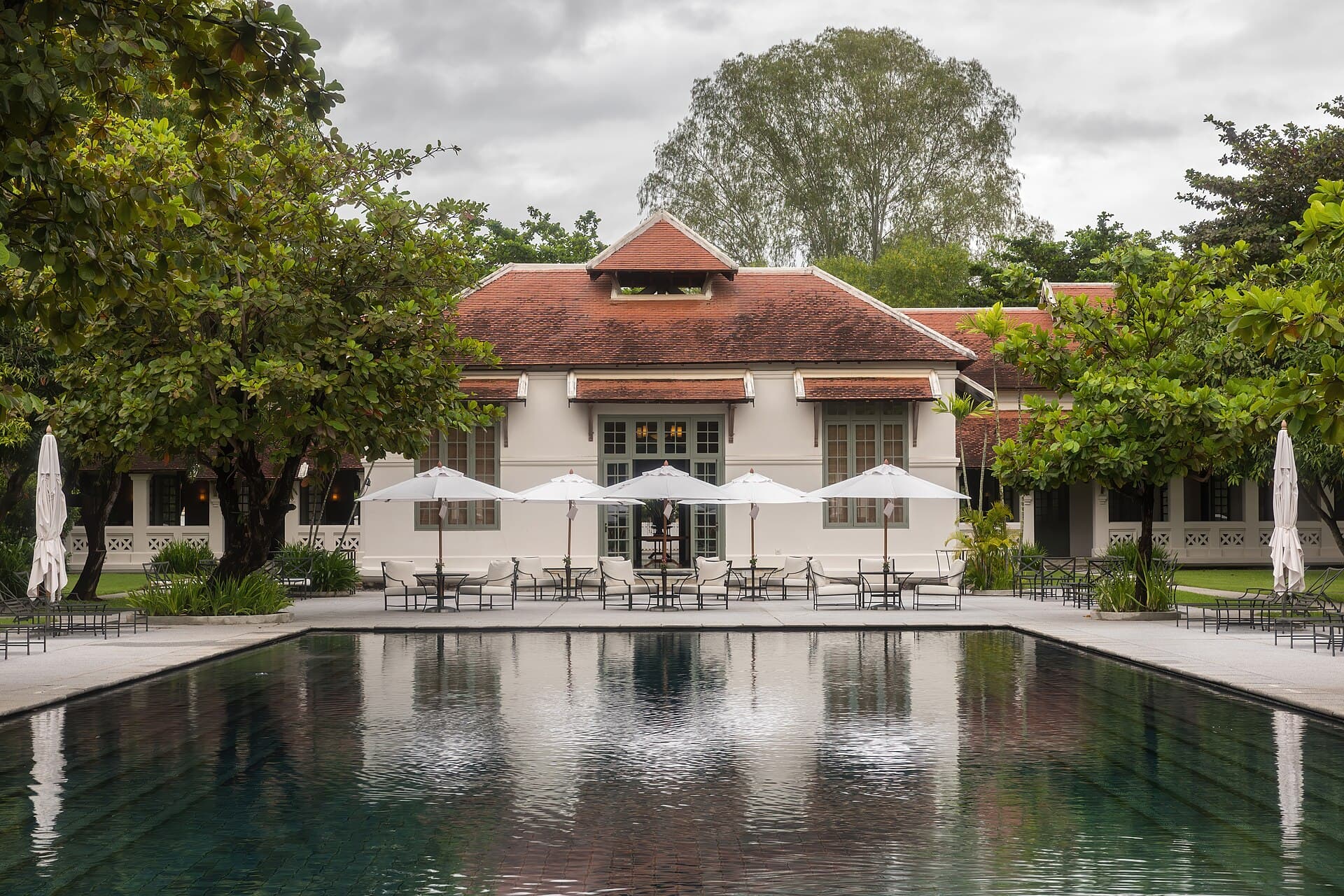
A whitewashed wall runs along Kingkitsarath Road at the foot of Mount Phousi, and behind it a lawn opens onto a row of long, low buildings with tiled roofs and deep verandas. These were the wards of the French provincial hospital of Luang Prabang, built in the early twentieth century. Amantaka occupies them, and the name, Aman with the Lao word for a teaching of the Buddha, was chosen for a town of 33 temples.
History
Luang Prabang was the royal capital of the kingdom of Lan Xang and later of the French protectorate, and the hospital was part of the colonial administration's building programme in the first decades of the twentieth century. The town was inscribed on the UNESCO World Heritage list in 1995 for the way its Lao timber houses and French brick villas sit together on the peninsula between the Mekong and the Nam Khan. Aman restored the hospital compound under the conservation rules that came with the listing and opened the hotel in 2009, its first in Laos.
Architecture and design
The estate keeps the plan of the hospital: a central lawn, a row of pavilions along the long axis and a smaller cluster of buildings at the back. The pavilions were re-roofed and the verandas restored; the interiors were gutted and rebuilt. Ed Tuttle, the architect of several early Aman resorts, directed the design, and his preference for symmetry, high ceilings and pale surfaces suits the French plan. Walls are white, floors are timber and terrazzo, and furniture is in dark wood with Lao textiles. The main swimming pool lies at the centre of the lawn, with the dining pavilion and the library on either side.
Rooms and suites
All 24 keys are suites, divided among the pavilions. Each has a bedroom, a sitting area, a dressing room and a large bathroom with a freestanding bath; most have a private garden with a pool of their own. The Khan and Mekong suites at the top of the scale have two-bedroom layouts for families. Ceilings are high enough to keep rooms cool for much of the year without air conditioning, though all suites have it.
Dining
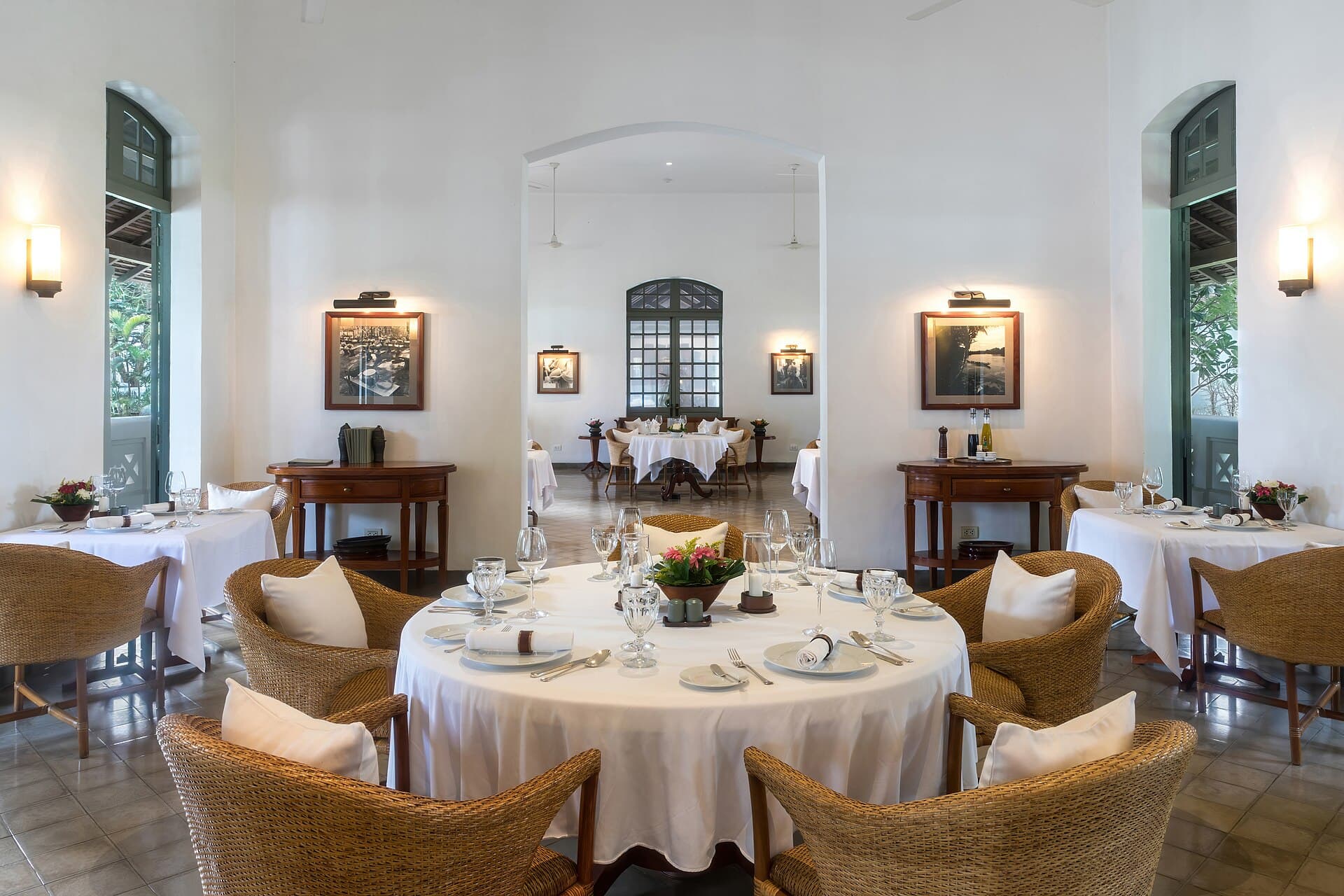
The restaurant occupies the dining pavilion facing the pool and serves a Lao menu alongside French cooking, a pairing that reflects the town's history. Breakfast includes Lao dishes such as khao piak and the river weed of the Mekong. Lao cooking classes are held in the kitchen garden, and private dinners can be set up on the lawn or in the suite gardens.
Wellness
The Aman Spa fills one of the rear buildings, with treatment rooms around a courtyard, a steam room, a gym and a yoga pavilion. Treatments draw on Lao herbal traditions. Guests are also taken at dawn to the alms-giving procession of the monks, which passes close to the hotel's gate.
Weddings and events
Amantaka hosts small weddings and private celebrations, usually for a party that takes the whole estate. The lawn, the pool terrace and the library are the usual settings; the hotel does not have conference rooms and meetings are limited to small groups in the library.
Location
The hotel sits inside the old town, at the foot of Mount Phousi, on the edge of the grid of streets that leads to the Royal Palace Museum and the night market. The Mekong is a ten-minute walk north; the Nam Khan a little closer to the south. Luang Prabang International Airport is about four kilometres away, and the hotel meets guests there. Among the luxury hotels in Luang Prabang, Amantaka is the one that puts guests within the heritage perimeter rather than across the river from it.
At a glance
What sets it apart
- 0124 suites in the pavilions of the former French provincial hospital
- 02Inside the UNESCO World Heritage old town, at the foot of Mount Phousi
- 03Opened in 2009 as Aman's first resort in Laos
- 04Most suites have a private garden and pool
- 05Aman Spa with courtyard treatment rooms and a yoga pavilion
Chronology
Dates that matter
1995
Luang Prabang is inscribed on the UNESCO World Heritage list.
2009
Aman opens Amantaka in the restored hospital compound on Kingkitsarath Road.