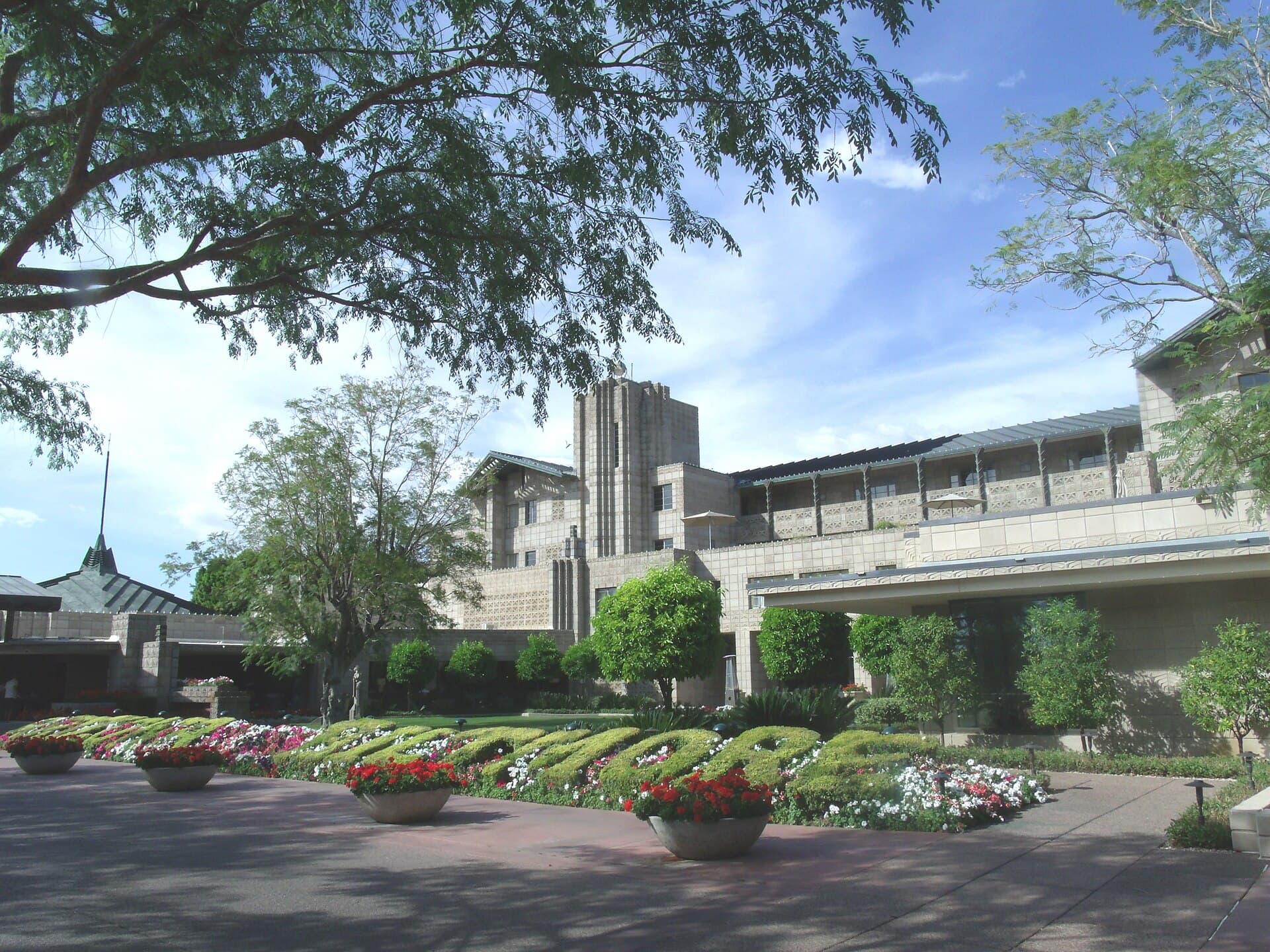
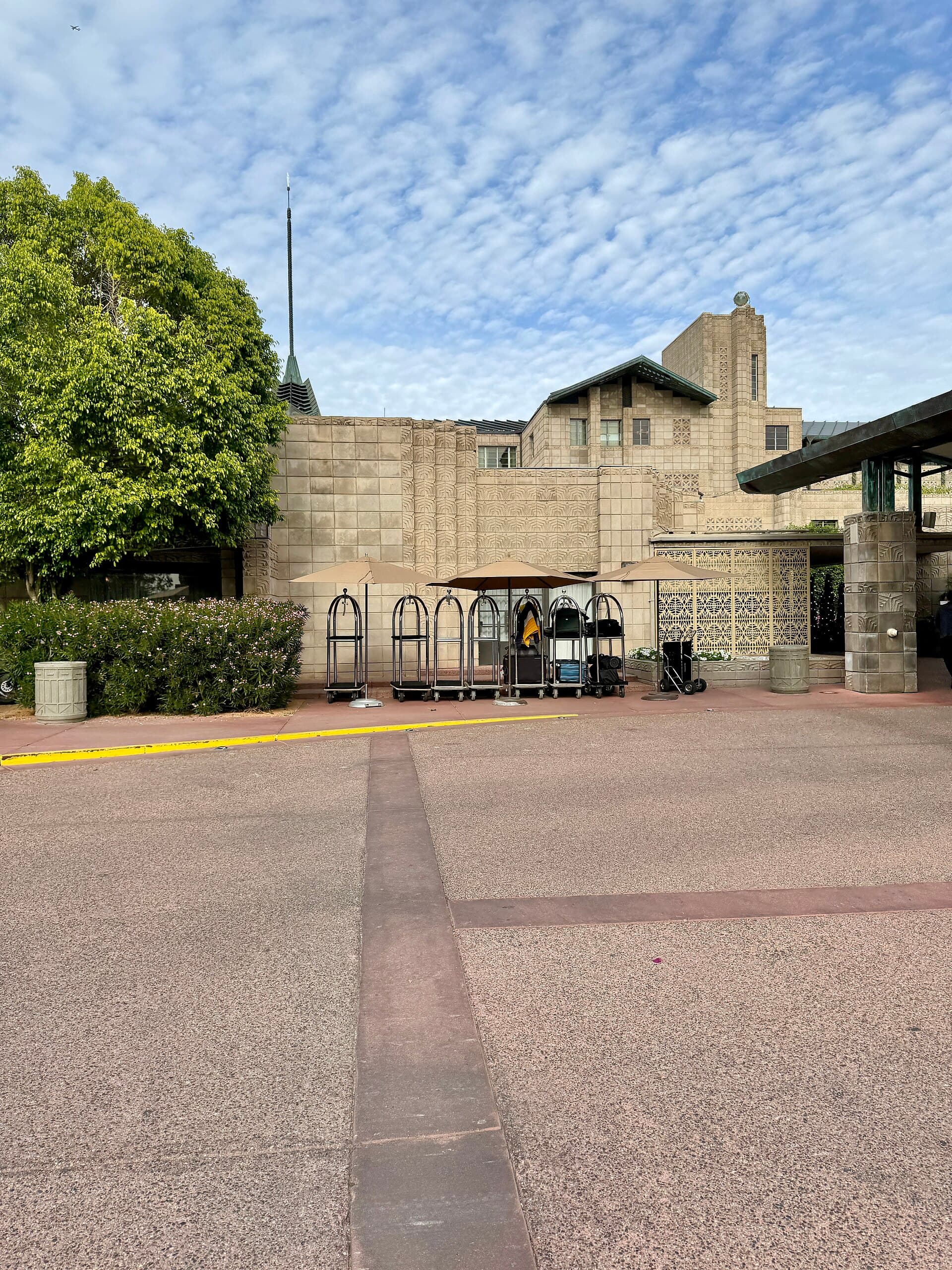
Every wall of the Arizona Biltmore in Phoenix, Arizona, is made of the same unit: a cast concrete block, 18 inches square, patterned with a geometric relief of a palm trunk. There are about 250,000 of them, cast on site from desert sand in 1928, and they give the hotel its colour, its texture and its argument with the light. The block is what visitors come to see.
History
The McArthur brothers, Warren and Charles, Phoenix car dealers and developers, planned a resort hotel on 200 acres of desert north of the city in 1927. Their brother Albert Chase McArthur, an architect who had worked in Frank Lloyd Wright's Oak Park studio, designed it, and he brought Wright to Phoenix for several months in 1928 to advise on the textile-block construction Wright had used in his Los Angeles houses. The hotel opened on 23 February 1929. The McArthurs ran out of money within the year, and William Wrigley Jr., the chewing-gum manufacturer and a minority investor, took it over; the Wrigley family owned the Biltmore until 1973 and built the Wrigley Mansion on the hill above it.
In 1973, during a renovation after the sale, a welder's torch started a fire that destroyed the roof and the fourth floor. Taliesin Associated Architects, Wright's successor firm, rebuilt it in 82 days, using Wright's drawings for new stained glass, and the hotel reopened that September. Every US president from Herbert Hoover to George W. Bush has stayed; Irving Berlin is said to have written White Christmas by the pool, and the Tequila Sunrise was invented at the bar in the 1930s. The resort joined the Waldorf Astoria brand in 2009 and reopened in 2021 after a renovation of 150 million dollars.
Architecture and design
McArthur's building is low and long, four storeys at most, with the blocks laid in walls that step back as they rise and a copper roof. Wright's influence shows in the Aztec Room, with its gold-leaf ceiling of 1929, the geometric stained glass of the lobby and the Sprite statues in the gardens, cast from Wright's designs for Midway Gardens in Chicago. The Catalina Pool of 1930, surrounded by tiles and a wall of textile blocks, is the one Marilyn Monroe called her favourite. The grounds cover 39 acres of lawns, citrus, palms and gardens against the Phoenix Mountains, with the Wrigley Mansion on the ridge.
Rooms and suites
The resort has about 700 rooms, suites, cottages and villas spread through the main building, the garden wings and the grounds, including the Ocatilla building for adults and the historic cottages beside the Catalina Pool. Rooms in the original wings keep the textile-block walls on the inside; those in the later wings have terraces onto the gardens.
Dining
Renata's Hearth is the principal restaurant, with Latin American and wood-fired cooking. The Wright Bar in the lobby takes the Tequila Sunrise and its history, Frank and Albert's is the all-day restaurant named for the two architects, and the Spire Bar serves the pool. Several cafés and poolside kitchens operate across the grounds in season.
Wellness
Tierra Luna Spa occupies a garden wing with treatment rooms, a salon and a pool of its own. The resort has seven swimming pools in all, including the Catalina Pool, the Paradise Pool with its waterslide, and the adults-only Saguaro Pool. Two 18-hole courses, the Adobe and the Links, belong to the adjoining Arizona Biltmore Golf Club.
Weddings and events
The Arizona Biltmore has one of the largest event inventories in the Phoenix area: 19 spaces and about 200,000 square feet of indoor and outdoor space, including the Grand Ballroom, the Frank Lloyd Wright Ballroom, the historic Aztec Room and the Squaw Peak Lawn with the mountain behind it. Weddings use the Aztec Room, the lawns and the ballrooms, and the largest receptions and conferences take around 1,000 guests. Capacities depend on the room and the layout.
Location
The resort stands on East Missouri Avenue in the Biltmore district of north-central Phoenix, eight miles from Sky Harbor International Airport and about 15 minutes by car from downtown. Biltmore Fashion Park is on the corner of 24th Street and Camelback Road, and the Phoenix Mountains Preserve trailheads are within a short drive. As a luxury hotel in Phoenix it has no rival for age or for architecture.
At a glance
What sets it apart
- 01Opened 23 February 1929, architect Albert Chase McArthur, Wright as consultant
- 02About 250,000 concrete textile blocks cast on site from desert sand
- 03Aztec Room with gold-leaf ceiling of 1929; Sprite statues from Wright's Midway Gardens
- 04Catalina Pool of 1930; seven pools in all on 39 acres
- 05Wrigley family ownership 1929 to 1973; Waldorf Astoria since 2009
Chronology
Dates that matter
1929
The hotel opens on 23 February; William Wrigley Jr. takes control before the year is out.
1930
The Catalina Pool is built beside the historic cottages.
1973
Fire during a renovation destroys the roof; Taliesin Associated Architects rebuild it in 82 days.
2009
The resort joins the Waldorf Astoria brand.
2021
The Biltmore reopens after a 150-million-dollar renovation.