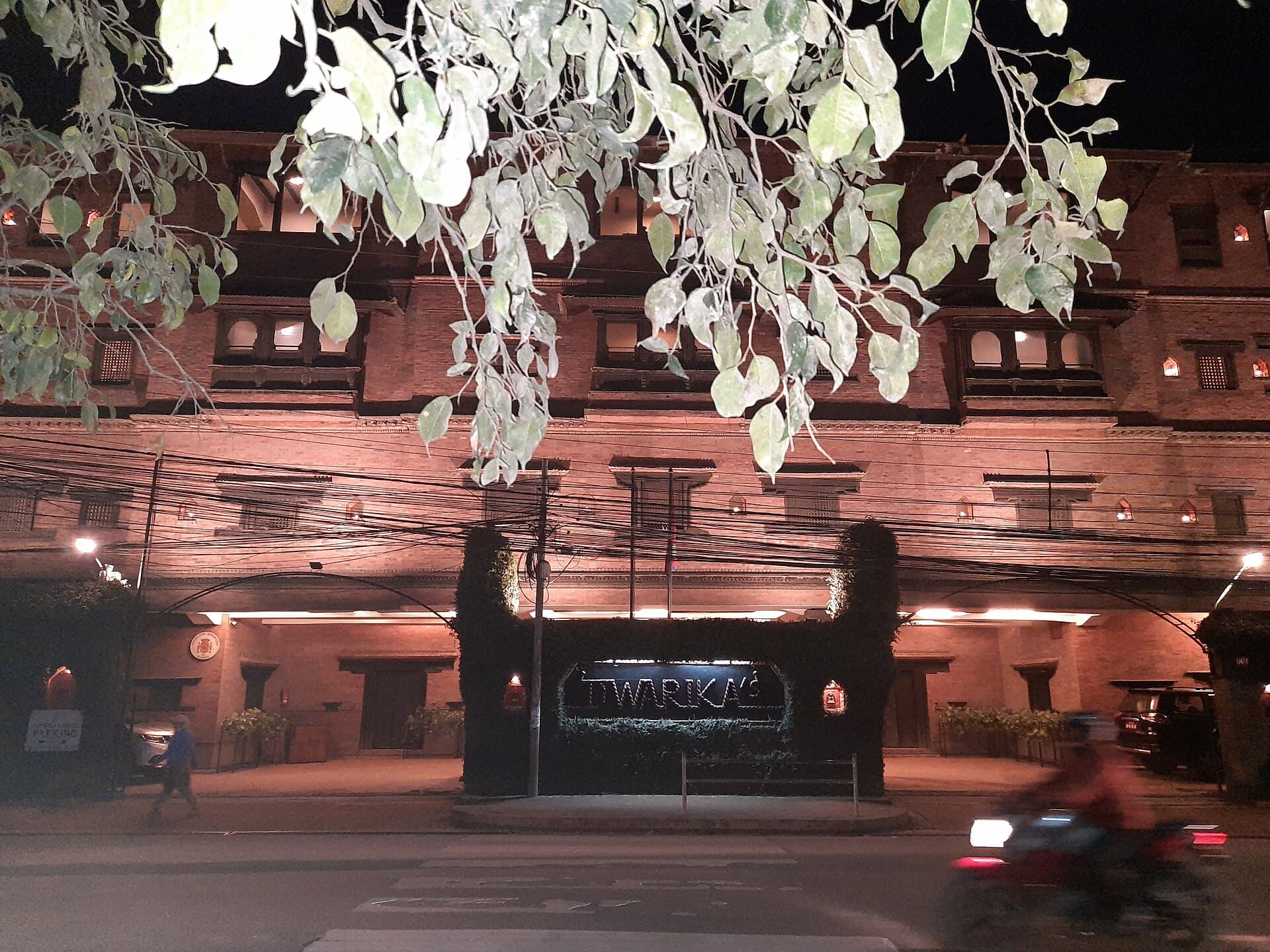
One morning in 1952, a young Kathmandu man named Dwarika Das Shrestha came across carpenters sawing up old carved timbers for firewood, and paid them for the pieces instead. Dwarika's Hotel, in the Battisputali district of Kathmandu, grew out of that moment. Its red-brick courtyards hold a collection of antique Newari woodcarving assembled over decades, and the carvings are not kept behind glass. They are the windows, doors, pillars and roof struts of the buildings themselves, which makes this a luxury hotel in Kathmandu that doubles as a working conservation project.
History
Shrestha's rescue became a life's work. Over the following decades he gathered carved timbers from houses being demolished or modernised across the Kathmandu Valley, at a time when concrete was replacing the old brick and wood, and he set up a workshop to clean, repair and copy them. The hotel was his way of giving the pieces a use: a place where travellers could sleep among them. The project received a PATA Heritage Award in 1980, an early international recognition for heritage work in Nepal.
Shrestha died in 1992. His wife, Ambica Shrestha, took over and became one of the best-known figures in Nepali hospitality, and the family still runs the business. In 2013 it opened a second property, Dwarika's Resort in Dhulikhel, on a ridge east of the valley.
Architecture and design
The buildings follow the Newari tradition of the valley's old towns: exposed brick, carved timber, sloping tiled roofs and inner courtyards paved in brick and stone. Some of the woodwork set into the walls is several hundred years old, salvaged from houses, shrines and palaces, and it sits beside new carving produced in the hotel's own workshop by craftsmen trained in the old methods. Latticed windows, terracotta details and planted courts give the place the feel of a Patan or Bhaktapur townhouse, enlarged. Guests move through courts and passages rather than corridors, and the carving changes at every turn.
Rooms and suites
No two rooms are alike. Each has its own arrangement of antique windows and carved details, with brick walls, wooden floors and furniture made in the Newari manner, and the suites add sitting areas and, in some cases, terraces over the courtyards. Bathrooms are large and modern. The rooms sit in low buildings around the courts, so most look onto carving, brickwork or garden rather than the city.
Dining
Krishnarpan, the hotel's Nepali restaurant, serves ceremonial set meals that run to as many as 22 courses, with dishes drawn from the country's regions. It is the meal most visitors book ahead, and the longer menus take most of an evening. The hotel also has a courtyard restaurant for all-day dining and a bar, and breakfast is taken among the brickwork and carvings.
Wellness
The spa draws on Ayurvedic and Himalayan traditions, and the outdoor swimming pool sits within the brick courts, framed by the same carved timber as the rest of the hotel. After a day of temples and traffic, it is the quietest corner of the compound.
Weddings and events
The courtyards are used for receptions, wedding celebrations and gala dinners, and the hotel holds meetings and conferences in its function rooms. Nepali weddings often run over several days, with processions, music and ritual, and open courts suit that rhythm better than a ballroom would.
Location
Battisputali lies east of the old centre, close to Pashupatinath, the great Hindu temple complex on the Bagmati river, and within easy reach of the stupa at Boudhanath. Tribhuvan International Airport is close by, so the transfer takes minutes rather than hours in normal traffic. Kathmandu's Durbar Square, Patan and Bhaktapur, the three royal cities of the valley, are all reachable by car, and seeing the hotel's carvings first makes their temples and palaces easier to read.
At a glance
What sets it apart
- 01Antique Newari woodcarving built into walls, windows and doors
- 02On-site workshop restoring and reproducing carved timber
- 03Krishnarpan restaurant with Nepali menus of up to 22 courses
- 04Outdoor pool set within brick courtyards
- 05Close to Pashupatinath and Tribhuvan International Airport
Chronology
Dates that matter
1952
Dwarika Das Shrestha begins rescuing carved timbers from Kathmandu Valley buildings.
1980
The project receives a PATA Heritage Award for its conservation work.
1992
Shrestha dies; his wife, Ambica Shrestha, takes over the hotel.
2013
The family opens Dwarika's Resort in Dhulikhel, east of the Kathmandu Valley.