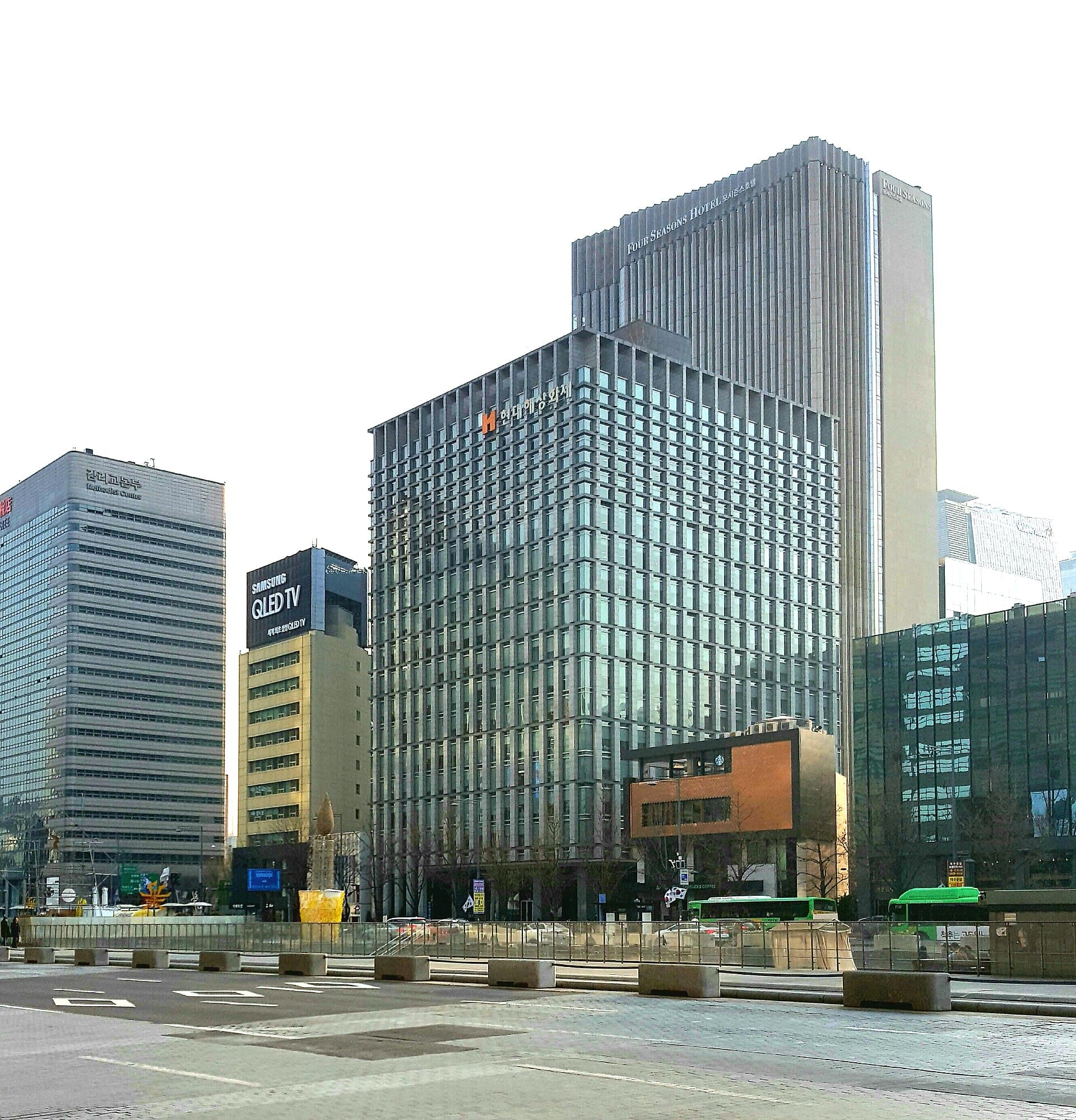
Gwanghwamun Square runs north to the main gate of Gyeongbokgung Palace, and one block to the west, on Saemunan-ro, stands Four Seasons Hotel Seoul. It opened in October 2015 as the first Four Seasons in Korea. The address is the point. This is the old centre of the capital, a district of ministries, newspaper offices, churches and embassies, and a long way in spirit from the towers of Gangnam on the far side of the Han River.
History
Jongno-gu held the Joseon court for five centuries, and its palaces, shrines and gates still set the pattern of the streets around the hotel. Gyeongbokgung was founded in 1395, burned during the Japanese invasions of the 1590s and rebuilt in the 1860s. Seoul already had a long list of international hotels when Four Seasons arrived, yet many of the newer ones had gone south of the river or out to Yeouido. The Canadian group, which had no house in Korea before this one, chose the historic core instead.
The neighbourhood had itself changed in the decade before the opening. The Cheonggyecheon stream, buried for decades beneath concrete and an overhead expressway, was uncovered and reopened as a public walk in 2005. Gwanghwamun Square followed in 2009, turning a broad traffic artery into a civic space, with the seated statue of King Sejong and the older statue of Admiral Yi Sun-sin at its centre. The hotel opened onto a district that had been made walkable again, and it gave the old city a luxury hotel in Seoul's historic centre rather than in one of its newer business districts.
Rooms and suites
There are 317 rooms and suites over the upper floors of the tower. The higher rooms on the palace side take in the tiled roofs of Gyeongbokgung, the ridge of Bugaksan behind them and, on a clear day, the granite peaks of Bukhansan further off. The other side looks over the hills of Inwangsan and the lower streets towards Seodaemun. Few hotel rooms in the city put the Joseon capital and its guardian mountains in the same window.
Dining
Yu Yuan serves Cantonese cooking. Boccalino is the Italian restaurant. The Market Kitchen handles breakfast and a large buffet through the day.
Charles H., reached by a staircase below the lobby, is the room many visitors come for. It is a cocktail bar named after Charles H. Baker Jr., the American travel writer whose 1939 book The Gentleman's Companion collected the drinks he met in ports and hotel bars around the world. The menu is arranged around the cities Baker wrote about, and the room has the low light and dark wood of an older hotel bar rather than the glass of a new tower.
Wellness
The hotel has a spa with treatment rooms, an indoor swimming pool, saunas and a large fitness centre. For anyone who prefers to exercise outdoors, the Cheonggyecheon walkway and the paths along the palace walls are close by.
Weddings and events
Hotel weddings are a central part of Korean family life, and the large Seoul hotels compete for them on dates booked well ahead. Four Seasons Hotel Seoul has a ballroom and a set of smaller function rooms, used for wedding banquets, receptions, product launches and corporate dinners. Its meeting rooms serve the companies and institutions of the surrounding business district, and private dining rooms attached to the restaurants take smaller family gatherings.
Location
Gwanghwamun Station on Line 5 is the nearest stop, and City Hall Station on Lines 1 and 2 is within reach on foot. Gyeongbokgung, Deoksugung and the Sejong Center for the Performing Arts are a short walk away, as are the lanes of Seochon to the north-west of the palace. Most international flights land at Incheon International Airport, about an hour by road. Gimpo Airport, closer to the city, takes domestic services and some regional routes. Seoul Station, for KTX trains to Busan and the airport railway to Incheon, is a brief taxi ride south.
At a glance
What sets it apart
- 01First Four Seasons in South Korea, opened October 2015
- 02317 rooms and suites in Jongno-gu, near Gyeongbokgung Palace
- 03Charles H. cocktail bar, named after writer Charles H. Baker Jr.
- 04Yu Yuan Cantonese restaurant and Boccalino Italian restaurant
- 05Indoor swimming pool, spa and fitness centre
Chronology
Dates that matter
1395
Gyeongbokgung Palace is founded as the main royal palace of the Joseon dynasty, a few streets from the future hotel site.
2005
The Cheonggyecheon stream reopens as a public walkway after the removal of an overhead expressway.
2009
Gwanghwamun Square opens in front of the palace gate, with the statue of King Sejong at its centre.
2015
Four Seasons Hotel Seoul opens in October, the first Four Seasons in Korea.