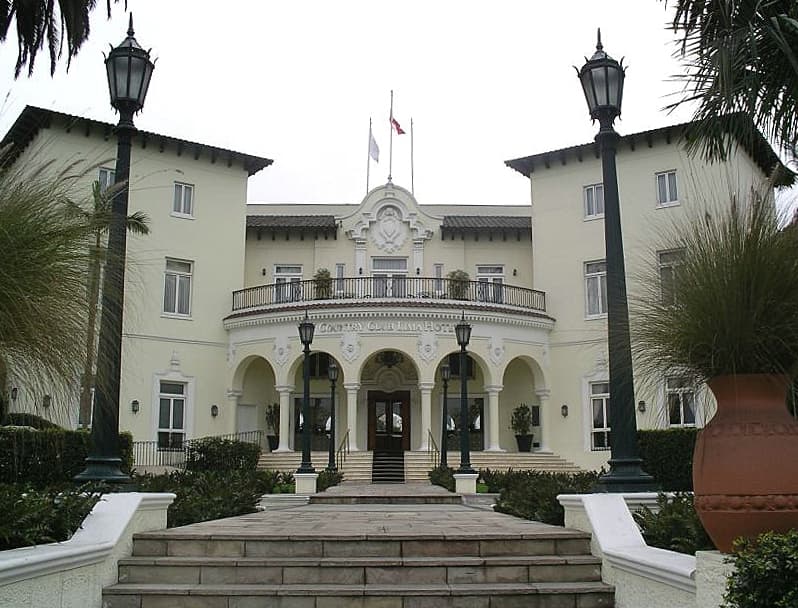
The train from the Sacred Valley stops at Machu Picchu Pueblo, and the gate of Inkaterra Machu Picchu Pueblo Hotel is at the end of the platform. Beyond it the noise of Aguas Calientes stops. Stone paths climb through five hectares of cloud forest along the Vilcanota river, past tree ferns and hummingbirds, to 83 whitewashed casitas with tiled roofs that look as if they had always stood on the hillside. The hotel belongs to Inkaterra, the Peruvian company that pioneered ecotourism in the country, and of the luxury hotels in Aguas Calientes it is the one whose grounds are a botanical reserve in their own right.
History
Inkaterra was founded in 1975 by José Koechlin von Stein, who began with a lodge in the Madre de Dios rainforest, Inkaterra Reserva Amazónica, and a conviction that tourism could pay for conservation. The Machu Picchu Pueblo Hotel grew on land the company acquired by the river at the foot of the citadel, where the village of Aguas Calientes was then a railway halt. Over the years the company replanted the hillside with native species and recorded what lived there: 372 species of orchid, which the American Orchid Society has cited as the largest native collection in one place, and more than a hundred species of birds. Inkaterra later added Inkaterra La Casona in Cusco, the Hacienda Urubamba in the Sacred Valley, and a sister property in Aguas Calientes, El MaPi. The hotel is a member of National Geographic Unique Lodges of the World.
Architecture and design
The casitas are built in the manner of an Andean village: adobe-coloured walls, terracotta tiles, eucalyptus beams and wooden shutters, arranged along the contours of the hill so that each has its own approach. Nothing rises above the tree canopy. Paths are stone, lit at night by lanterns, and the river is audible from most rooms. The public buildings, the restaurant, bar and reception, follow the same style around a central lawn.
Rooms and suites
There are 83 rooms in the casitas, in several categories from standard rooms to suites and villas with private terraces and, in the top categories, a plunge pool or outdoor shower. Rooms have fireplaces or heaters for the damp evenings, alpaca throws and bathrooms with tubs. The gardens are the point: guests wake to birdsong and walk to breakfast through the forest.
Dining
The main restaurant serves Peruvian and Andean cooking with produce from the hotel's own gardens, including the small tea plantation whose leaves are processed on site. Café Inkaterra, by the river, is an informal restaurant open to the public, and the bar does pisco sours by the fire. Breakfast is a large buffet timed around the early buses to the citadel.
Wellness
Unu Spa, set among the trees, offers Andean treatments with local herbs and has a eucalyptus-steam sauna. The hotel's walks are its other wellness programme: a guided orchid trail, a birding walk at dawn, a visit to the tea plantation and to the spectacled bear rescue enclosure, where bears rescued from captivity are rehabilitated.
Weddings and events
The hotel hosts small weddings and blessings in the gardens, with the citadel as the reason for the trip, and takes private groups who travel together to Machu Picchu. It has no conference facilities. Larger celebrations are usually a dinner in the restaurant for a party staying across several casitas.
Location
Aguas Calientes, officially Machu Picchu Pueblo, sits in the Urubamba gorge below the citadel and is reached only by train or on foot. The hotel is beside the railway station, which makes arrival simple. Buses to Machu Picchu leave from the village and climb the switchbacks to the site in about twenty-five minutes. The nearest airport is Cusco's Alejandro Velasco Astete, from which most guests take the train from Ollantaytambo or Poroy, a journey of about ninety minutes to three and a half hours depending on the departure point.
At a glance
What sets it apart
- 0183 whitewashed casitas in five hectares of cloud forest by the Vilcanota river
- 02372 native orchid species recorded on the grounds
- 03Spectacled bear rescue and rehabilitation enclosure on site
- 04Beside the Machu Picchu Pueblo railway station
- 05Own tea plantation and Unu Spa among the trees