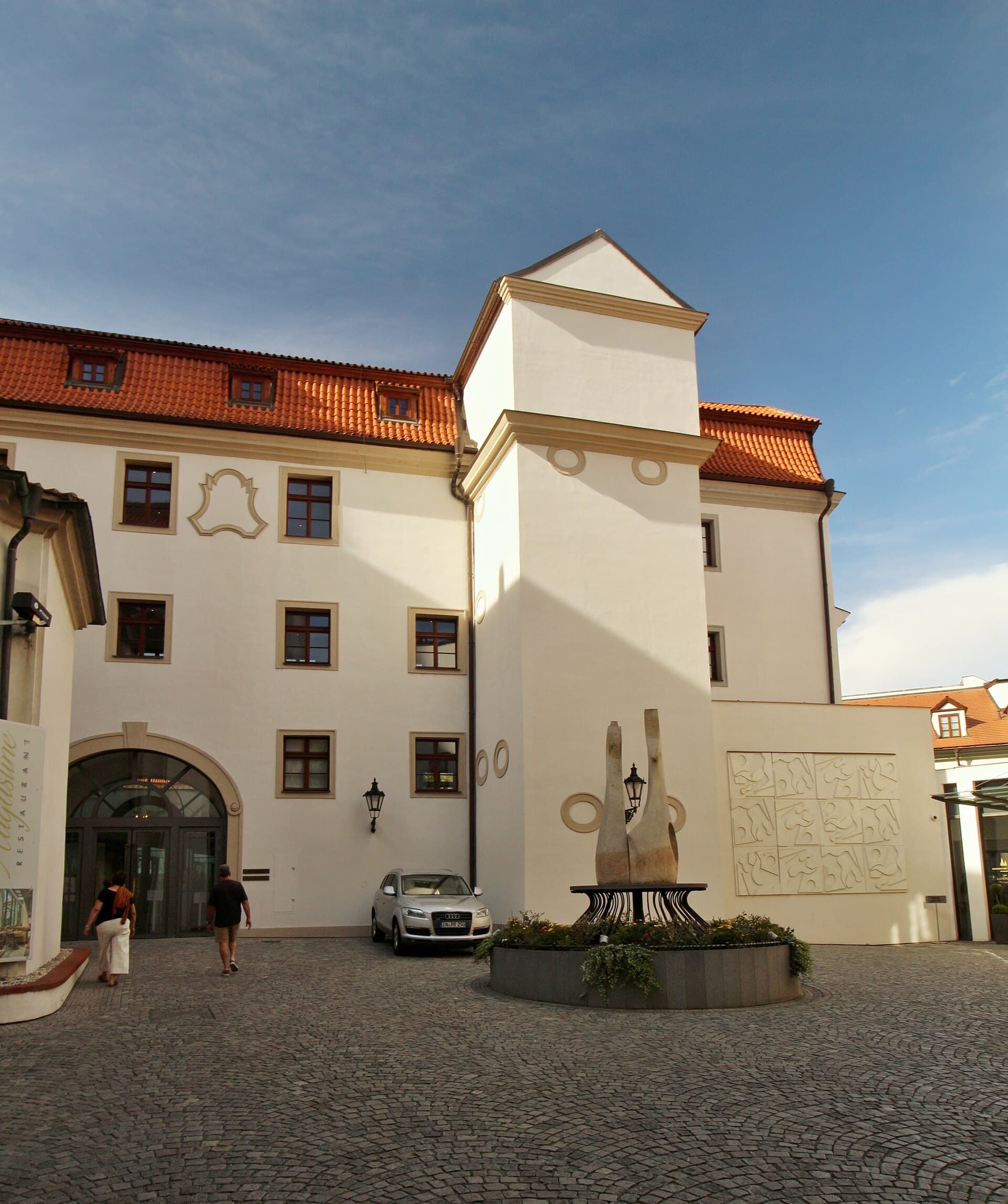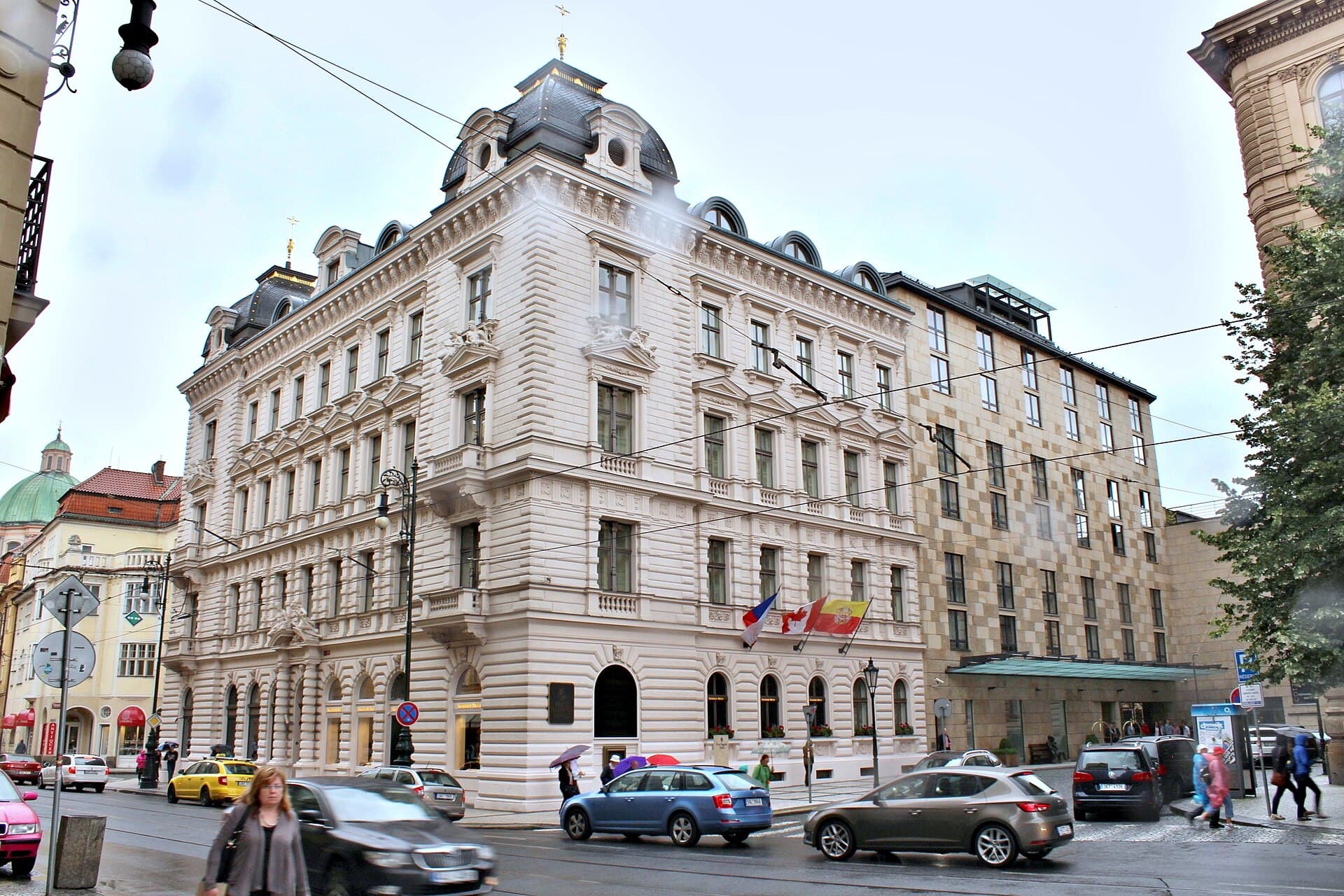
Nebovidská is a short street at the quiet southern end of Malá Strana, between the Kampa island parks and the slope up to Petřín hill. The monastery that stood on it from the fourteenth century belonged to the Dominicans, and its cloisters, cells and chapel were rebuilt over the centuries before the whole complex was converted into Mandarin Oriental, Prague, which opened in September 2006.
History
The Dominican foundation dates from the late Middle Ages and was altered in the Baroque period, like most of Malá Strana. The buildings passed out of religious use long before the twentieth century and had served as offices and storage by the time Mandarin Oriental Hotel Group took them on. The conversion took several years because the site was excavated as it was rebuilt; the archaeologists' finds were kept in place, which is why the spa has a glass floor. The hotel opened in 2006 as the group's first in central Europe.
Architecture and design
The plan follows the monastery: long vaulted corridors on the ground floor, rooms in the former cells above, and the cloister garden at the centre. The interiors are restrained, in pale wood, linen and stone, with Asian references kept to a few objects rather than a theme. Original vaults and timber beams were retained wherever they survived, and the garden is planted as a lawn with mature trees.
Rooms and suites
There are 99 rooms and suites. Their shapes vary because the monastery walls dictated them: some are long and narrow under vaulted ceilings, others have the deep window recesses of the old cells. Rooms on the upper floors look towards Prague Castle or over the garden. The larger suites occupy the corners of the main wing with separate sitting rooms.
Dining
Spices, the restaurant, serves Asian cooking in the former monastery halls, with a terrace onto the garden in summer. The Monastery Lounge is the room for afternoon tea and breakfast, and Barego is the bar. The kitchens also serve the garden, which doubles as the outdoor dining space in warm months.
Wellness
The spa is the hotel's best-known feature. It occupies a former Renaissance chapel that stood apart from the main monastery, with treatment rooms set under its vaults and a glass floor in the entrance through which the excavated foundations of the medieval church can be seen. There is a vitality pool rather than a swimming pool, together with a sauna, a steam room and a fitness room. Treatments follow the Mandarin Oriental programme used across the group.
Weddings and events
The monastery halls and the cloister garden are used for weddings, with ceremonies in the garden in summer and dinners under the vaults. Meeting rooms on the ground floor host board meetings and small conferences. The hotel does not have a large ballroom and suits weddings of modest size rather than gatherings of several hundred.
Location
The hotel stands in the southern part of Malá Strana, a few minutes on foot from Kampa island and the Charles Bridge, and ten minutes from the Malostranská metro. Prague Castle is a 15-minute walk uphill. Among the luxury hotels in Prague it is the one with the quietest street. Václav Havel Airport is about 30 minutes by car and the main station, Praha hlavní nádraží, about 15 minutes.
At a glance
What sets it apart
- 01Former Dominican monastery of the fourteenth century on Nebovidská street
- 02Spa inside a former Renaissance chapel with a glass floor over excavations
- 0399 rooms and suites along the old cloisters
- 04Cloister garden used for summer dining and ceremonies
- 05Opened 2006 as the group's first hotel in central Europe
Chronology
Dates that matter
2006
Mandarin Oriental, Prague opens in September in the converted Dominican monastery.
2015
The restaurant reopens as Spices, serving Asian cooking in the monastery halls.