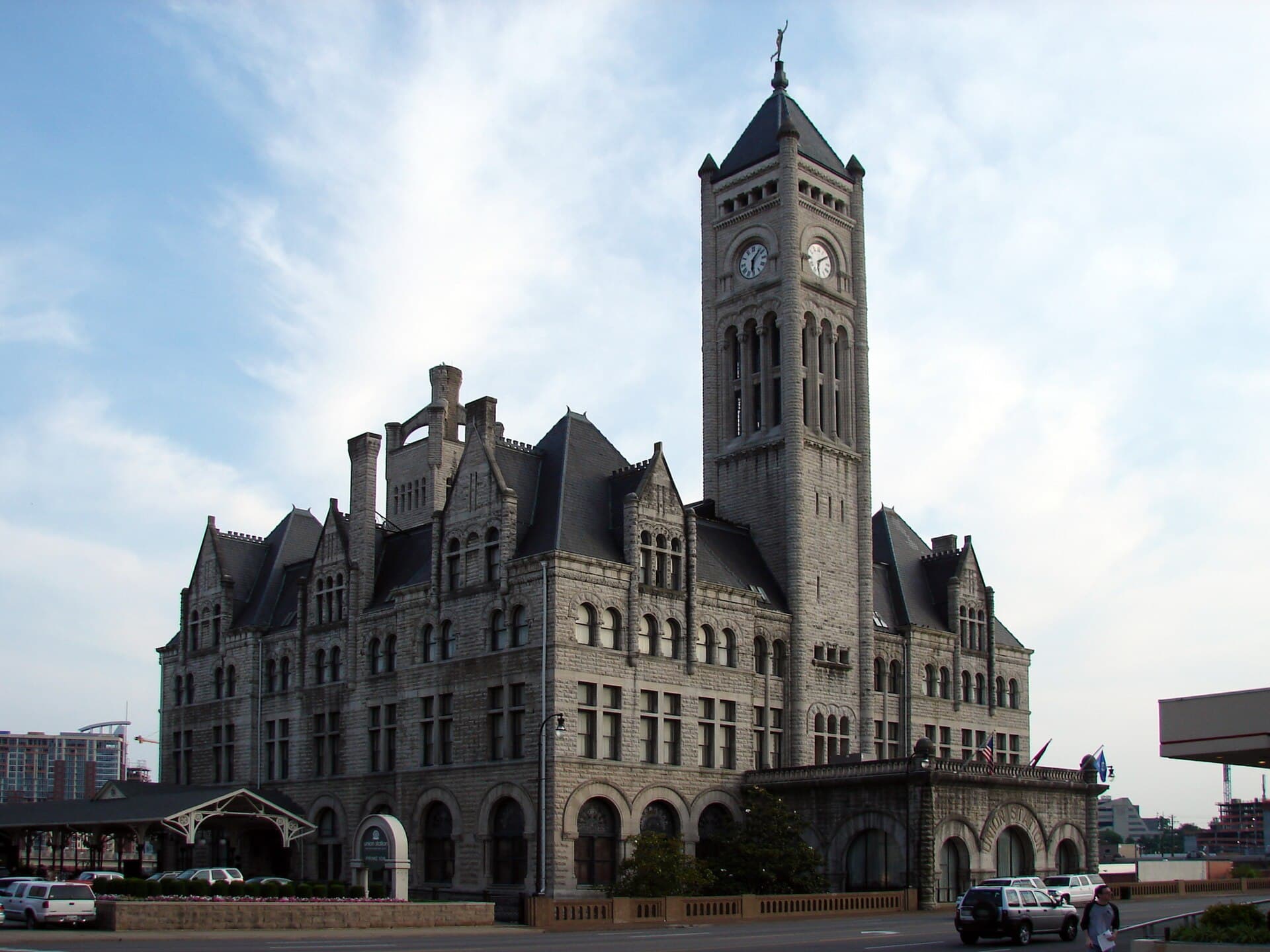
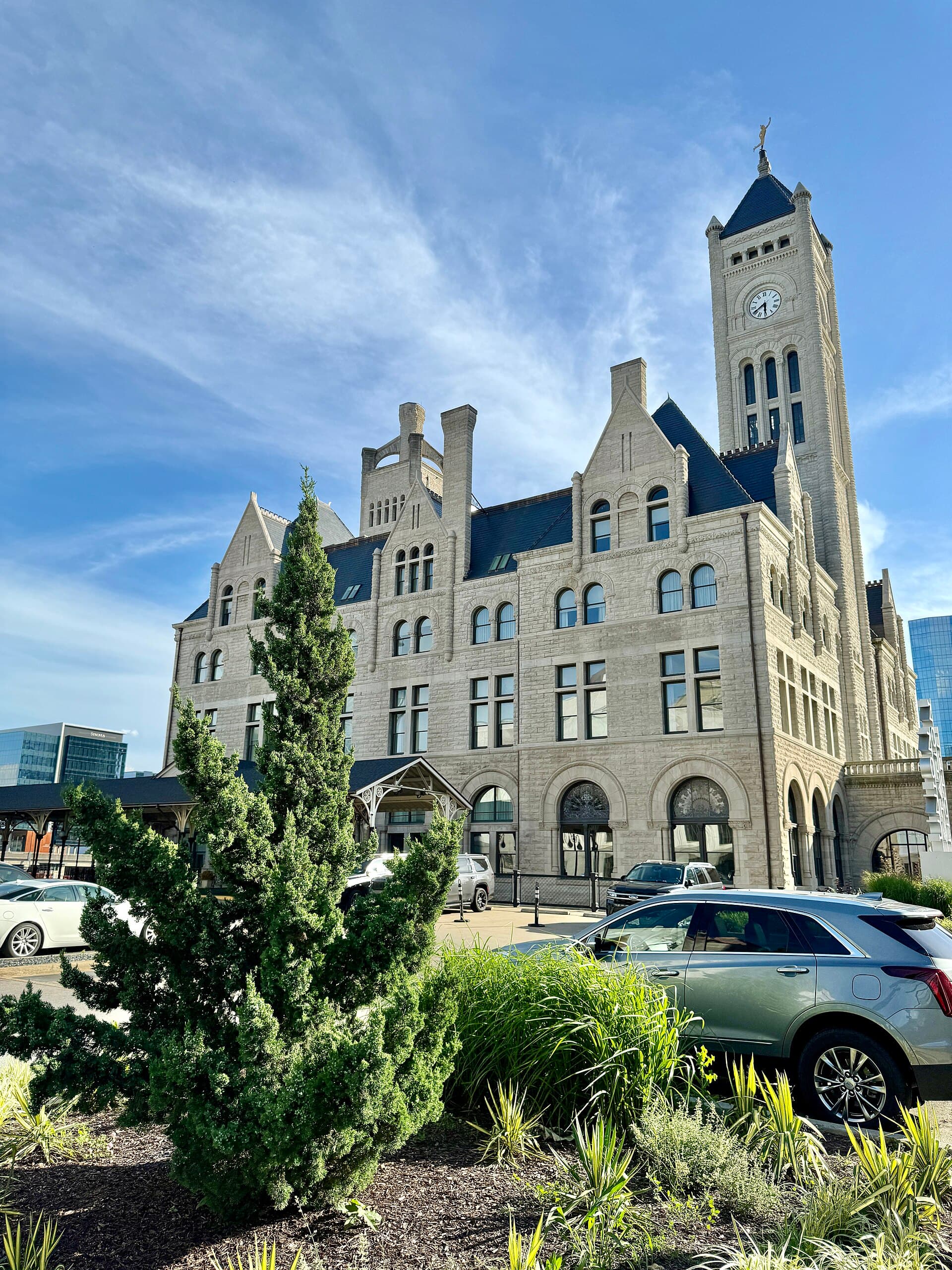
The last passenger train left Nashville's Union Station in 1979, when Amtrak withdrew the Floridian, and the stone terminal on Broadway with its 220-foot clock tower sat empty for most of a decade. The Union Station Nashville Yards is the hotel that opened in the building in 1986, and its lobby is the old waiting room, 65 feet high under a barrel vault of stained glass.
History
The Louisville and Nashville Railroad opened the station in October 1900 to serve its own trains and those of the Nashville, Chattanooga and St. Louis Railway, which it controlled. Richard Montfort, the L&N's chief engineer, designed it. The waiting room had two pools stocked with live alligators, a detail the hotel still tells guests about, and a statue of Mercury stood on the tower until a storm brought it down in 1951. The building was listed on the National Register of Historic Places in 1969 and declared a National Historic Landmark in 1977, two years before the trains stopped. The train shed behind it, one of the largest single-span sheds in the country, was demolished in 2001 after decades of neglect. The hotel conversion of 1986 saved the head house, and a renovation in 2016 reworked the rooms and brought the restaurant into the lobby. The hotel took its current name when the Nashville Yards development rose on the former rail yards beside it.
Architecture and design
Montfort worked in the Richardsonian Romanesque manner: rusticated grey stone, round arches, a steep roof and the square clock tower that still reads from Broadway. Inside, the vault carries stained glass along its length and the walls hold bas-relief panels of locomotives and angel figures with the dates of the station. The mezzanine gallery runs around the hall, and the hotel's bar occupies one end of it. The 2016 renovation introduced brass, leather and dark timber against the original limestone and marble.
Rooms and suites
The 125 rooms occupy the upper floors of the head house, and because the building was planned as offices for a railway, they vary in shape and ceiling height. Rooms on the Broadway side look down the avenue towards the river; those at the back look over the yards and the new towers.
Dining
Carter's, the restaurant and bar in the great hall, serves breakfast through dinner under the vault, and its bar takes over the hall in the evenings. Lower Broadway's honky-tonks begin ten blocks to the east, and most guests walk there after dinner.
Weddings and events
The great hall is the venue, and it is one of the most photographed wedding settings in Nashville: ceremonies under the stained glass, receptions on the floor of the hall with the mezzanine above. Smaller rooms off the hall hold meetings and dinners, and the hotel sits two blocks from the Music City Center convention hall.
Location
The hotel stands at 1001 Broadway, at the corner of 10th Avenue, across from the Frist Art Museum in the city's 1934 post office. Nashville International Airport is about 20 minutes by car. Downtown and the Ryman Auditorium are a fifteen-minute walk east along Broadway, and the Nashville Yards development, with its offices and entertainment district, surrounds the station on the former rail land. For a luxury hotel in Nashville the building is unmatched in age and in height of ceiling.
At a glance
What sets it apart
- 01Opened as a railway terminal in October 1900, designed by Richard Montfort for the L&N
- 02Barrel-vaulted lobby 65 feet high with original stained glass
- 03220-foot clock tower on Broadway
- 04National Historic Landmark since 1977; hotel since 1986
- 05125 rooms; Carter's restaurant and bar in the great hall
Chronology
Dates that matter
1900
Union Station opens in October for the Louisville and Nashville Railroad.
1951
A storm brings down the Mercury statue from the top of the tower.
1977
The station is designated a National Historic Landmark.
1979
Amtrak's Floridian makes the last passenger call.
1986
The building reopens as a hotel.
2001
The train shed behind the station is demolished.
2016
A renovation reworks the rooms and places the restaurant in the great hall.