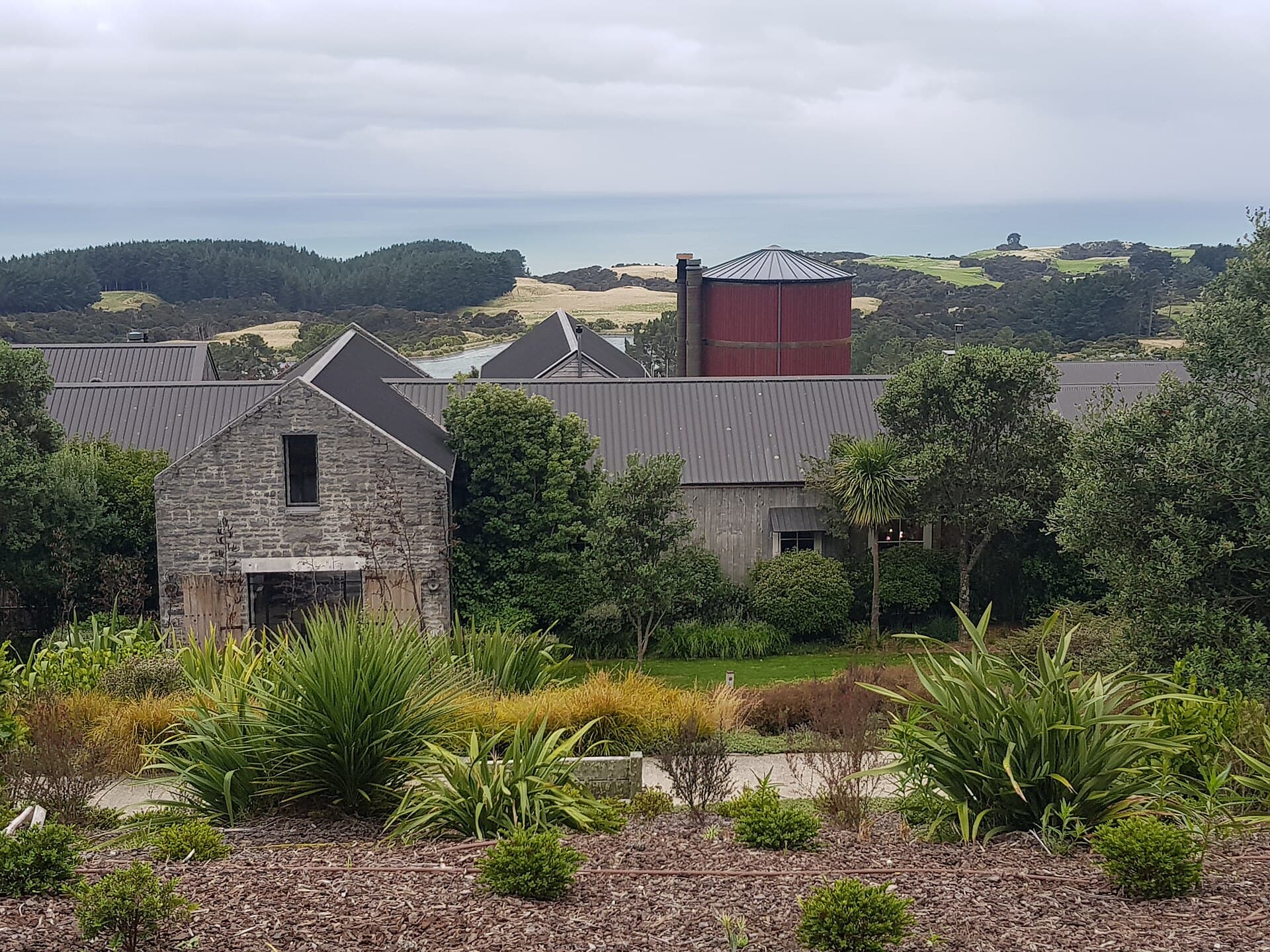
Every September the lawns and woods below the house turn yellow with daffodils, the legacy of a man who planted them in the tens of thousands. Otahuna Lodge, at Tai Tapu at the foot of the Port Hills south of Christchurch, was built in 1895 as the country house of Sir Heaton Rhodes and has been a small lodge of seven suites since 2007.
History
Robert Heaton Rhodes, a lawyer and farmer who later sat in Parliament and served as a government minister, commissioned the house in his early thirties on land his family held at the edge of the Canterbury Plains. It was designed by the Christchurch architect Frederick Strouts and was, on completion, one of the largest private residences in New Zealand. Rhodes lived there until his death in 1956 and spent much of his life on the gardens, which became among the most admired in the country. Daffodils were his particular passion, and he grew and collected them on a scale few private gardeners have matched.
After his death the house changed hands several times. In 2006 two Americans, Hall Cannon and Miles Refo, bought it and set about its restoration, and they opened it as a lodge the following year. The Canterbury earthquakes of 2010 and 2011 damaged the house, bringing down chimneys, and the owners carried out repairs and strengthening while keeping the original fabric. Heritage New Zealand lists the house in its highest category.
Architecture and design
Otahuna is a large timber house in the Queen Anne manner, with steep gables, bay windows, verandas and tall brick chimneys. Inside, the panelled hall, the staircase and the principal rooms keep their original woodwork and fireplaces. The furnishing follows the period of the house without turning it into a museum, with antiques, paintings and deep, comfortable chairs.
Rooms and suites
The seven suites are in the main house, each different in shape and character. Several have fireplaces, and their windows look over the gardens or out towards the plains and, on a clear day, the Southern Alps. The small number of rooms means that guests share the house much as Rhodes's own visitors once did, meeting for drinks before dinner in the drawing room.
Dining
Dinner is a set menu served each evening, built largely around fruit, vegetables and herbs from the estate's kitchen garden and orchards, with meat and cheese from Canterbury producers. The garden is worked to supply the kitchen through the year, and the menu follows what is being picked that week. Guests can walk the garden with the staff before dinner.
Weddings and events
The house is used for weddings and private celebrations, often on an exclusive-use basis, with ceremonies in the gardens and dinners in the dining room. Its seven suites set the scale of any gathering that stays overnight.
Location
The estate covers some 30 acres of gardens, woodland and lawns in the foothills of the Port Hills, the remains of the ancient volcano whose other flank forms Lyttelton Harbour. The village of Tai Tapu lies just below, and central Christchurch is about 20 minutes by car. Christchurch Airport is a little further, and the house makes a base for Banks Peninsula and the French-settled harbour town of Akaroa, for the vineyards of Waipara in North Canterbury and for the high country to the west. For a luxury hotel near Christchurch, Otahuna offers something the city cannot: a complete Victorian country house, its garden still in use. Otahuna is a member of Relais & Châteaux.
At a glance
What sets it apart
- 01Built in 1895 for Sir Heaton Rhodes, designed by Frederick Strouts
- 02Seven suites in the main house
- 03Daffodil plantings from Rhodes's time flower each September
- 04Dinner cooked from the estate's kitchen garden and orchards
- 05Member of Relais & Châteaux
Chronology
Dates that matter
1895
Otahuna is completed for Robert Heaton Rhodes to designs by Frederick Strouts.
1956
Sir Heaton Rhodes dies after six decades at Otahuna.
2006
Hall Cannon and Miles Refo buy the house and begin its restoration.
2007
Otahuna opens as a lodge with seven suites.
2011
The Canterbury earthquakes damage the house, which is repaired and strengthened.