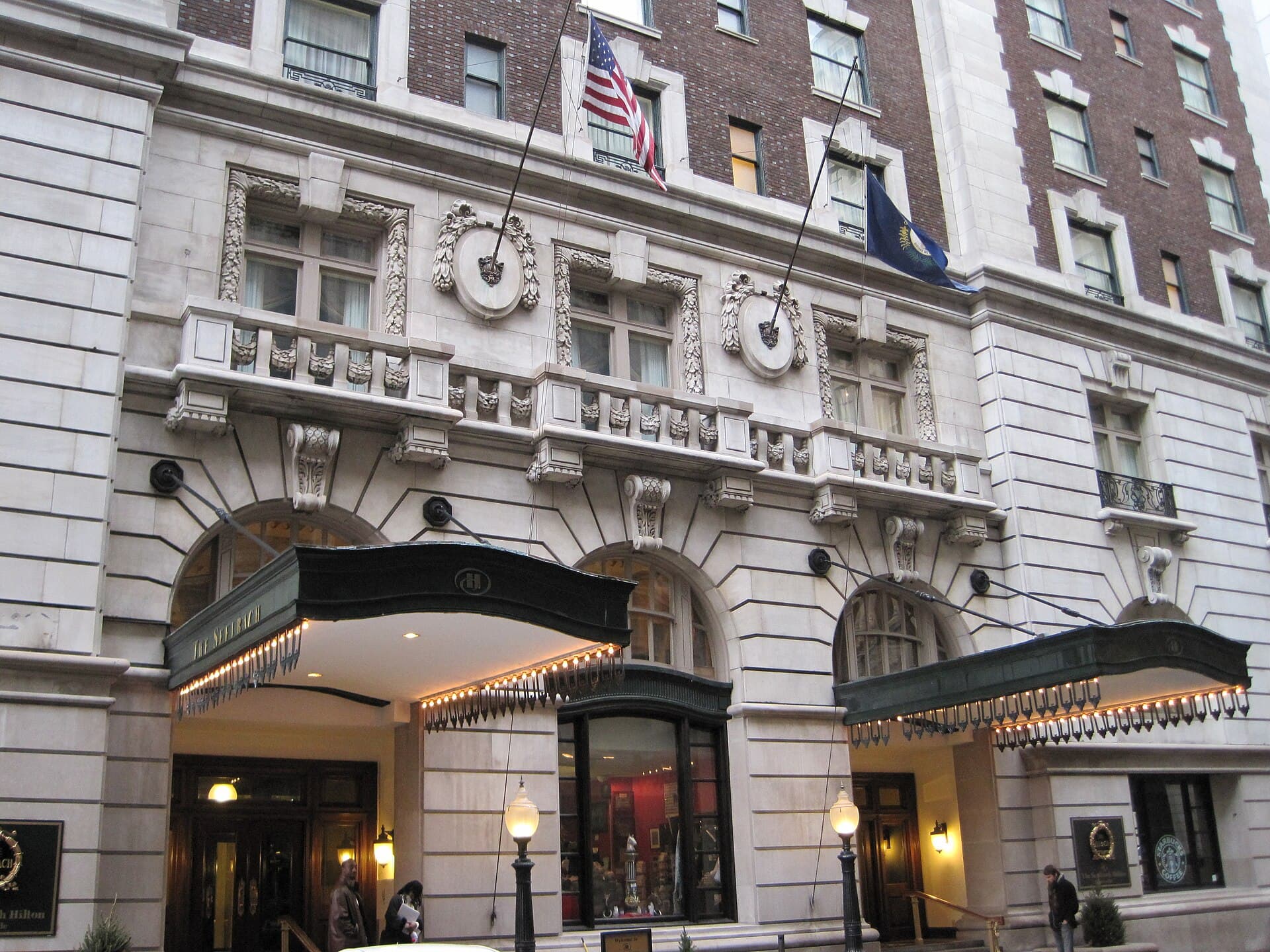
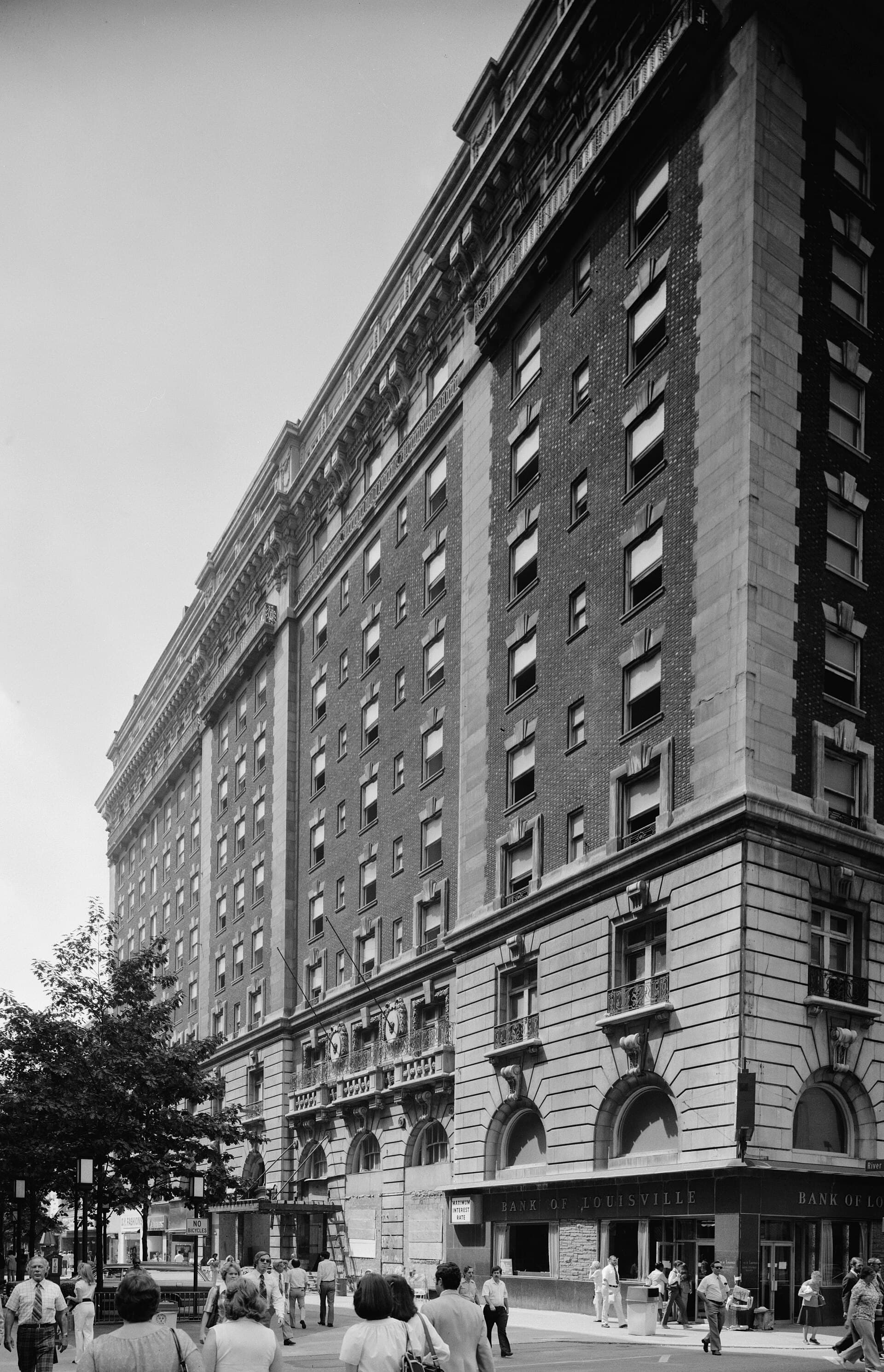
F. Scott Fitzgerald, a young lieutenant stationed at Camp Zachary Taylor outside Louisville in 1918, spent enough evenings at the Seelbach to use it later: in The Great Gatsby, Tom Buchanan marries Daisy at the Muhlbach Hotel in Louisville, and the Seelbach is the house he had in mind. The Seelbach Hotel opened on Fourth Street in Louisville, Kentucky, in May 1905, built by Louis and Otto Seelbach, brothers from Bavaria who had run a restaurant and bar in the city since the 1870s.
History
The brothers hired Frank Mills Andrews, a Dayton architect, and told him to build the finest hotel in the South; it cost them close to a million dollars and was enlarged within two years. Presidents followed: William Howard Taft, Woodrow Wilson, Franklin D. Roosevelt, Harry Truman and John F. Kennedy among them. During Prohibition Al Capone played cards in the Oakroom, where a mirror let him watch the door and a passage to the alley let him leave. The hotel closed in 1975 as downtown emptied, and a restoration brought it back in 1982. It has carried the Hilton name since the 1990s and has been on the National Register of Historic Places since 1975. The Seelbach cocktail, bourbon and champagne with triple sec and bitters, was presented in 1995 as a rediscovered 1917 recipe; its creator, the hotel's bar manager, admitted in 2016 that he had invented it.
Architecture and design
Andrews built in Beaux-Arts style, ten storeys of brick and stone over a lobby of marble from Italy and Switzerland, bronze fittings and a painted ceiling. Murals of Kentucky pioneer history run around the lobby walls. Below ground, the Rathskeller of 1907 is the hotel's rarest room: walls, pillars and vaulted ceiling are faced in Rookwood pottery from Cincinnati, with pelicans on the columns as symbols of good luck, and it is the only room of its kind still standing. The Grand Ballroom on the top floor and the Oakroom, the former gentlemen's billiard room, keep their original panelling.
Rooms and suites
Rooms on the ten floors vary in size, with named suites on the upper floors facing Fourth Street. Rooms on the street side hear the city at night; those at the back are quieter. Corridors and lifts keep the 1905 proportions, wide and high. Derby week, the first Saturday in May, fills the hotel a year in advance.
Dining
The Oakroom is the hotel's formal restaurant, in the panelled billiard room where Capone played, and serves a menu built on Kentucky produce and bourbon. The Old Seelbach Bar, off the lobby, is the city's reference bourbon bar and the home of the Seelbach cocktail. A café handles breakfast.
Weddings and events
The Rathskeller, the Grand Ballroom and the Oakroom are the three rooms couples ask for, the first for its Rookwood walls, the second for its scale and the third for dinners. The hotel also holds Derby parties and corporate meetings in its ballroom and smaller function rooms, and offers catering for all of them.
Location
The Seelbach stands at 500 South Fourth Street in downtown Louisville, beside the Fourth Street Live entertainment block and within walking distance of the Muhammad Ali Center, the Louisville Slugger Museum and the Ohio riverfront. Louisville Muhammad Ali International Airport is about 15 minutes by car, and Churchill Downs about ten. It is the luxury hotel in Louisville with the longest memory.
At a glance
What sets it apart
- 01Opened May 1905 by Louis and Otto Seelbach; designed by Frank Mills Andrews
- 02Model for the Louisville hotel in F. Scott Fitzgerald's The Great Gatsby
- 03Rathskeller of 1907 faced entirely in Rookwood pottery, the last of its kind
- 04Oakroom restaurant in the former billiard room where Al Capone played cards
- 05Old Seelbach Bar, home of the Seelbach cocktail
Chronology
Dates that matter
1905
The Seelbach opens in May on Fourth Street.
1907
The Rookwood-lined Rathskeller is completed.
1918
F. Scott Fitzgerald, stationed at Camp Zachary Taylor, frequents the hotel.
1975
The hotel closes and is listed on the National Register of Historic Places.
1982
The restored hotel reopens.
1995
The Seelbach cocktail is introduced as a rediscovered recipe, later admitted to be new.