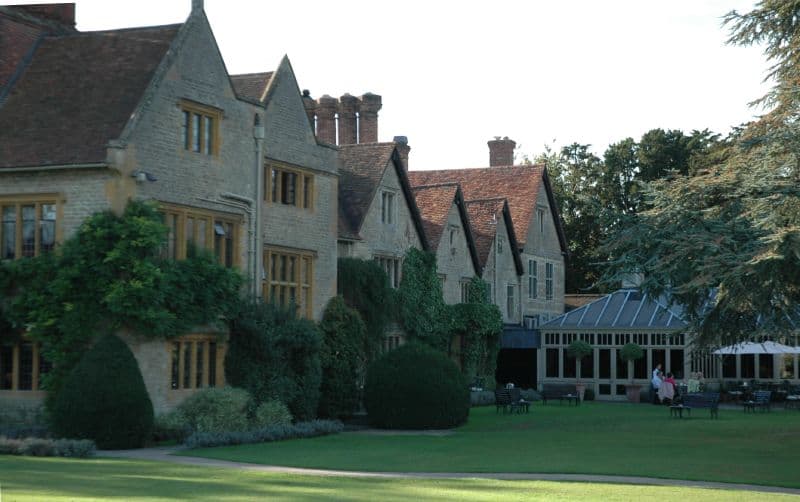
Braemar sits high in the Cairngorms, on the road that climbs from Deeside towards Glenshee, and at its main crossroads stands a large granite Victorian inn. The Fife Arms takes its name from the Earls of Fife, whose Mar Lodge estate lies just west of the village. In 2014 the building was bought by Iwan and Manuela Wirth, founders of the gallery Hauser & Wirth, and after a long restoration it reopened in December 2018 as a luxury hotel in Braemar where Highland history and contemporary art occupy the same rooms.
History
The inn was built in the Victorian era as a coaching stop for travellers on Deeside. The valley had become fashionable once Queen Victoria and Prince Albert made Balmoral their Highland home in the middle of the nineteenth century, and visitors followed the court up the Dee. Sportsmen came for the shooting and fishing, walkers for the hills, and later motorists for the long drive over the Cairnwell. By the early 2010s the old hotel had grown tired, and the Wirths set out to restore it.
The village has its own literary and royal history, and the hotel draws on both. Robert Louis Stevenson spent the summer of 1881 in a cottage in Braemar and began writing Treasure Island there. Each September the Braemar Gathering, the Highland games regularly attended by the monarch, fills the village with spectators, pipers and competitors.
Architecture and design
The restoration was led by Moxon Architects, who repaired the Victorian structure and reorganised the building for modern use, and the interiors were designed by Russell Sage. The result is deliberately rich: tartan, antlers, taxidermy, antique furniture and patterned papers, mixed with contemporary pieces chosen by the owners.
Art runs through the house. The Chinese painter Zhang Enli painted the ceiling of the drawing room, and a large spider sculpture by Louise Bourgeois stands in the courtyard. Works by Pablo Picasso and Lucian Freud hang near watercolours by Queen Victoria, and many objects were acquired because they relate to the region, its natural history or its people. The effect is closer to a private collector's house than a hotel lobby.
Rooms and suites
There are 46 bedrooms, each decorated around a theme drawn from Scottish culture, the natural history of the Cairngorms or the story of the inn and its guests. No two are alike. Furniture, fabrics and pictures were chosen room by room, so that a stay here involves a good deal of looking.
Dining
The Clunie Dining Room takes its name from the Clunie Water, the river that runs through the village, and its menus are built on Scottish produce, including game from the surrounding hills and seafood from the coast. The Flying Stag is the public bar, used by villagers as well as hotel guests. Elsa's, a smaller cocktail bar, is named after the couturier Elsa Schiaparelli.
Location
The hotel stands in the centre of Braemar, inside the Cairngorms National Park, the largest national park in Britain. Braemar Castle, a seventeenth-century tower house, stands on the edge of the village. Balmoral Castle is about nine miles east along the Dee, with Ballater beyond it, and the Glenshee ski centre lies to the south over the Cairnwell Pass. The Linn of Dee, a narrow rocky gorge on the river, is a favourite outing west of the village, and the surrounding hills are walked, fished and stalked through the seasons. Aberdeen Airport is the nearest airport, around an hour and a half away by car.
At a glance
What sets it apart
- 01Drawing room ceiling painted by the Chinese artist Zhang Enli
- 02Louise Bourgeois spider sculpture in the courtyard
- 0346 bedrooms, each decorated around its own theme
- 04Restoration by Moxon Architects, interiors by Russell Sage
- 05Owned by Hauser & Wirth founders Iwan and Manuela Wirth
Chronology
Dates that matter
1852
Prince Albert buys Balmoral, drawing visitors up Deeside towards Braemar.
1881
Robert Louis Stevenson spends the summer in Braemar and begins Treasure Island.
2014
Iwan and Manuela Wirth buy The Fife Arms.
2018
The Fife Arms reopens in December after its restoration.