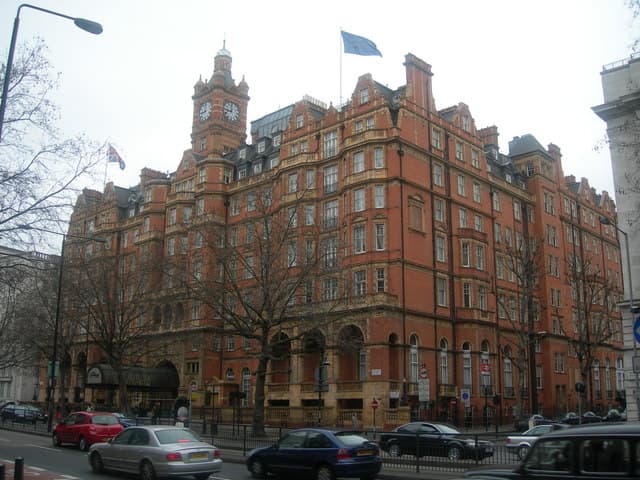
Marylebone station was the last of London's great termini, opened in 1899 by the Great Central Railway, and the railway age required a hotel beside it. Sir John Blundell Maple, of the Tottenham Court Road furniture firm, paid for one, and Robert William Edis designed it: the Great Central Hotel, 700 rooms of red brick and terracotta on Marylebone Road, with a carriage courtyard at its heart. More than a century later that courtyard is the glass-roofed Winter Garden of The Landmark London, and the hotel is one of the few in the city where the building explains itself as soon as you walk in.
History
The Great Central was the wrong hotel at the wrong time. The railway that fed it never carried the traffic of its rivals, and by the First World War the building had been requisitioned as a convalescent home for officers. It never went back to being a hotel for long. In the Second World War it housed the Army, and from 1945 it was the headquarters of the British Railways Board, known to a generation of railwaymen simply as 222 Marylebone Road. The courtyard was roofed over for offices and the ballrooms became canteens.
Privatisation freed the building in the 1980s. A Japanese developer restored it, reopening it in 1993 as the Regent London, and in 1995 the Lancaster Landmark Hotel Company, owned by the Thai Jatuchai family, bought it and gave it its present name. The building is Grade II listed.
Architecture and design
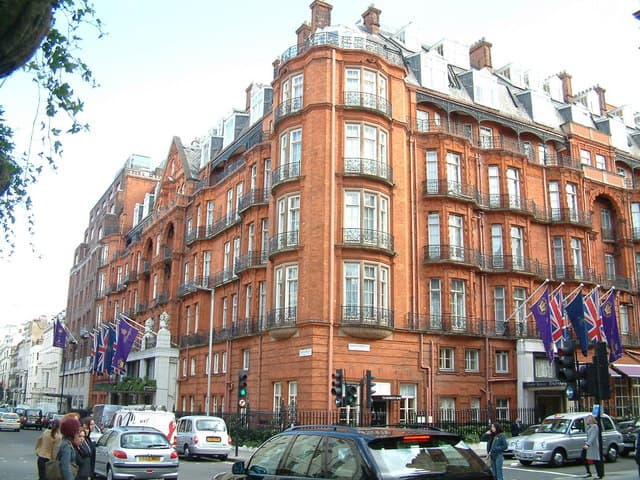
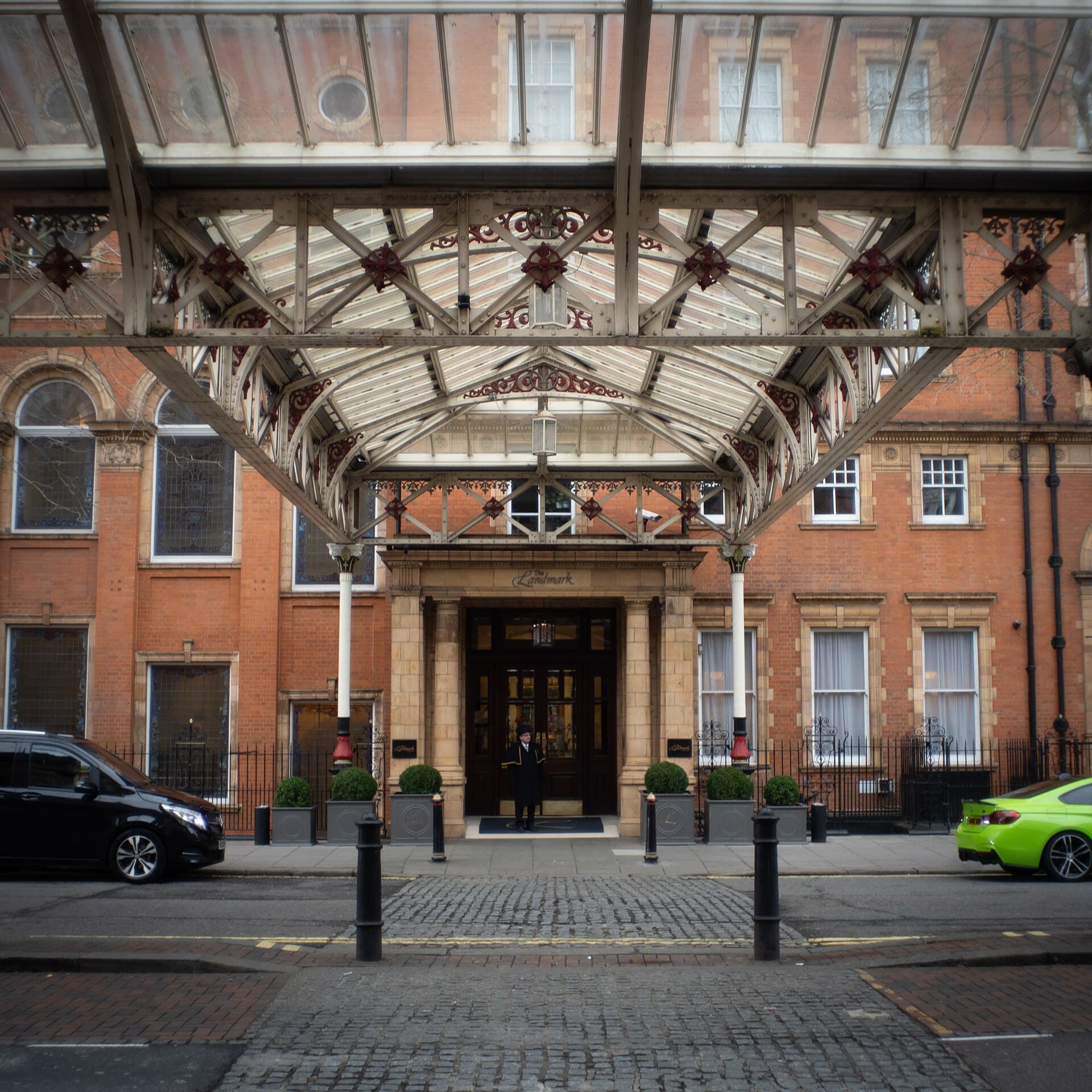
Edis's facade is late-Victorian Queen Anne revival, with a clock tower, gables and a mass of terracotta ornament; the Marylebone Road entrance has a porte-cochère for carriages. The 1990s restoration made one decision that defines the hotel: the old carriage courtyard was glazed over at the top, eight storeys up, and planted with palm trees. The Winter Garden that resulted is the lobby, the restaurant and the afternoon-tea room in one, and every inward-facing bedroom corridor looks down into it. The original staircases, marble and mosaic floors, and the plaster ceilings of the ballroom survived the office years and were cleaned rather than remade.
Rooms and suites
The Landmark has around 300 rooms and suites, large by London standards because the Victorian plan was never subdivided; standard rooms start at about 50 square metres. Rooms either face the atrium, quiet and leafy, or look outward over Marylebone Road and the station roof. Bathrooms are marble with separate baths and showers. The suites on the upper floors include the Presidential Suite and a set of one-bedroom suites with sitting rooms; decoration throughout is classical, with heavy curtains and mahogany.
Dining
The Winter Garden restaurant serves breakfast, lunch and dinner under the palms and is where the hotel's afternoon tea is taken, with a pianist in the gallery. The Great Central Bar is the panelled bar off the entrance, and Twotwentytwo, named after the building's old address, is a bar and dining room on the Marylebone Road side with its own entrance.
Wellness
The spa and health club in the basement has a 15-metre swimming pool, a sauna, a steam room and a gym, plus treatment rooms. It is one of the larger hotel pools in central London.
Weddings and events
The Grand Ballroom, with its restored Victorian ceiling and chandeliers, is the main room for weddings and dinners. The Drawing Room, the Empire Room and the Music Room are the mid-sized spaces, each with period detail, and a run of boardrooms takes meetings. The hotel holds a civil ceremony licence and hosts weddings of all sizes, Asian weddings among them, with the Winter Garden available for drinks receptions. As a luxury hotel in London with a railway station next door, it is a straightforward choice for guests arriving from the Chilterns and the Midlands.
Location
222 Marylebone Road stands directly beside Marylebone station, with Baker Street Underground station a short walk east. Regent's Park, Madame Tussauds and the shops of Marylebone High Street are all close. Heathrow is about 25 km by road, and the Heathrow Express from Paddington, one stop away on the Bakerloo line, takes 15 minutes to the airport.
At a glance
What sets it apart
- 01Opened 1899 as the Great Central Hotel by Robert William Edis
- 02Eight-storey glass-roofed Winter Garden atrium with palm trees
- 03British Railways Board headquarters from 1945 to the 1980s
- 04Around 300 rooms from about 50 m², large for central London
- 0515-metre pool in the basement spa, Grade II listed building
Chronology
Dates that matter
1899
The Great Central Hotel opens beside the new Marylebone station, financed by Sir John Blundell Maple.
1945
The building becomes the headquarters of British Railways, 222 Marylebone Road.
1993
After restoration the building reopens as a hotel, the Regent London.
1995
The Lancaster Landmark Hotel Company buys it and renames it The Landmark London.