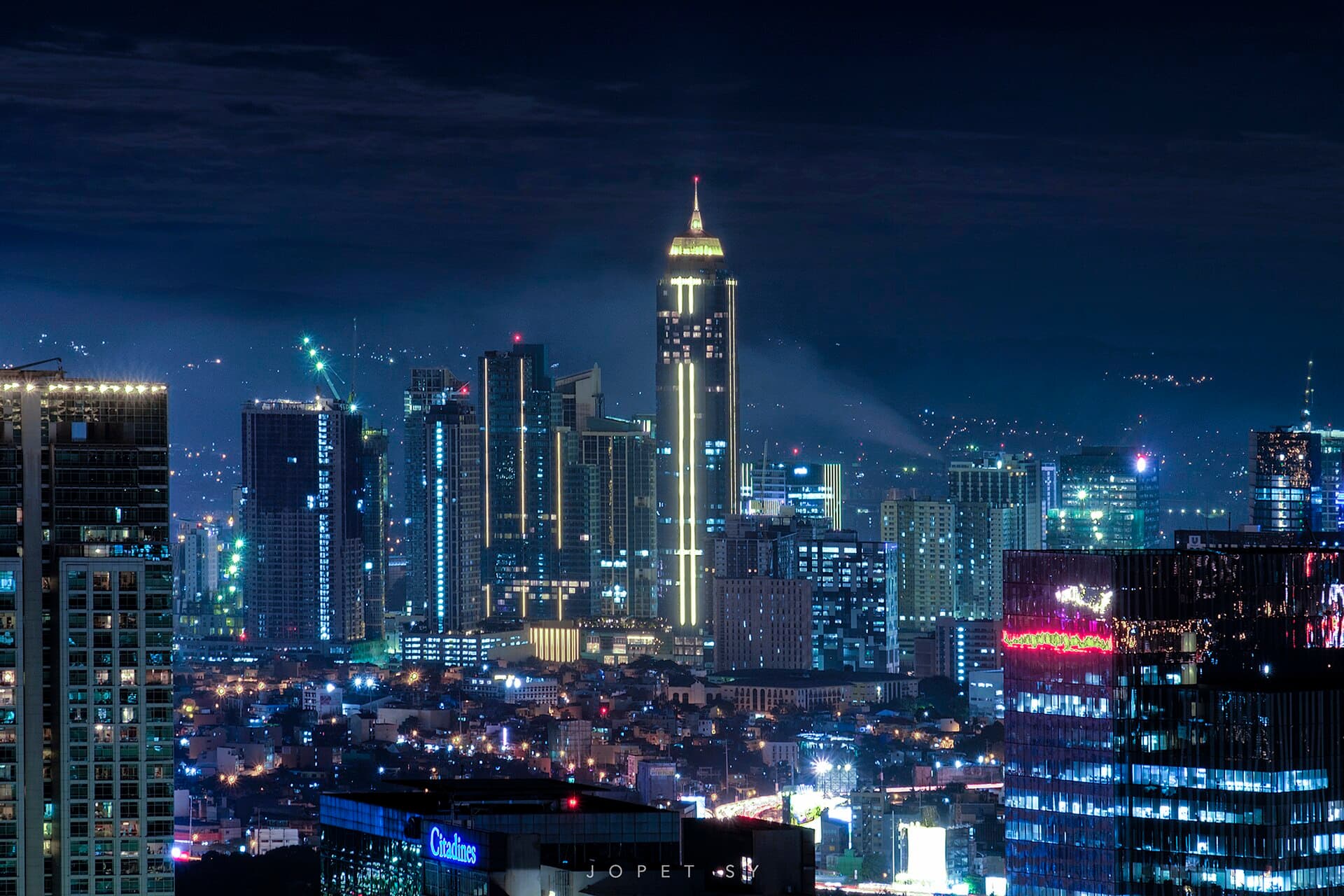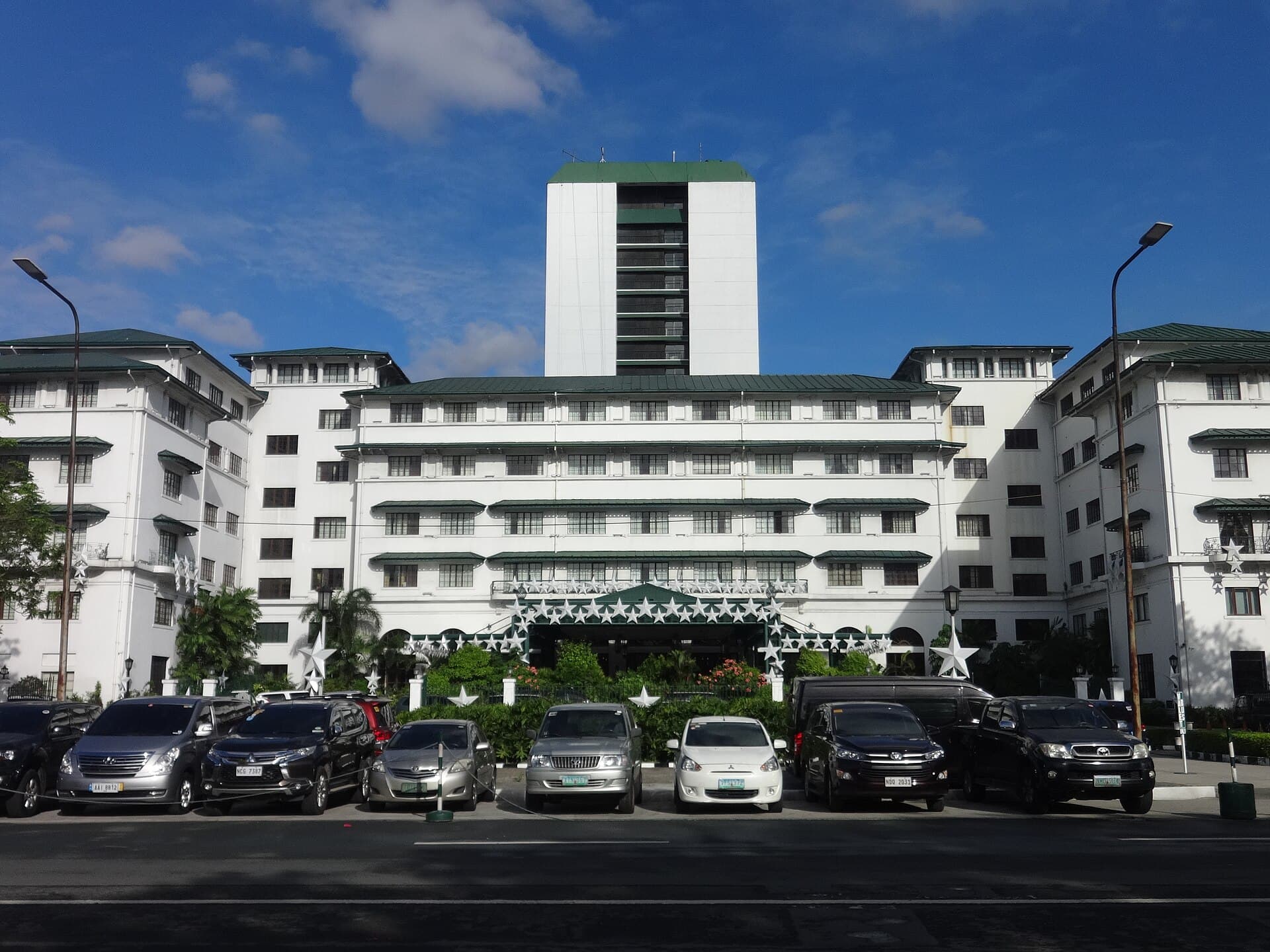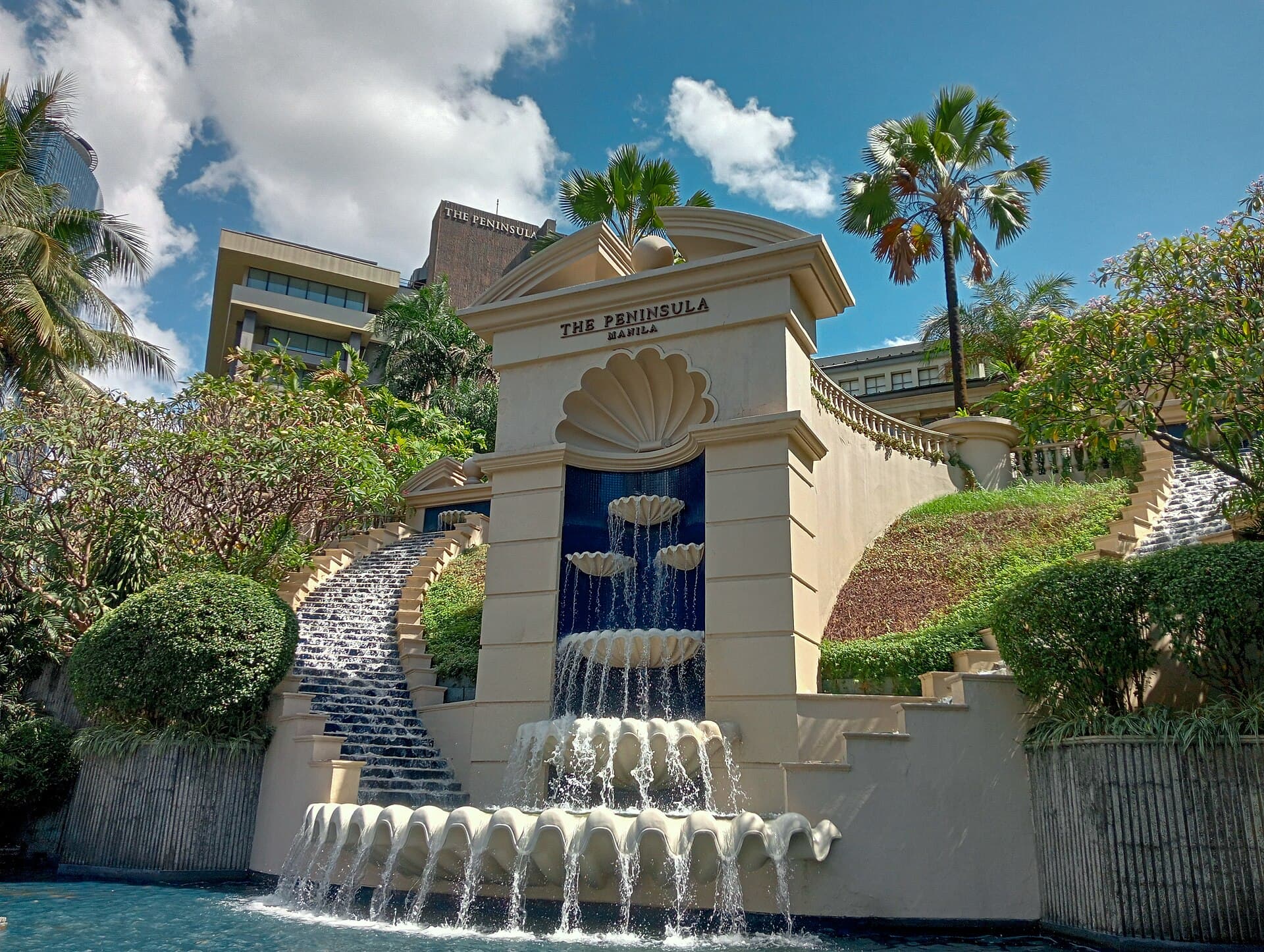

Every taxi driver in Metro Manila knows the corner of Ayala Avenue and Makati Avenue, and most of them call it simply the Pen. The Peninsula Manila has stood there since 1976, two towers either side of a lobby whose ceiling rises three floors, and the city's business district has grown up around it. It is the Hongkong and Shanghai Hotels group's second hotel outside Hong Kong, and the one with the strongest hold on its city.
History
The hotel opened on 14 September 1976, one of a dozen built in a rush before the IMF and World Bank annual meeting that Manila hosted that October. It was the group's first Peninsula outside Hong Kong after the original of 1928, and it set the pattern the brand later followed in Beverly Hills, New York and Bangkok: a central lobby open to the public, afternoon tea as a civic ritual, and a fleet of green cars.
On 29 November 2007 the hotel became the stage for the Manila Peninsula siege. Senator Antonio Trillanes and a group of officers facing trial for an earlier coup attempt walked out of their court hearing and occupied the hotel's second floor, calling for the resignation of President Arroyo. After an ultimatum passed, an armoured vehicle drove through the lobby doors, tear gas followed, and the group surrendered that evening. The lobby was repaired and reopened within days; the episode is now part of the hotel's story, told without much drama by staff who were there.
In 2026 the hotel marks fifty years in operation.
Architecture and design
The plan is simple: two mid-rise towers, the Ayala Tower and the Makati Tower, joined by the Lobby at ground level. That Lobby is the design. It runs the width of the building under a coffered ceiling, with a mezzanine gallery along two sides and a string orchestra playing in the afternoons. At its centre hangs the Sunburst, a radiating sculpture by the National Artist Napoleon Abueva, which has been the hotel's emblem since it opened. A renovation in the 2000s refreshed the rooms and restaurants but left the Lobby's proportions alone.
Rooms and suites
The two towers hold around 470 rooms and suites, large by Manila standards and finished in the Peninsula manner: pale wood, marble bathrooms, a bedside panel that runs the lights and curtains, and a valet box in the hallway for shoes and pressing. Higher floors look across the Makati skyline, and the suites on the upper floors of each tower have separate dining rooms and dressing rooms.
Dining
The Lobby is the first restaurant, serving breakfast through to a late supper and the afternoon tea for which the hotel is known. Old Manila is the fine-dining room, with a grill and a long wine list. Spices serves Southeast Asian cooking in a room off the lobby, and Escolta, named after the old Manila shopping street, is the buffet restaurant. The Bar is the drinking room, and Salon de Ning, the brand's cabaret-style lounge, opens on the lower level in the evenings.
Wellness
The Peninsula Spa occupies its own floor with treatment rooms, a relaxation lounge and steam and sauna areas. The outdoor pool sits in a garden between the two towers, screened from the avenues by trees, and the fitness centre next to it is open around the clock.
Weddings and events
The Rigodon Ballroom is the main room, named after the formal dance of Philippine society balls, and the hotel has a set of smaller function rooms on the mezzanine level for board meetings and private dinners. Weddings are part of the hotel's business in a city where church ceremonies at Makati's San Antonio or Santuario de San Antonio are followed by hotel receptions, and the Rigodon has hosted generations of them. Conferences use the ballroom and the adjoining rooms.
Location
The hotel stands at the junction of Ayala Avenue and Makati Avenue in the Makati Central Business District, across from the Ayala Center malls and within walking distance of the stock exchange and the Ayala Triangle gardens. Ninoy Aquino International Airport is about 9 km south, between 25 minutes and an hour by car depending on the traffic. Ayala station on the MRT-3 line is on EDSA, a short walk down Ayala Avenue. For a luxury hotel in Makati it has the simplest address in the city.
At a glance
What sets it apart
- 01Opened 14 September 1976 for the IMF and World Bank meeting
- 02Three-storey Lobby with Napoleon Abueva's Sunburst sculpture
- 03Two towers, Ayala and Makati, at the centre of the business district
- 04Rigodon Ballroom for weddings and conferences
- 05Scene of the Manila Peninsula siege of 29 November 2007
Chronology
Dates that matter
1976
The Peninsula Manila opens on 14 September ahead of the IMF and World Bank annual meeting.
2007
The Manila Peninsula siege: officers led by Antonio Trillanes occupy the hotel on 29 November and surrender the same day.
2026
The hotel marks fifty years in operation.