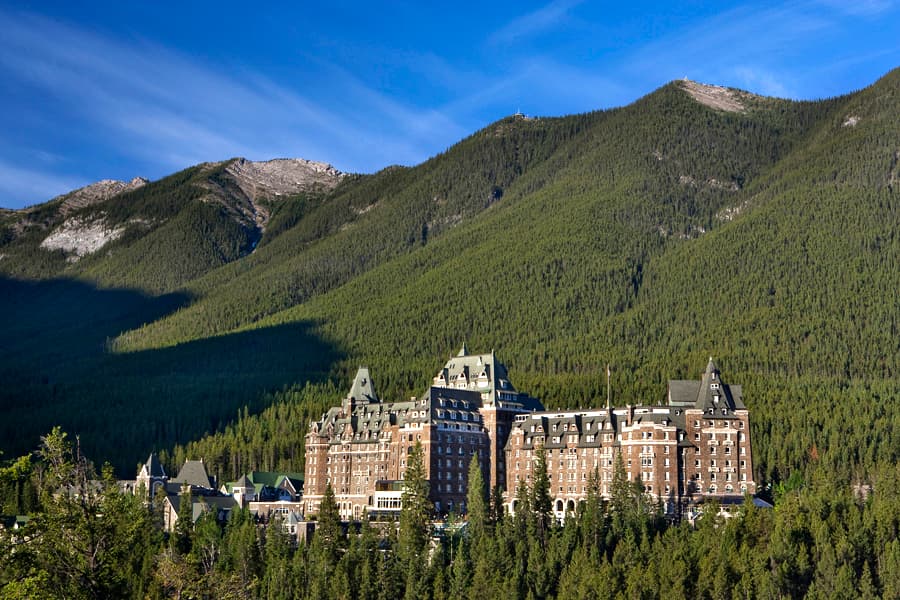
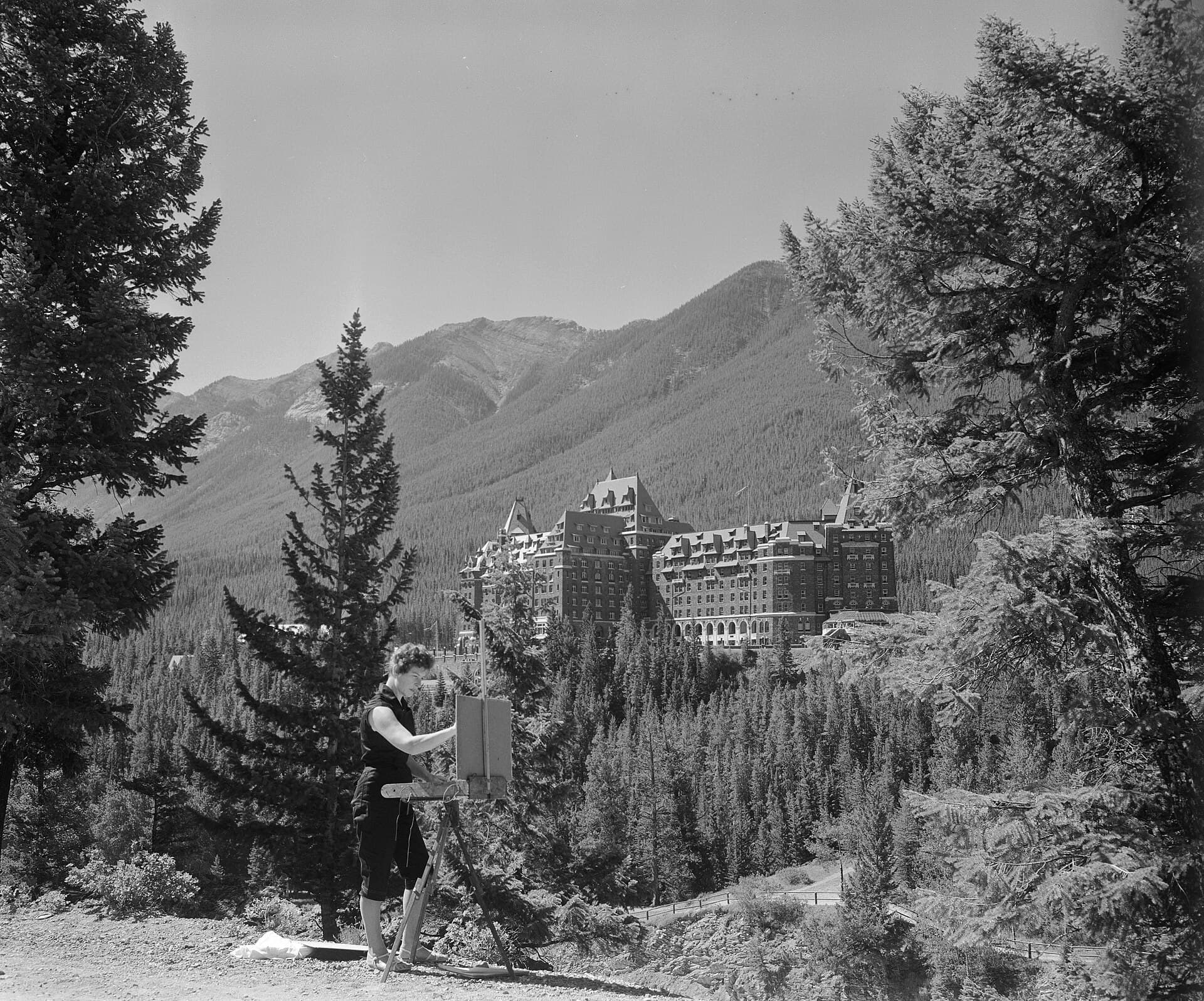
Fairmont Banff Springs rises above the junction of the Bow and Spray rivers in Banff National Park, Alberta, a Scottish baronial castle of grey Rundle stone that the Canadian Pacific Railway opened in 1888. It is the model of the Canadian railway hotel, a National Historic Site of Canada and the most photographed luxury hotel in Banff, with a golf course, a spa and ballrooms that fill with weddings every summer.
History
The railway reached the Rockies in the 1880s and William Cornelius Van Horne, general manager of the Canadian Pacific Railway, decided to turn the hot springs at Banff into a destination for wealthy travellers. The first Banff Springs Hotel, a wooden building by the New York architect Bruce Price, opened on 1 June 1888. Demand outgrew it within two decades. From 1911 the company replaced it in stages with a stone hotel: the central tower by Walter Painter opened in 1914, and after a fire destroyed the surviving wooden north wing in 1926, the architect J. W. Orrock completed the present building in 1928.
The hotel closed each winter until 1969, when it began to operate year-round for the ski season. It was designated a National Historic Site of Canada in 1988 and passed with the other Canadian Pacific hotels to the Fairmont brand in 1999. Marilyn Monroe stayed here in 1953 while filming River of No Return in the park, and the hotel has received royalty, prime ministers and film crews in the decades that followed.
Architecture and design
The building is in the Scottish baronial style, with turrets, steep roofs and stepped gables in local Rundle limestone, cut on Mount Rundle across the valley. Inside, Mount Stephen Hall is a Gothic hall with a vaulted timber ceiling, stone arches and stained glass, named after the first president of the railway. Oak panelling, stone fireplaces and long stone corridors give the public rooms the atmosphere of a castle, and the terrace on the south side looks down the Bow Valley towards Mount Rundle and the Fairholme Range.
Rooms and suites
The hotel has 724 rooms and suites across the main building and the Manor wing. Rooms vary widely in size and shape because the building grew in stages; many have window seats cut into the thick stone walls, and the upper floors look towards the valley or the Spray River. Fairmont Gold floors offer a private lounge and concierge.
Dining
The hotel counts a dozen restaurants and bars. The 1888 Chop House takes its name from the opening year and serves Alberta beef. The Rundle Bar occupies a lounge opening onto the terrace. Other rooms cover breakfast, Italian, Alpine and casual dining, and the golf clubhouse has its own restaurant in season.
Wellness
The Willow Stream Spa has mineral pools fed with hot water, a waterfall whirlpool, treatment rooms and an indoor pool. The hotel also has an indoor and outdoor pool complex for guests and a fitness centre. The Banff Springs Golf Course, laid out by Stanley Thompson in 1928 along the Bow River beneath Mount Rundle, is open from spring to autumn; in winter the hotel serves the ski areas of Sunshine Village, Lake Louise and Mount Norquay.
Weddings and events
The hotel is one of the busiest wedding venues in western Canada. Ceremonies take place on the terrace, in Mount Stephen Hall or in the smaller salons, and receptions in the Cascade Ballroom, the largest room, or in Mount Stephen Hall itself. The conference centre adjoining the main building takes meetings and exhibitions of several hundred delegates, and the hotel regularly hosts corporate retreats and incentive groups drawn by the park setting.
Location
The hotel is at 405 Spray Avenue; the centre of Banff is a 15-minute walk or a short shuttle ride. Calgary International Airport lies about 145 kilometres east along the Trans-Canada Highway, roughly 90 minutes by car or coach, and the Banff Upper Hot Springs and the Sulphur Mountain gondola are a few minutes off by road.
At a glance
What sets it apart
- 01Opened 1 June 1888 by the Canadian Pacific Railway under William Van Horne
- 02Rebuilt in Rundle limestone between 1911 and 1928 in Scottish baronial style
- 03National Historic Site of Canada since 1988
- 04Stanley Thompson golf course along the Bow River, opened 1928
- 05Year-round operation since 1969; Willow Stream Spa with mineral pools
Chronology
Dates that matter
1888
The wooden Banff Springs Hotel by Bruce Price opens on 1 June.
1914
Walter Painter's central stone tower opens.
1926
Fire destroys the remaining wooden north wing.
1928
J. W. Orrock completes the present building; the Stanley Thompson golf course opens.
1969
The hotel stays open through its first winter season.
1988
Designation as a National Historic Site of Canada.
1999
Canadian Pacific Hotels adopts the Fairmont name.