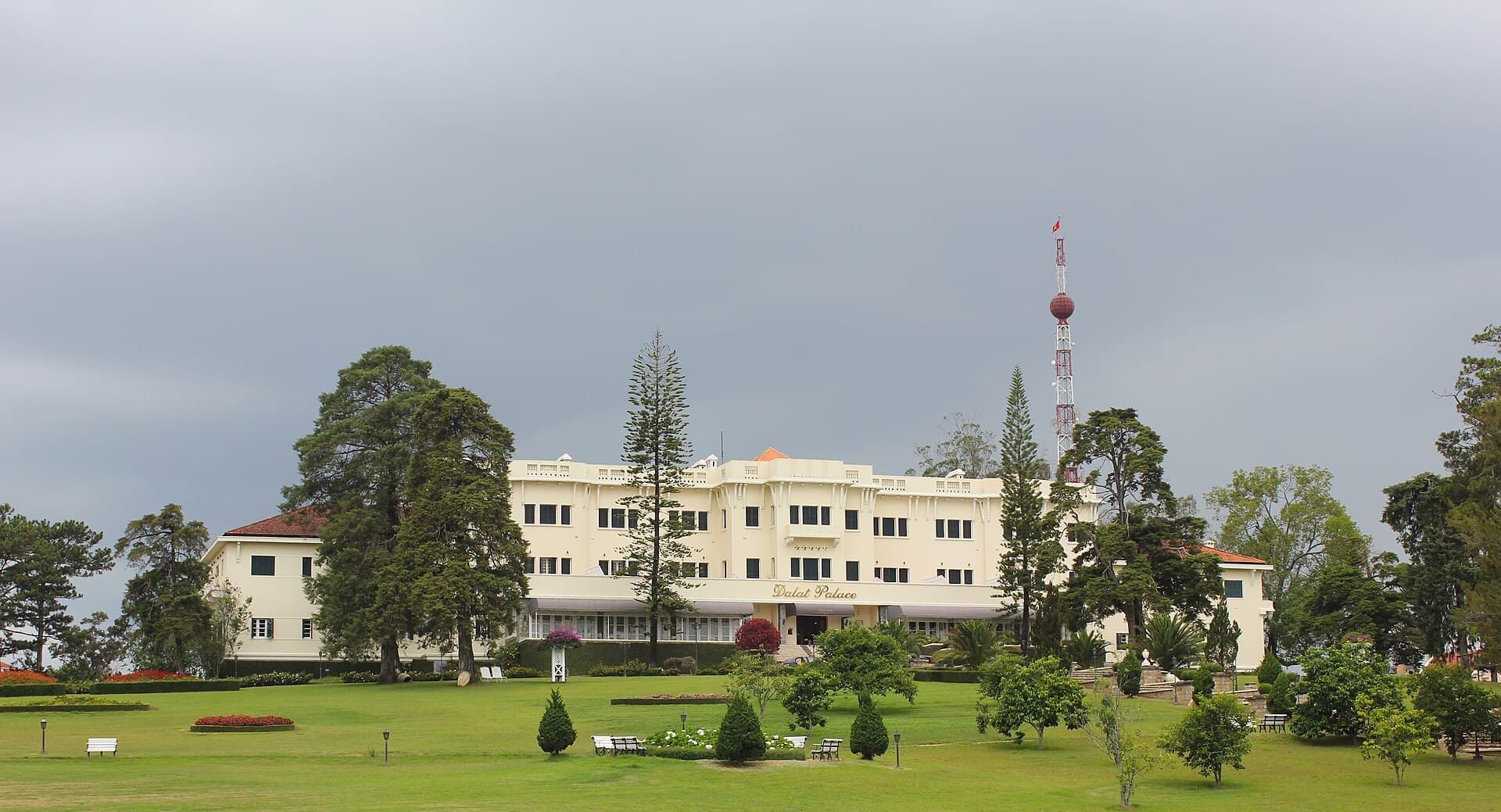

The French began building Da Lat as a hill station in the years before the First World War, on a plateau at 1,500 metres where the air was cool enough to grow strawberries and roses. In 1922 the colony's grandest hotel opened there, the Langbian Palace, on a rise above the lake that would later be named Xuan Huong. Dalat Palace Heritage Hotel is the same building, on the same lawn, at 2 Tran Phu street.
History
The Langbian Palace was named after the mountain that overlooks the town. It received governors-general, planters and officers escaping the heat of Saigon, and in 1933 it gained a neighbour when Emperor Bao Dai built his summer residence a short drive away. After 1954 the hotel passed through state hands and lost much of its character. In the early 1990s Larry Hillblom, the co-founder of the courier company DHL, took a lease and financed a reconstruction that cost far more than the building was worth, with the aim of making it look as it had in the 1920s. The hotel reopened in 1995 as the Sofitel Dalat Palace; Hillblom died in a plane crash off Saipan the same year. The hotel later left the Sofitel brand and took its present name.
Architecture and design
The building is a long two-storey block in the French colonial manner, with a central pediment, a slate mansard roof and rows of tall shuttered windows. Hillblom's reconstruction removed the modernist alterations of the post-war decades and restored the façade, the parquet floors and the fireplaces. Inside, the lobby and salons are furnished with period pieces, oil paintings and chandeliers; the long veranda along the lake side is the best place to understand why the French chose this spot.
Rooms and suites
There are 43 rooms, including seven suites, which is small for a building of this size and explains the generous proportions of each. Rooms have working fireplaces, claw-foot baths and high ceilings; the lake-facing rooms on the first floor are the ones to ask for. The heritage wing of the hotel is the whole building: there is no modern annexe.
Dining
Le Rabelais, the main restaurant, serves classical French cooking in a formal room with a terrace towards the lake. Larry's Bar, named after Hillblom, occupies a vaulted cellar and keeps a billiard table and a long list of whiskies. Afternoon tea is served in the lobby lounge.
Wellness
The hotel has a small spa with treatment rooms and a fitness room. The grounds include tennis courts, and guests have access to the Dalat Palace Golf Club across the lake, an 18-hole course that dates from the 1920s and was rebuilt in the 1990s.
Weddings and events
The salons on the ground floor and the lawn above the lake are used for weddings and private dinners. Meetings are held in a function room with natural light. The hotel's size means events are intimate rather than large.
Location
Da Lat is the main town of the Central Highlands of Vietnam, 300 kilometres north-east of Ho Chi Minh City and about 30 kilometres from Lien Khuong airport. The hotel stands on Tran Phu street in the town centre, opposite Xuan Huong lake; the market, the railway station of 1938 and Bao Dai's summer palace are all within a few minutes by car. It is the only luxury hotel in Da Lat whose building predates the Second World War.
At a glance
What sets it apart
- 01Opened in 1922 as the Langbian Palace, the first grand hotel of the hill station
- 0243 rooms and seven suites in the original building, many with fireplaces
- 03Reconstruction financed by DHL co-founder Larry Hillblom, reopened 1995
- 04Le Rabelais restaurant and Larry's Bar in the vaulted cellar
- 05Lawn and veranda above Xuan Huong lake at 1,500 metres
Chronology
Dates that matter
1922
The Langbian Palace opens above the lake of the French hill station of Dalat.
1933
Emperor Bao Dai builds his summer palace a short drive from the hotel.
1995
The hotel reopens as the Sofitel Dalat Palace after a reconstruction financed by Larry Hillblom.
2012
The hotel leaves the Sofitel brand and becomes the Dalat Palace Heritage Hotel.