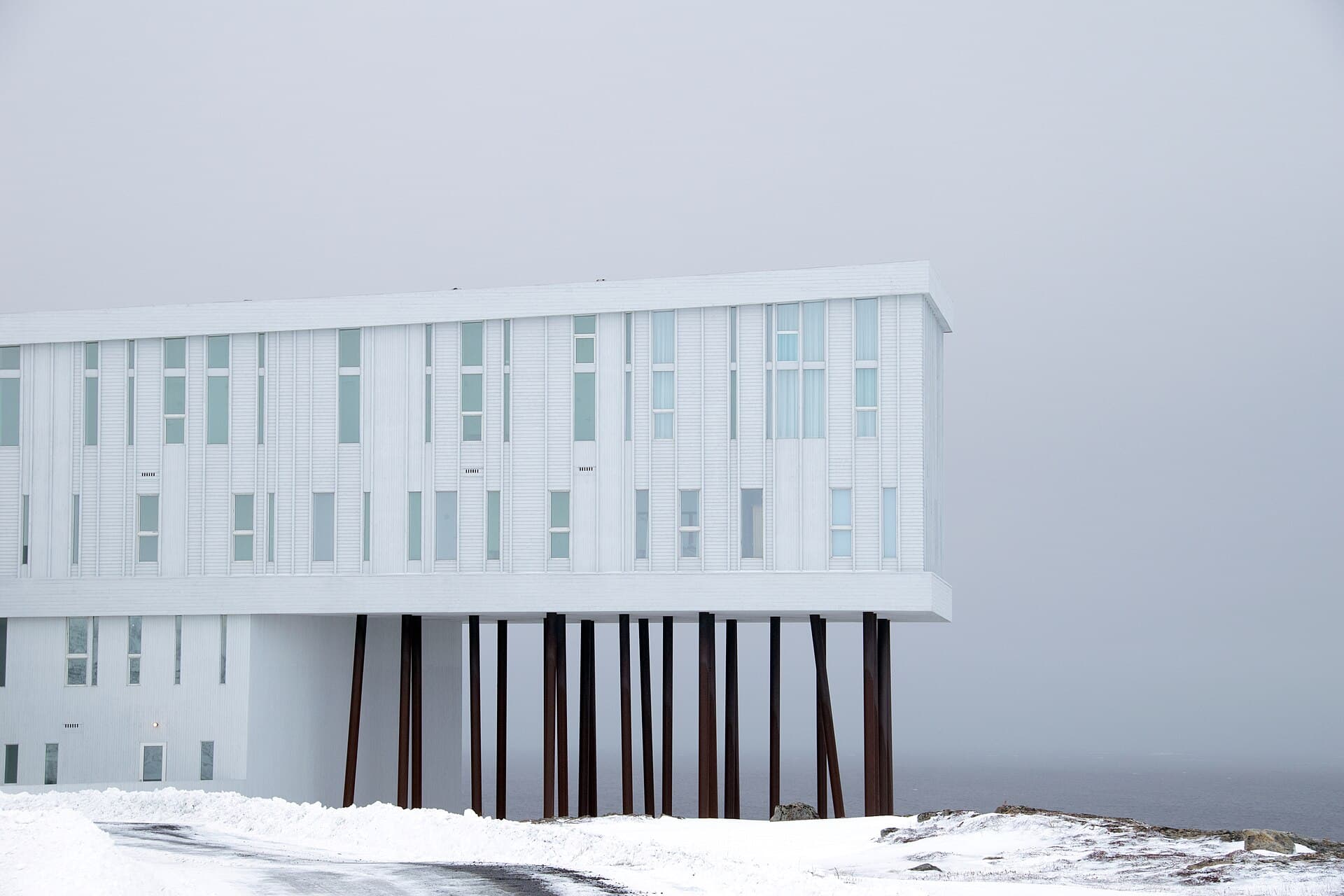
The road from the ferry ends at a white building on stilts, four storeys of glass and timber above the surf at Joe Batt's Arm. Fogo Island Inn, on Fogo Island off the north-east coast of Newfoundland, was never meant to be only a hotel. It is the engine of a plan to keep a 400-year-old fishing community alive after the cod moratorium of 1992 emptied its harbours.
History
Zita Cobb grew up on Fogo Island, left in the 1970s when the inshore fishery collapsed, and made a fortune in fibre optics in the United States. She returned in the early 2000s and, with her brothers Alan and Anthony, founded the Shorefast Foundation in 2003, a registered charity. The foundation's first projects were an artists' residency programme, Fogo Island Arts, and a series of small studios on the shoreline. The inn was the larger piece: a 29-suite hotel that would employ islanders, buy from islanders and send all of its operating surplus back into the foundation. It opened in May 2013.
Shorefast publishes what it calls an economic nutrition label for the inn, a breakdown showing what share of a room rate stays on Fogo Island, in Newfoundland and in Canada. Around half of each night's revenue remains on the island.
Architecture and design
The architect was Todd Saunders, born in Gander, Newfoundland, and based in Bergen, Norway. He had already designed the Fogo Island Arts studios, each a sharp white shape dropped on the rock. The inn follows the same logic at a bigger scale: a long, narrow building in an X plan, clad in white-painted spruce, raised on slender wooden stilts where the ground falls away towards the sea, in the manner of the island's traditional fishing stages. Every suite faces the ocean through floor-to-ceiling glass. Inside, the furniture, quilts, rugs and even wallpaper were designed in collaboration with islanders and made in the island's workshops. Wood-burning stoves heat the rooms. The building also holds a cinema, a library, an art gallery and a heritage library on Fogo Island's history.
Rooms and suites
The 29 suites range over the building's four floors, all with sea views and daybeds set in the window. Larger suites on the upper floors have two levels. Rates include all meals, a half-day orientation with a local community host, and use of the inn's facilities. There are no televisions in the standard suites by design, though the cinema shows films nightly.
Dining
The dining room sits at the end of the building with double-height windows over the water. The kitchen works from what the island provides: cod, snow crab, lobster and whelks in season, berries picked on the barrens in late summer, root vegetables from island gardens, and game and seabirds under traditional licence. Breakfast and lunch are informal. Dinner is a set multi-course menu.
Wellness
On the roof, two wood-fired hot tubs and a sauna look out across the Atlantic towards the icebergs that drift past in spring and early summer. There is a small gym, and treatments can be booked in the suite.
Weddings and events
Fogo Island Inn takes weddings and private celebrations, most often as a full buyout of the 29 suites so that the whole building belongs to one party. The cinema and the dining room serve as the main gathering spaces. The inn also hosts small retreats and board meetings for groups that want isolation.
Location
Fogo Island is reached by car ferry from Farewell, on the Newfoundland mainland, a crossing of about 45 minutes. Gander International Airport is roughly an hour's drive from the ferry terminal. Joe Batt's Arm is one of several small communities on the island, which has a population of about 2,200. Icebergs pass in May and June, whales in summer, and the winter brings sea ice. For a luxury hotel in Newfoundland, the setting is as far from a city as any in Canada.
At a glance
What sets it apart
- 01Twenty-nine suites, all facing the North Atlantic
- 02Building by Todd Saunders on stilts, X plan, white-painted spruce
- 03Owned by the Shorefast Foundation; surpluses stay on Fogo Island
- 04Rooftop sauna and wood-fired hot tubs
- 05Furniture, quilts and textiles made in the island's workshops
Chronology
Dates that matter
1992
The cod moratorium ends the inshore fishery that had sustained Fogo Island for four centuries.
2003
Zita Cobb and her brothers found the Shorefast Foundation.
2013
Fogo Island Inn opens in May with 29 suites.