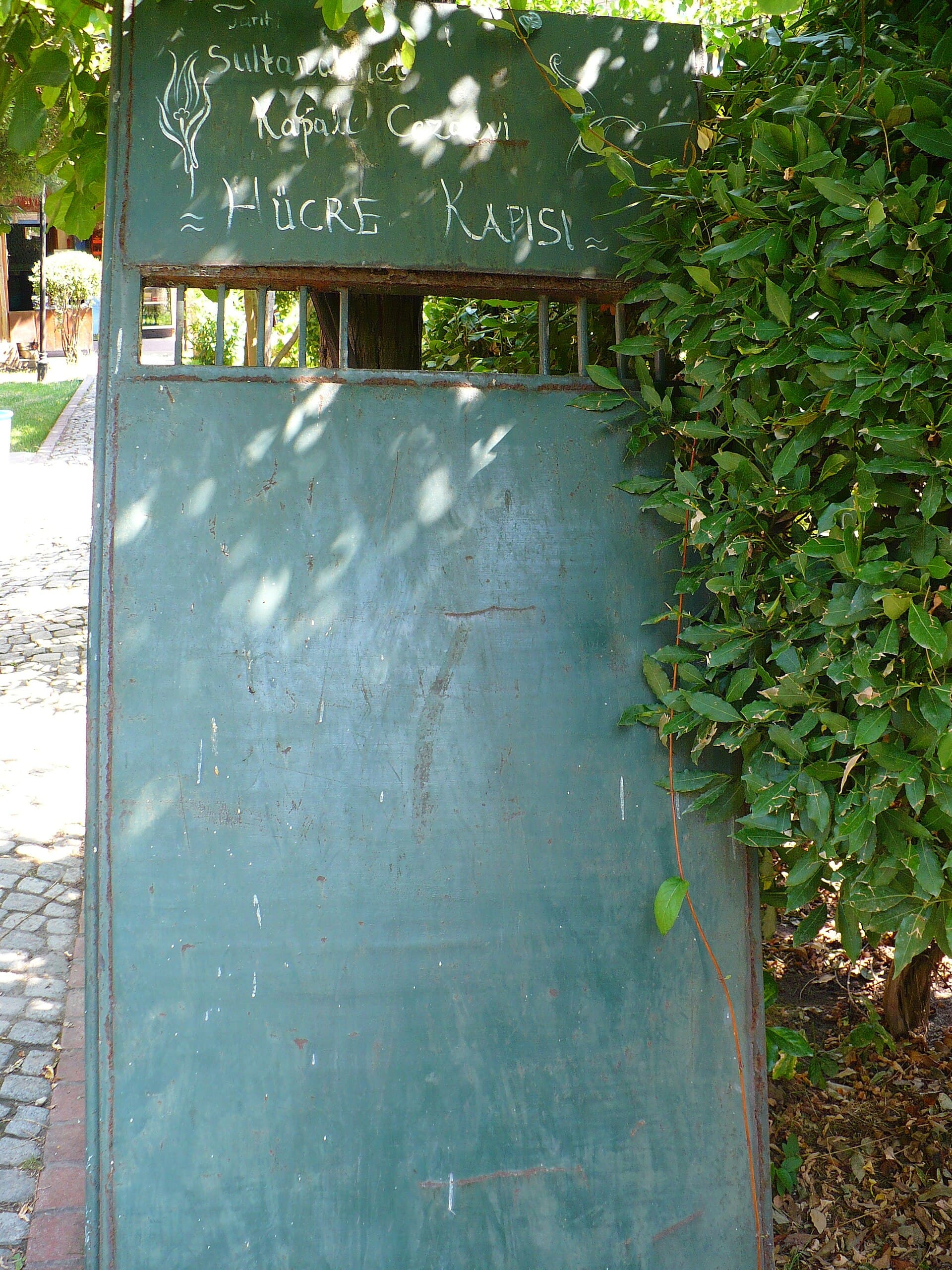
Tevkifhane Sokağı, the street of the detention house, keeps the name of the building on its corner long after the last prisoner left. That building was put up as a jail in the closing years of the Ottoman Empire, with yellow-ochre walls, corner towers and an inner courtyard, on ground between Hagia Sophia and the Blue Mosque. In 1996 it opened as Four Seasons Hotel Istanbul at Sultanahmet, and the courtyard at its centre became a garden.
History
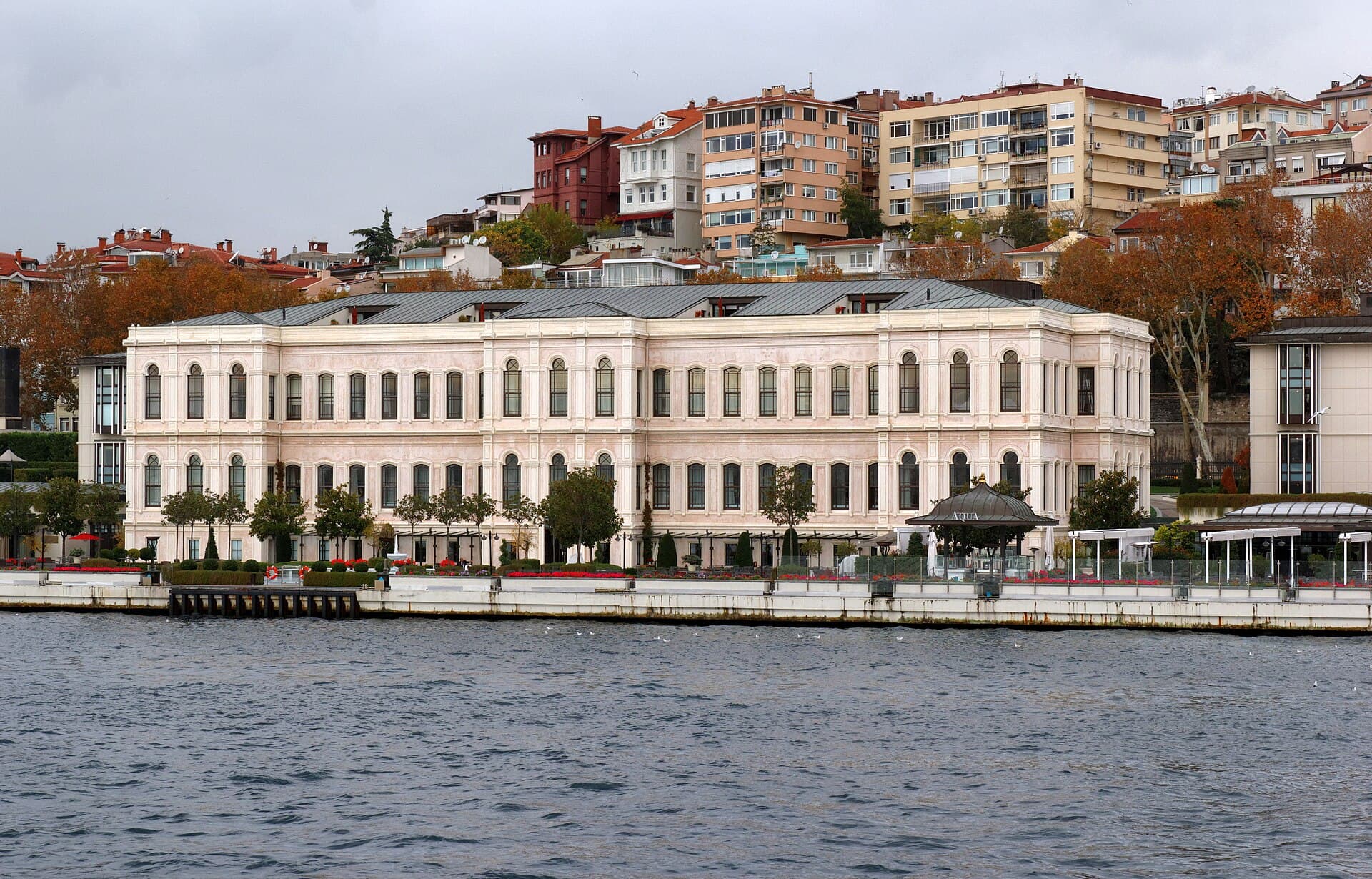
The jail dates from around 1919 and, as the street name says, held people awaiting trial, a use it kept for much of the twentieth century. After it closed the building stood unused until Four Seasons converted it, opening in 1996 with its first hotel in Türkiye. In 2008 the company opened a second Istanbul hotel on the Bosphorus at Beşiktaş, built around the nineteenth-century Atik Paşa mansion, and the original took the suffix 'at Sultanahmet' to tell the two apart.
The ground beneath the neighbourhood has a far longer history. From the fourth century the Great Palace of the Byzantine emperors spread from the Hippodrome down the slope towards the Sea of Marmara, and its remains lie under much of Sultanahmet. The floor mosaics shown in the Great Palace Mosaic Museum, behind the Blue Mosque, come from that complex. In 1985 the historic peninsula, this quarter included, was inscribed on the UNESCO World Heritage List as the Historic Areas of Istanbul.
Architecture and design
The jail belongs to what Turkish architectural historians call the First National Architectural Movement, the style that in the 1910s and 1920s brought Ottoman forms back into public building, with pointed arches, broad eaves, tile panels and domed corner towers. Its best-known works in Istanbul are by Vedat Tek and Mimar Kemaleddin, and the jail is a modest cousin of their post offices and office blocks. The conversion kept the outer walls, the towers and the courtyard plan, covered part of the courtyard in glass and added a terrace at roof level. The interiors are Turkish in reference and domestic in scale, and they make no attempt to recall what the building was for.
Rooms and suites
There are 65 rooms and suites, arranged along the wings around the courtyard. Some look onto the garden, others towards Hagia Sophia, the Blue Mosque or the Sea of Marmara, and the rooms on the upper floor have the widest views. The small size is the point of the house: few guests, a quiet courtyard and closed doors on the busiest quarter of the city.
Dining
Meals are served in the courtyard, partly under glass, with tables moving into the open garden in summer. The kitchen cooks Turkish and Mediterranean dishes, and breakfast follows the Turkish pattern of cheeses, olives, honey and bread. On the roof, the terrace faces the domes of Hagia Sophia and the Blue Mosque, and at sunset the call to prayer carries across from the minarets next door.
Weddings and events
With 65 rooms and no ballroom, the hotel suits small occasions: a private dinner in the courtyard, a reception on the roof terrace, a wedding party taking most of the house, or a board meeting in one of its salons. Large conferences and weddings of several hundred guests are beyond its scale.
Location
Sultanahmet is the oldest part of the city, and the hotel stands in the middle of it. Hagia Sophia, completed under Justinian in 537, is a few minutes away on foot. The Blue Mosque, built for Sultan Ahmed I and finished in 1616, stands beyond the gardens, with the Hippodrome alongside. Topkapı Palace begins behind Hagia Sophia, the Basilica Cistern lies across the square, and the Grand Bazaar is about 15 minutes on foot to the west. For a luxury hotel in Istanbul's old city, it is hard to be closer to the monuments. The T1 tram stops at Sultanahmet and runs to Sirkeci, where the Marmaray rail line crosses under the Bosphorus. Istanbul Airport is about an hour away by car, Sabiha Gökçen about the same in normal traffic.
At a glance
What sets it apart
- 01Former jail of the late Ottoman period, opened as a hotel in 1996
- 0265 rooms and suites around a garden courtyard
- 03Roof terrace facing Hagia Sophia and the Blue Mosque
- 04Facade in the First National Architectural style, with corner towers
- 05First Four Seasons in Türkiye; the Bosphorus sister followed in 2008
Chronology
Dates that matter
1919
The jail on Tevkifhane Sokağı is completed in the closing years of the Ottoman Empire.
1985
The historic peninsula, Sultanahmet included, is inscribed on the UNESCO World Heritage List.
1996
The converted jail opens as Four Seasons Hotel Istanbul, the group's first hotel in Türkiye.
2008
A second Four Seasons opens on the Bosphorus and the original adds 'at Sultanahmet' to its name.