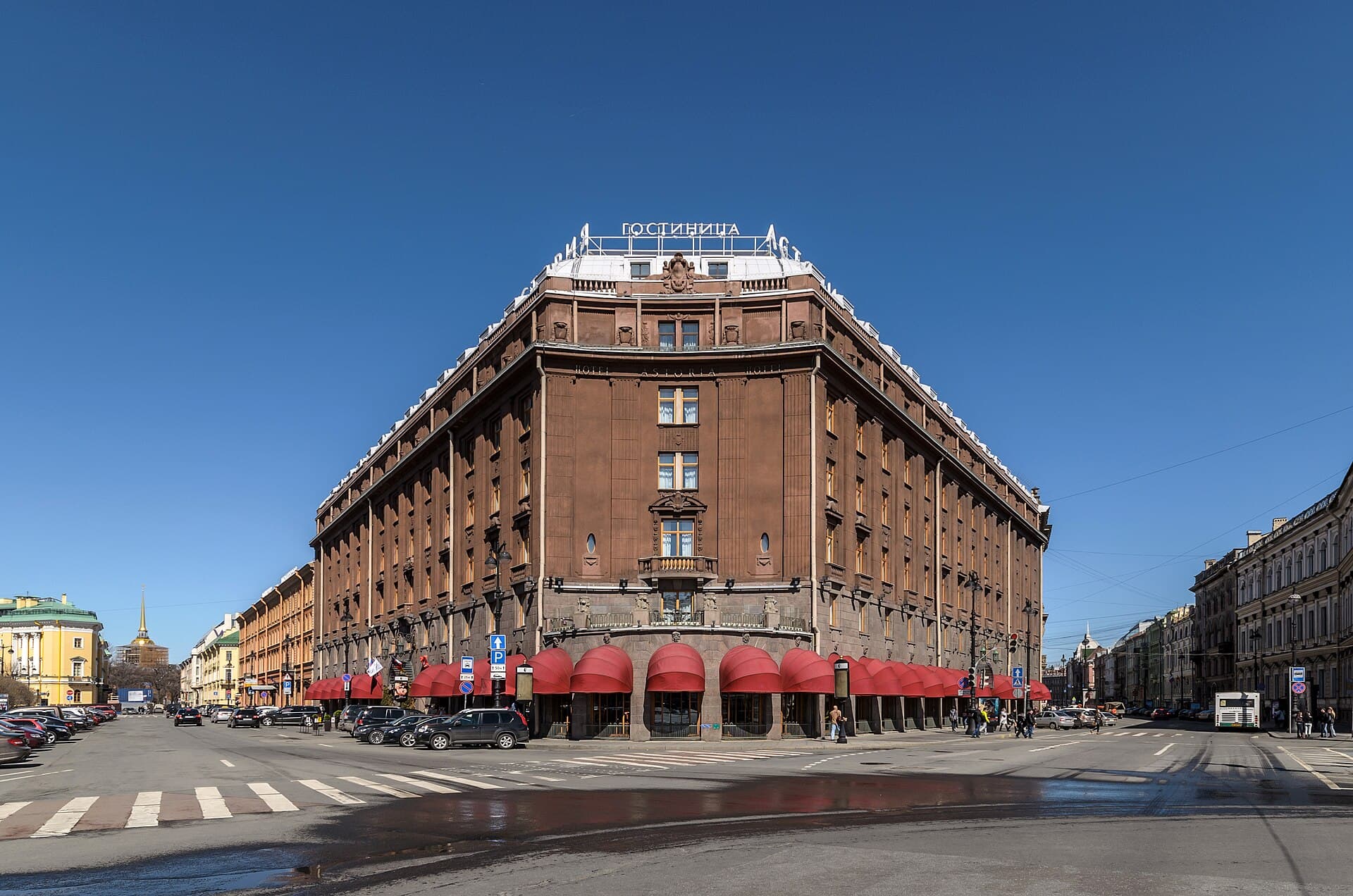

Hotel Astoria faces St Isaac's Cathedral across the square of the same name, in the centre of Saint Petersburg. It opened in December 1912, in time for the centenary of the 1812 war, and it has been the city's best-known luxury hotel through revolution, siege and the Soviet decades. Rocco Forte Hotels has owned and run it since 1997, and its restoration is one of the group's defining projects.
History
The Astoria was built between 1911 and 1912 by Fyodor Lidval, the leading architect of the Northern Modern style in the city, on a site at the corner of Bolshaya Morskaya Street and St Isaac's Square. It opened on 23 December 1912 and immediately joined the neighbouring Angleterre as the address for foreign visitors to the capital.
After 1917 the hotel was requisitioned and used by the new government, and in the 1920s it returned to receiving foreign guests under Intourist. During the siege of Leningrad from 1941 to 1944 the Astoria was turned into a hospital for the starving and the wounded. The German command had printed invitations to a victory banquet in the hotel's dining room, which was never held; the invitation is part of the hotel's story.
The building was refurbished in the late Soviet period, and in 1997 Sir Rocco Forte took it over as the first foreign-managed luxury hotel in the city. A full renovation followed, with interiors by Olga Polizzi, and the Astoria has since anchored the Rocco Forte collection in Russia alongside the Angleterre next door.
Architecture and design
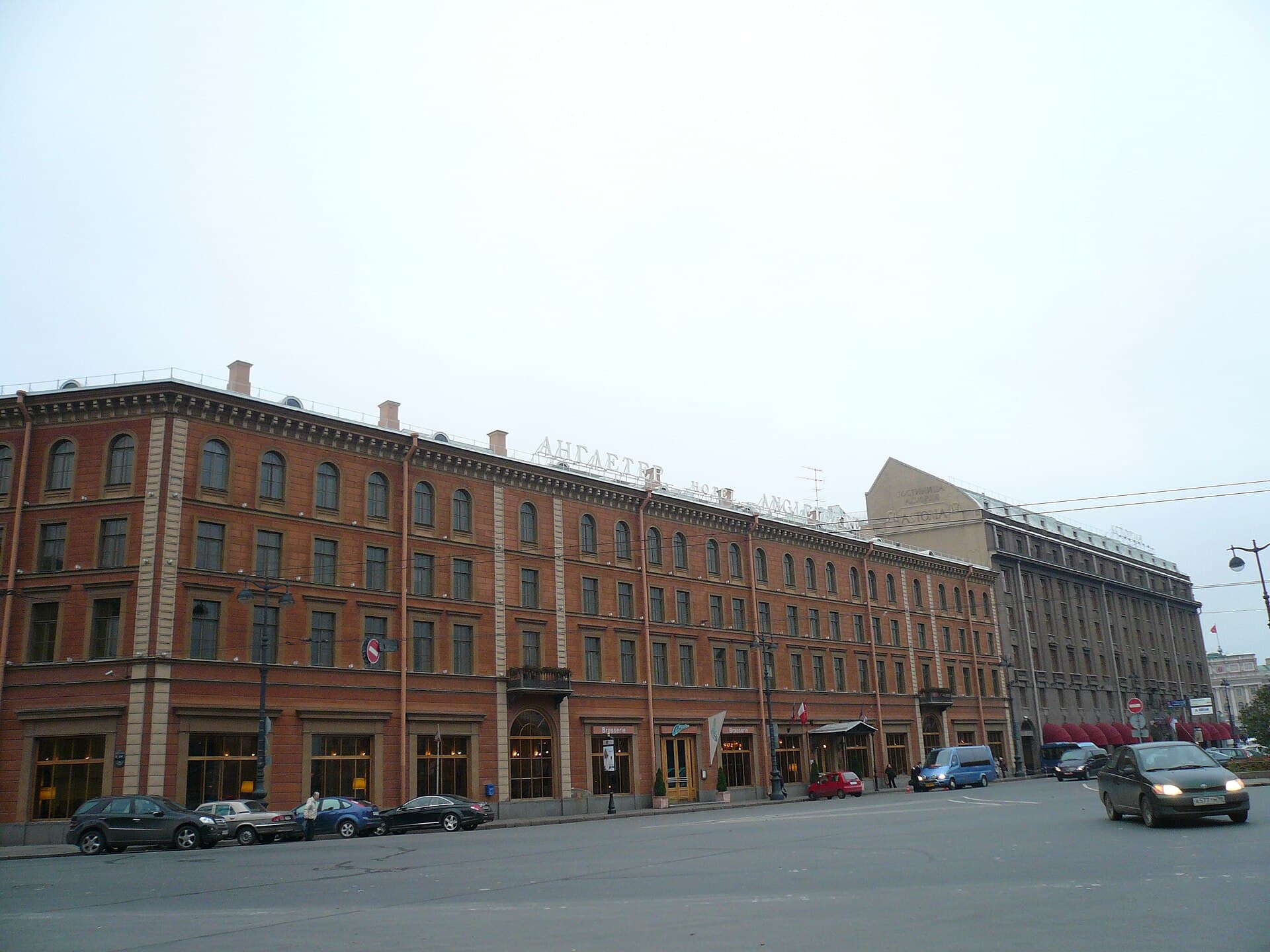
Lidval's building is six storeys of grey granite and stone, with a rounded corner towards the cathedral, tall windows and restrained Art Nouveau detailing in the metalwork and the lanterns. Inside, the rooms are arranged around the original staircase and the ballroom, and the public rooms keep their high ceilings and parquet. The decoration mixes Russian antiques and paintings with the lighter palette used by Olga Polizzi throughout the Rocco Forte hotels. The Astoria and the Angleterre share the block, and a passage joins them at ground level, so the two function as one property with two entrances on the square.
Rooms and suites
Rooms and suites range from classic rooms on the inner courtyard to suites looking onto St Isaac's Cathedral and the Mariinsky Palace. The cathedral-facing suites on the upper floors are the most requested, and the hotel's largest suites carry the names of figures linked to its history.
Dining
The hotel's restaurant and lounge open off the lobby, and the Lichfield Bar is named after the photographer Patrick Lichfield, whose portraits hang on its walls. Afternoon tea in the lounge under the glass roof is a fixed point for visitors to the square. The kitchen draws on Russian and European dishes, and the restaurant and lounge are open to non-residents, which makes the hotel a meeting place for the city as well as for its guests.
Weddings and events
The Astoria has a ballroom and a winter garden, both used for weddings, balls and gala dinners, plus smaller salons for meetings. The hotel is a traditional venue for city balls and for embassy receptions.
Location
The hotel is at Bolshaya Morskaya Street 39 on St Isaac's Square. Ten minutes on foot brings the Hermitage and Palace Square, fifteen the Mariinsky Theatre, and Admiralteyskaya metro station is nearer still, a few minutes off. The drive to Pulkovo airport takes about 40 minutes.
At a glance
What sets it apart
- 01Opened 23 December 1912 to the design of Fyodor Lidval
- 02Faces St Isaac's Cathedral from the corner of Bolshaya Morskaya Street
- 03Served as a hospital during the siege of Leningrad
- 04Owned and run by Rocco Forte Hotels since 1997, interiors by Olga Polizzi
- 05Connected to the Angleterre Hotel, its sister on the same square
Chronology
Dates that matter
1911
Construction begins on St Isaac's Square under Fyodor Lidval.
1912
The Astoria opens on 23 December.
1941
The hotel becomes a hospital during the siege of Leningrad.
1997
Rocco Forte Hotels takes over the hotel.
2002
The renovated hotel reopens with interiors by Olga Polizzi.