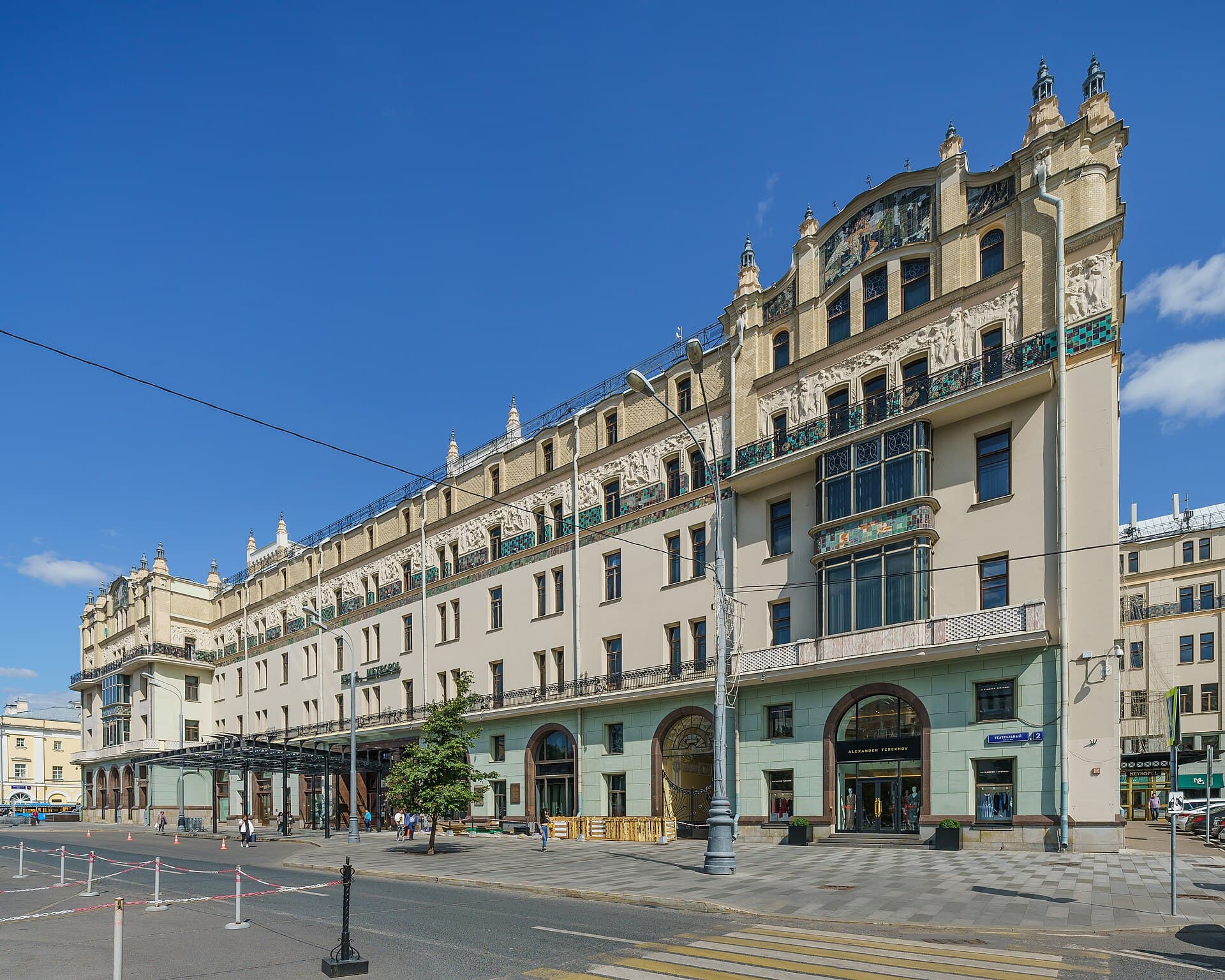

On Teatralny Proyezd, between the Bolshoi Theatre and the walls of Kitay-Gorod, a few minutes on foot from Red Square, Hotel Metropol is the Art Nouveau landmark of central Moscow. Opened in 1905, it was conceived as a cultural centre as much as a hotel, and its facade and public rooms carry some of the best decorative art of the Russian Silver Age. Among luxury hotels in Moscow it is the one with the deepest connection to the city's artistic and political history.
History
The project was financed by the industrialist and patron Savva Mamontov, who wanted a hotel joined to an opera house and exhibition halls. A design competition in 1899 was won by the British architect William Walcot, and Lev Kekushev directed much of the building work. A fire in 1901 destroyed part of the structure before completion, and the hotel finally opened in March 1905.
After the revolution the Bolsheviks moved the government from Petrograd to Moscow in 1918, and the Metropol became the Second House of Soviets. The Central Executive Committee met in its restaurant hall, Lenin spoke there, and party officials lived in the rooms. It returned to use as a hotel in the 1930s and received foreign writers and delegations through the Soviet decades. A full restoration from 1986 to 1991 brought back the original interiors, and the hotel has been privately owned since it was sold at auction in 2012.
Architecture and design
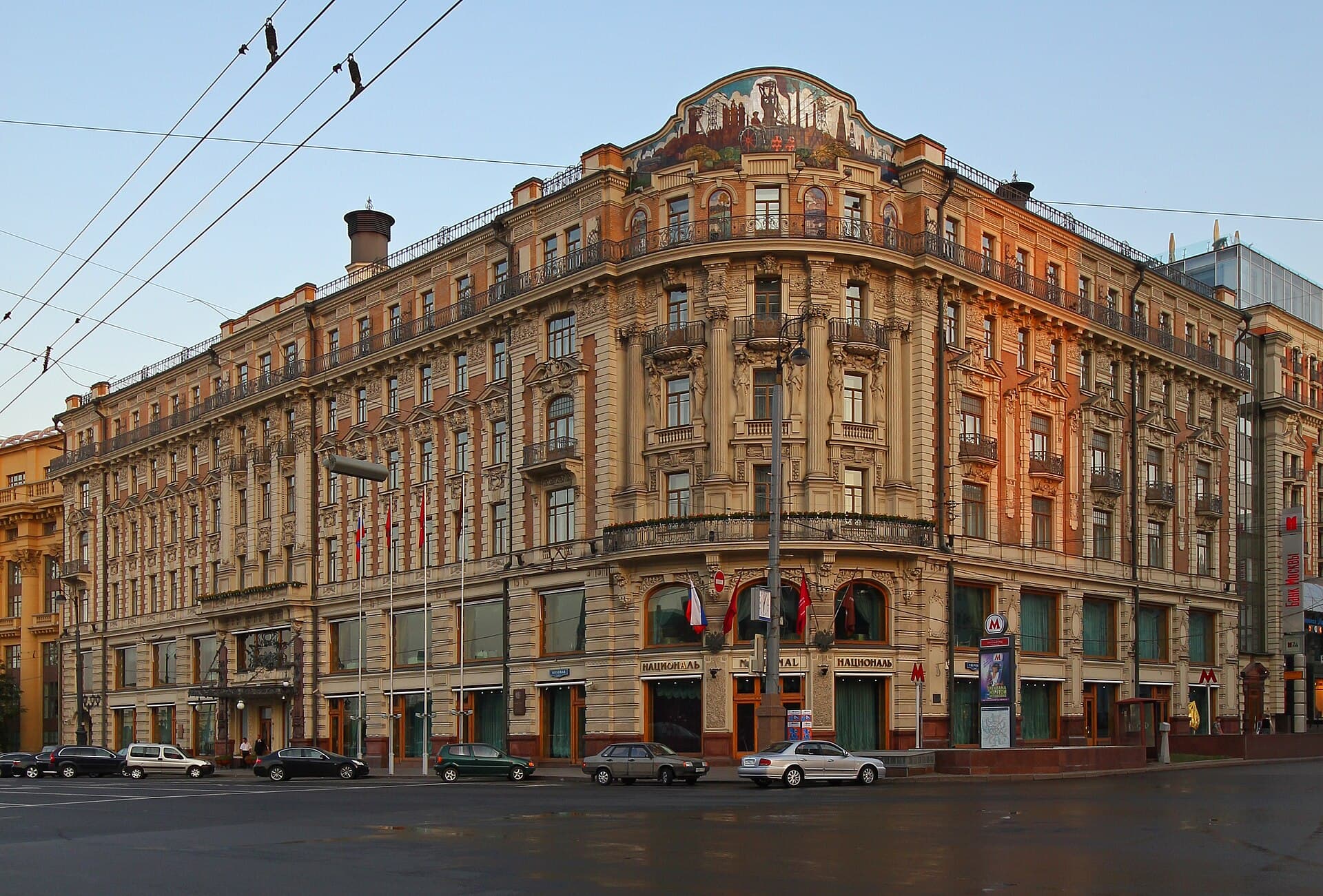
The facade is the most photographed part of the building. Its upper band holds a large majolica panel, Princess of Dreams, designed by Mikhail Vrubel after a play by Edmond Rostand, with further ceramic panels by Alexander Golovin along the frieze. Below them runs a plaster frieze, The Seasons, by the sculptor Nikolai Andreev. The style is Russian Art Nouveau, not Art Deco: curving ironwork, floral motifs and coloured ceramics rather than geometric ornament.
Inside, the Metropol Hall restaurant sits under a stained-glass dome supported by iron columns, with a marble fountain at its centre. The main staircase, the lifts and the corridors keep their period detailing, and many rooms contain antique furniture and paintings from the hotel's own collection.
Rooms and suites
The hotel has around 365 rooms and suites, no two alike in plan because the building was never standardised. The suites on the upper floors look across to the Bolshoi and towards the Kremlin towers, and several keep original stucco ceilings and tiled stoves.
Dining
The Metropol Hall, the restaurant under the dome, serves breakfast and dinner and is the room most visitors come to see. The hotel also has a bar and smaller restaurants off the lobby, and afternoon tea is served under the glass ceiling.
Weddings and events
The hotel has sixteen function rooms, with the largest reception taking about 450 guests. The Metropol Hall is used for gala dinners and weddings, and the smaller halls for board meetings, press conferences and private receptions. Several of the historic halls keep their original decoration and are protected, so set-up is arranged with the hotel's team.
Location
The Metropol is at Teatralny Proyezd 2, facing Teatralnaya Square and the Bolshoi Theatre. Red Square and the Kremlin are a five-minute walk, and Teatralnaya and Ploshchad Revolyutsii metro stations are at the door. Sheremetyevo airport is reached by the Aeroexpress train to Belorussky station, then two metro stops.
At a glance
What sets it apart
- 01Opened 1905, financed by Savva Mamontov, designed by William Walcot
- 02Mikhail Vrubel's majolica panel Princess of Dreams on the facade
- 03Metropol Hall restaurant under a stained-glass dome with a central fountain
- 04Second House of Soviets from 1918, where Lenin addressed the government
- 05Faces the Bolshoi Theatre, five minutes on foot from Red Square
Chronology
Dates that matter
1899
William Walcot wins the design competition for Savva Mamontov's hotel.
1901
A fire destroys part of the unfinished building.
1905
The Metropol opens in March.
1918
The Soviet government moves to Moscow and the hotel becomes the Second House of Soviets.
1986
A five-year restoration of the original interiors begins.
1991
The restored hotel reopens.
2012
The hotel is sold at auction to a private owner.