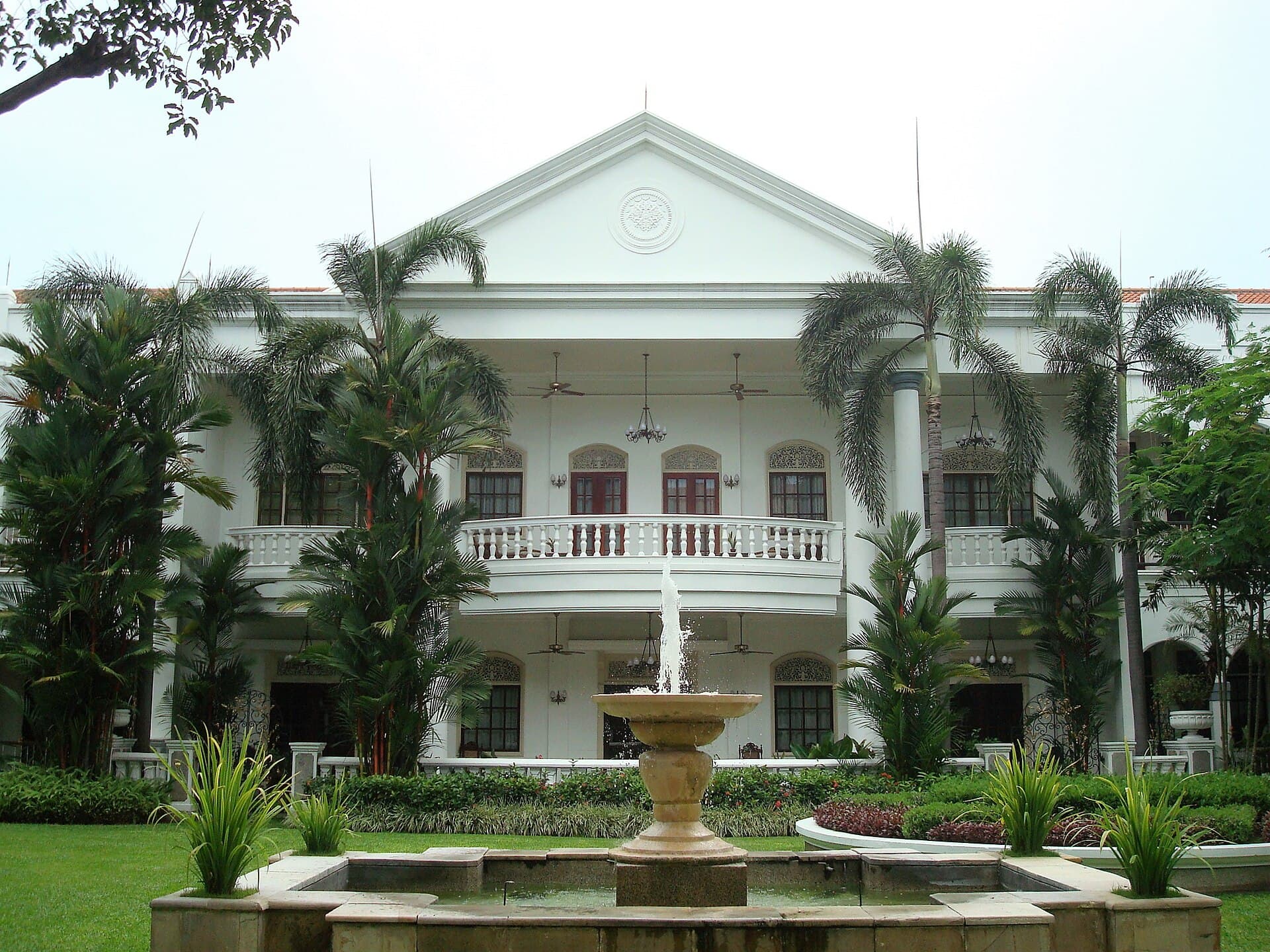

The flagpole is still there. On 19 September 1945, weeks after Indonesia declared independence, a Dutch flag went up over the Hotel Yamato on Jalan Tunjungan and a crowd gathered below. Young men climbed to the roof and tore the blue strip from the tricolour; the red and white that remained flew over Surabaya and the incident became one of the founding scenes of the republic, taught in every Indonesian school. The hotel is Hotel Majapahit Surabaya, and the courtyard where the crowd stood is now a garden between the wings.
History
Lucas Martin Sarkies, of the Armenian family that built Raffles in Singapore, the Eastern and Oriental in Penang and the Strand in Rangoon, opened the Hotel Oranje in 1910 as the grand hotel of the Dutch East Indies' second city. Surabaya was then the busiest port in the archipelago, a sugar and shipping town, and the hotel served planters, traders and naval officers. In 1936 the Sarkies added the Art Deco entrance block on Jalan Tunjungan that gives the hotel its street face. The Japanese occupation renamed it Hotel Yamato in 1942; the Dutch briefly reclaimed it as the Oranje after the war; and in 1969 it became the Majapahit, after the Javanese empire. A three-year restoration between 1993 and 1996 returned the building to its original plan, and it reopened under Mandarin Oriental management. It is now part of Accor's MGallery collection.
Architecture and design
Regent Alfred John Bidwell of Swan and Maclaren, the architect of the Raffles Hotel's 1899 main building, designed the original two-storey wings in the colonial manner: wide verandahs, high ceilings, timber shutters and rooms arranged around open courtyards to catch the breeze. The 1936 entrance is a different animal, a streamlined Art Deco pavilion with curved corners and a stepped parapet. The restoration kept both, and the gardens between the wings, planted with frangipani and palms, are the heart of the plan. There is no tower; the hotel keeps to two storeys across the whole site.
Rooms and suites
The facts file lists 139 rooms, of which four are suites. Rooms open onto verandahs overlooking the courtyards, with teak floors, high ceilings and period-style furniture; several suites carry the names of the hotel's history. It is a low, spread-out house in a city of towers, and that is the point.
Dining
The hotel has two restaurants. One serves Indonesian and Asian food in a colonial dining room; the other is the all-day room facing the garden. A bar off the lobby keeps the Sarkies tradition of a long drink at sunset. The names of the restaurants have changed with each operator and are not confirmed here.
Wellness
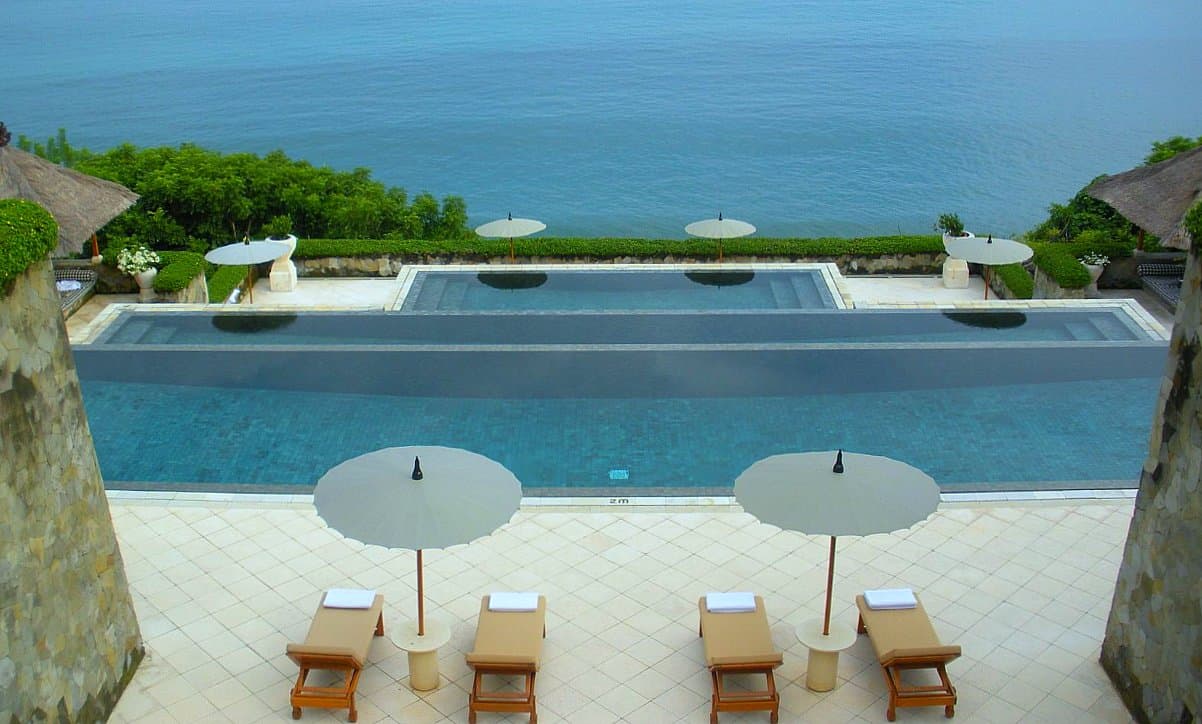
There is an outdoor swimming pool in the gardens, a spa with treatment rooms offering Javanese massage and a fitness centre.
Weddings and events
The hotel hosts weddings and meetings and the facts file counts eight event spaces with a top capacity of 300. The courtyard gardens are the signature setting for ceremonies and receptions, and the colonial function rooms serve dinners, seminars and company meetings. Javanese and Chinese-Indonesian weddings, with their staged ceremonies, are a regular feature of the house's calendar.
Location
Jalan Tunjungan is the old commercial spine of Surabaya, and the Tunjungan Plaza shopping complex is beside the hotel. The Heroes Monument and the old town along the Kalimas river are a short drive north; Gubeng railway station is around ten minutes by car; Juanda International Airport is 45 minutes to an hour away. For a luxury hotel in Surabaya it has no rival in historical weight, and it is the only one that figures in the national story.
At a glance
What sets it apart
- 01Opened 1910 as Hotel Oranje by Lucas Martin Sarkies
- 02Site of the 19 September 1945 flag incident
- 03Original wings by R.A.J. Bidwell of Swan and Maclaren
- 04Art Deco entrance pavilion added in 1936
- 05Two-storey plan around courtyard gardens, restored 1993 to 1996
Chronology
Dates that matter
1910
The Hotel Oranje opens on Jalan Tunjungan, built by the Sarkies family.
1936
The Art Deco entrance block is added to the street front.
1942
The Japanese occupation renames the hotel the Yamato.
1945
The flag incident of 19 September takes place at the hotel.
1969
The hotel takes the name Majapahit.
1996
A three-year restoration ends and the hotel reopens under Mandarin Oriental.