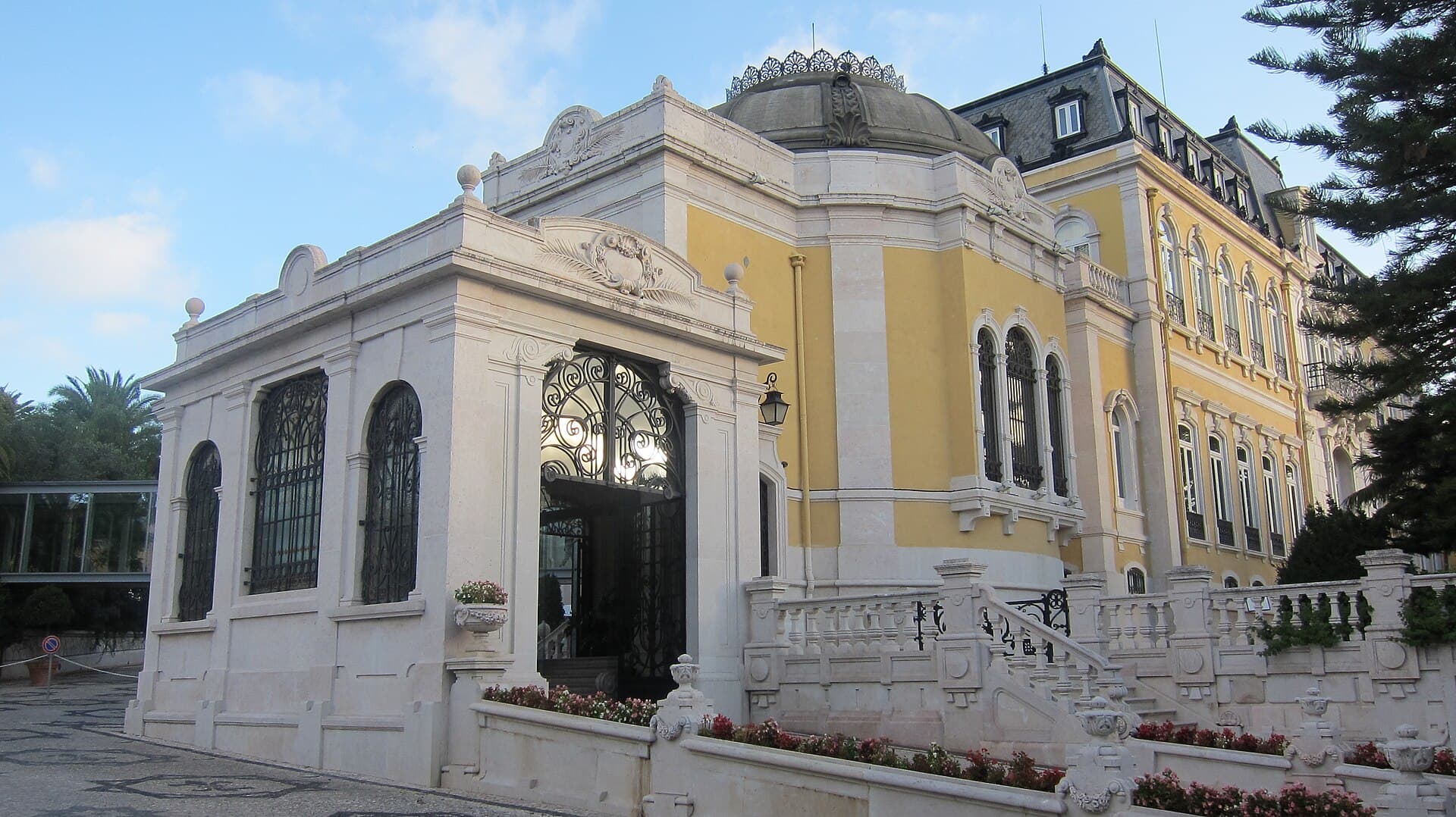
Rua Jau climbs away from the Tagus through Alcântara, in the west of Lisbon, and behind a long wall at number 54 the Valle Flor palace stands in its own park: the Pestana Palace Lisboa. José Luís Constantino Dias, a planter who made a fortune in cocoa on the island of São Tomé and was later created Marquês de Valle Flor, commissioned the house from the Italian architect Nicola Bigaglia in 1904. Bigaglia died before the work was finished, and the Portuguese architect Manuel Joaquim Norte Júnior completed it in 1913.
History
Valle Flor built on a scale that no Lisbon merchant had attempted for a generation, with marble and carved stone from Italy, painted ceilings, a chapel and a park laid out with exotic trees from the colonies. The family kept the palace through the first half of the 20th century. It was classified as a national monument, which protected the interiors but left the building without a use. The Pestana group, founded in Madeira by Dionísio Pestana and by then the largest hotel company in Portugal, bought the estate in the 1990s, restored the palace room by room and opened it as a hotel in 2001, with bedrooms in two new wings in the park so that the palace itself could keep its reception rooms. The hotel is a member of The Leading Hotels of the World.
Architecture and design
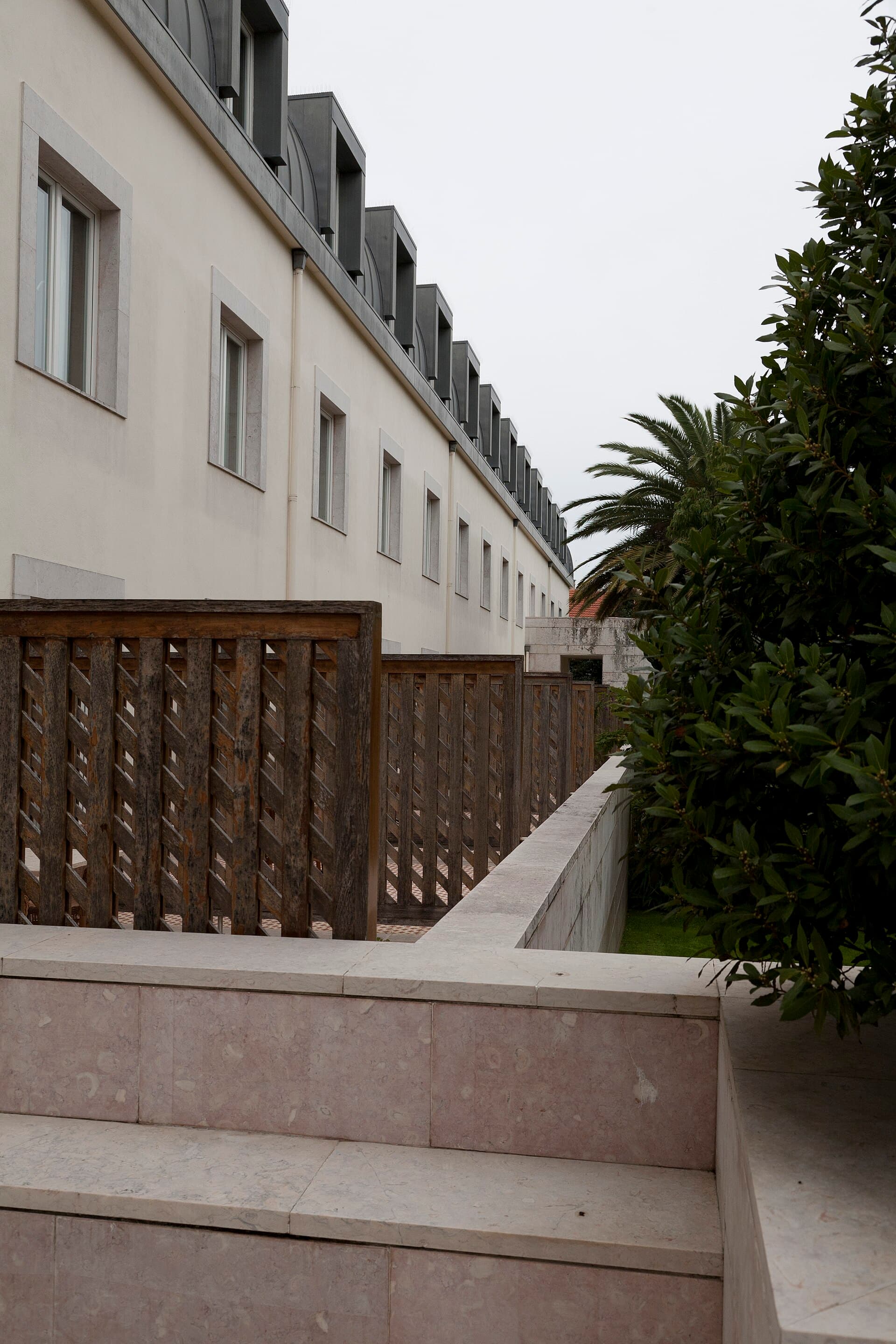
The palace is an eclectic building of the early 1900s, with a loggia, corner pavilions and a roofline of balustrades and urns. Inside, the main floor is a sequence of reception rooms, each in a different style of the period, with gilded panelling, painted ceilings and marble floors, and the state rooms, the chapel and the staircase survive as the marquis left them. The two bedroom wings are low and set among the trees, and a pavilion in the park serves for lunches and receptions.
Rooms and suites
There are 190 rooms and suites. The suites occupy the palace itself, in the former private apartments of the family, with the original ceilings and views over the park; the rooms fill the two wings, with balconies onto the gardens or the river side of the city.
Dining
The Valle Flor restaurant occupies the former dining room of the palace and serves Portuguese cooking under a painted ceiling, with a terrace onto the park in summer. The bar is in one of the palace salons, and a lighter restaurant serves by the pool.
Wellness
An outdoor pool sits in the park among the palms, and there is a heated indoor pool with a spa and gym in one of the wings.
Weddings and events
The Pestana Palace is one of the most-used wedding venues among the luxury hotels in Lisbon. Ceremonies are held in the park or the chapel, with receptions in the state rooms of the palace or in the pavilion, and the park takes a marquee for the largest parties. The salons and a set of meeting rooms serve for conferences and private dinners.
Location
Alcântara lies between the city centre and Belém, below the Monsanto park and in sight of the 25 de Abril bridge. The monastery and the monuments of Belém are 10 minutes by car to the west, the LX Factory 5 minutes down the hill, and Cais do Sodré and the Baixa about 15 minutes to the east. Lisbon airport is about 25 minutes by car.
At a glance
What sets it apart
- 01Palace built 1904 to 1913 for the Marquês de Valle Flor, classified a national monument
- 02Design by Nicola Bigaglia, completed by Manuel Joaquim Norte Júnior
- 03190 rooms and suites, the suites in the palace, the rooms in two park wings
- 04State rooms, chapel and painted ceilings kept as reception rooms
- 05Park with century-old trees, outdoor pool and a reception pavilion
Chronology
Dates that matter
1904
Construction of the Valle Flor palace begins in Alcântara to Nicola Bigaglia's design.
1913
The palace is completed under Manuel Joaquim Norte Júnior.
2001
The Pestana group opens the restored palace as the Pestana Palace Lisboa with 190 rooms.