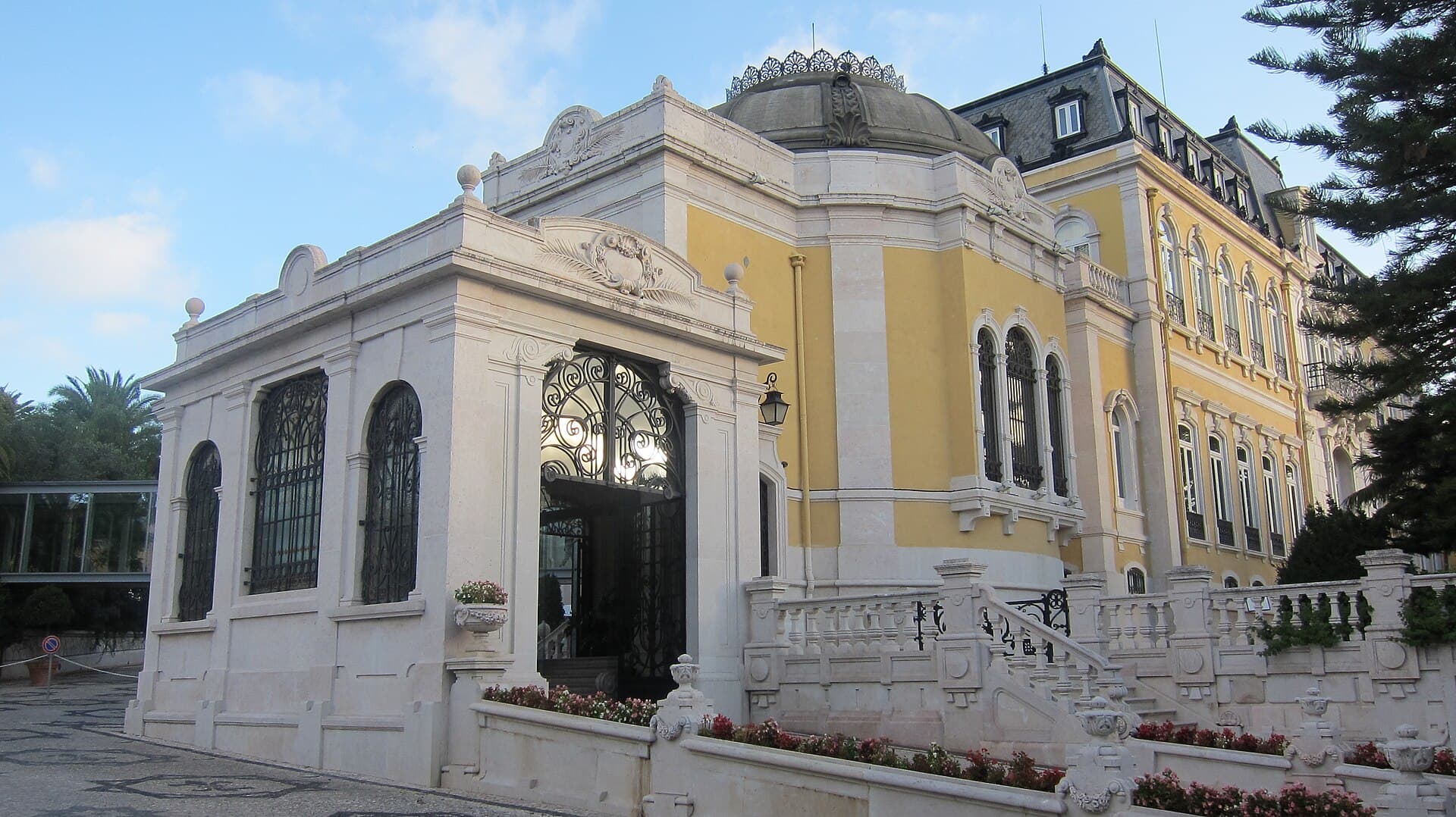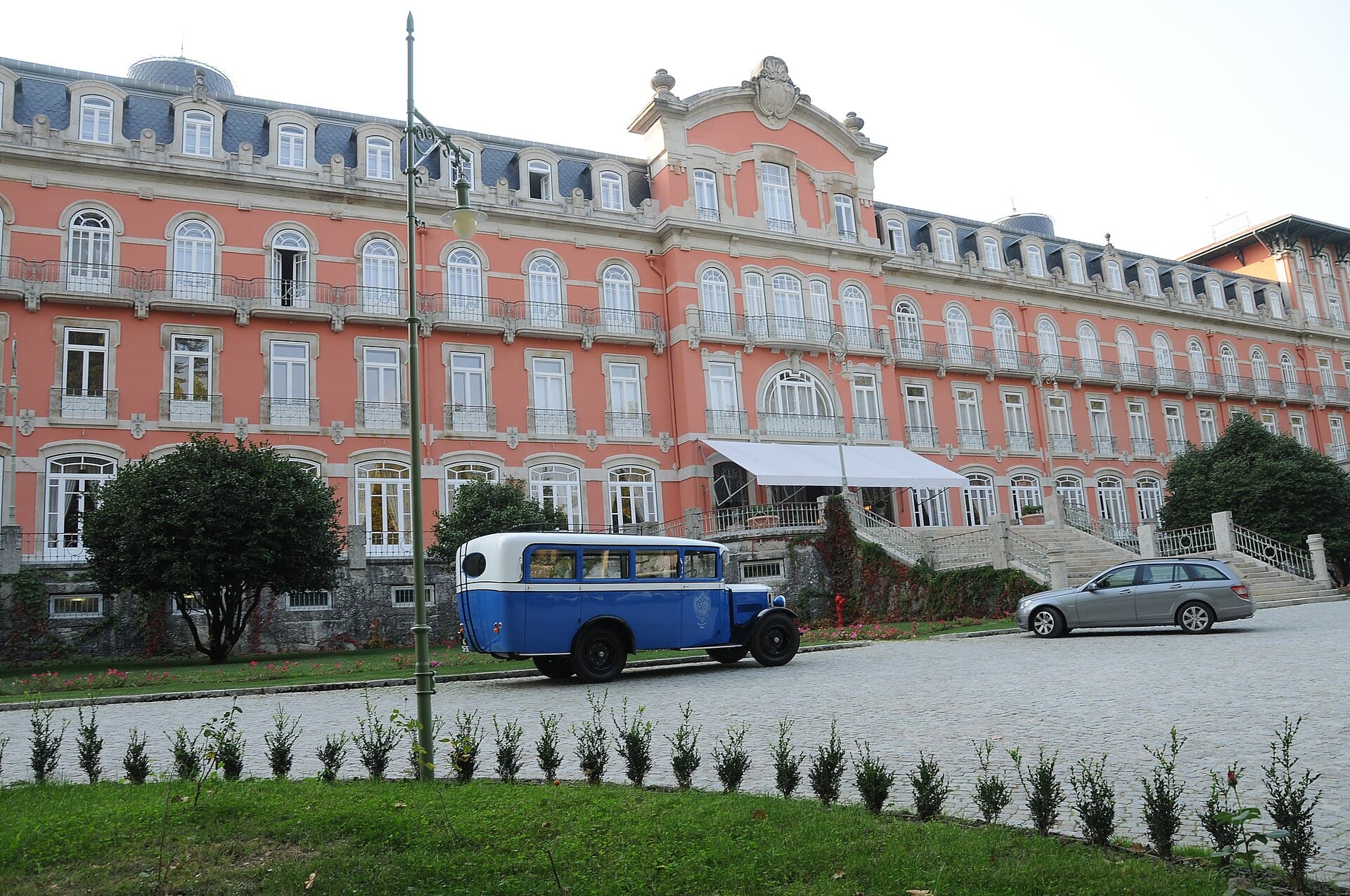
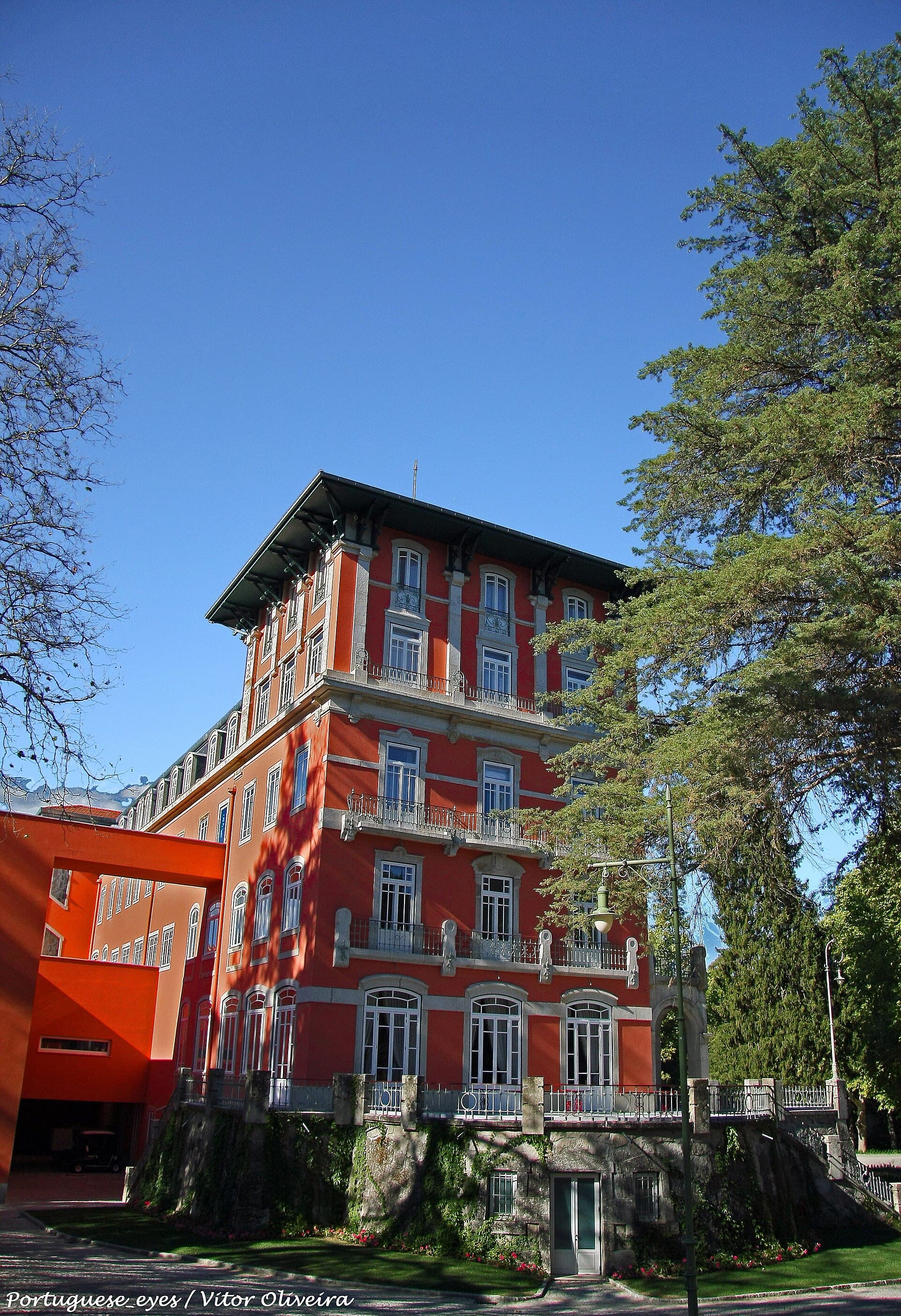
The road from Chaves to Vila Pouca de Aguiar runs along the edge of the Vidago park, a hundred hectares of century-old trees in the hills of Trás-os-Montes, and at its heart stands a pink-and-white palace with a slate mansard roof. Vidago Palace, a luxury hotel in the spa village of Vidago in northern Portugal, was commissioned by King Carlos I as a hotel to match the spas of central Europe. He died in 1908 before it was finished, and the hotel opened on 6 October 1910, the day after the proclamation of the Portuguese republic.
History
The mineral waters of Vidago had been bottled and drunk for their effect on the digestion since the 1870s, and the village had a bathhouse and a railway station before it had a palace. The hotel of 1910 was built to the Belle Époque pattern, with a grand staircase, a ballroom and a dining room under a painted ceiling, and for half a century it drew the Portuguese and Spanish upper classes for the summer season. A nine-hole golf course by Mackenzie Ross was added in the park in 1936. The hotel declined with the thermal trade in the later 20th century and closed in 2006. The owning company, the Vidago water business that belonged to the Unicer group, spent four years on a restoration and reopened the palace in October 2010, for its centenary, with the golf course extended to 18 holes by Cameron Powell and a new thermal spa by the Porto architect Álvaro Siza Vieira. The hotel is a member of The Leading Hotels of the World.
Architecture and design
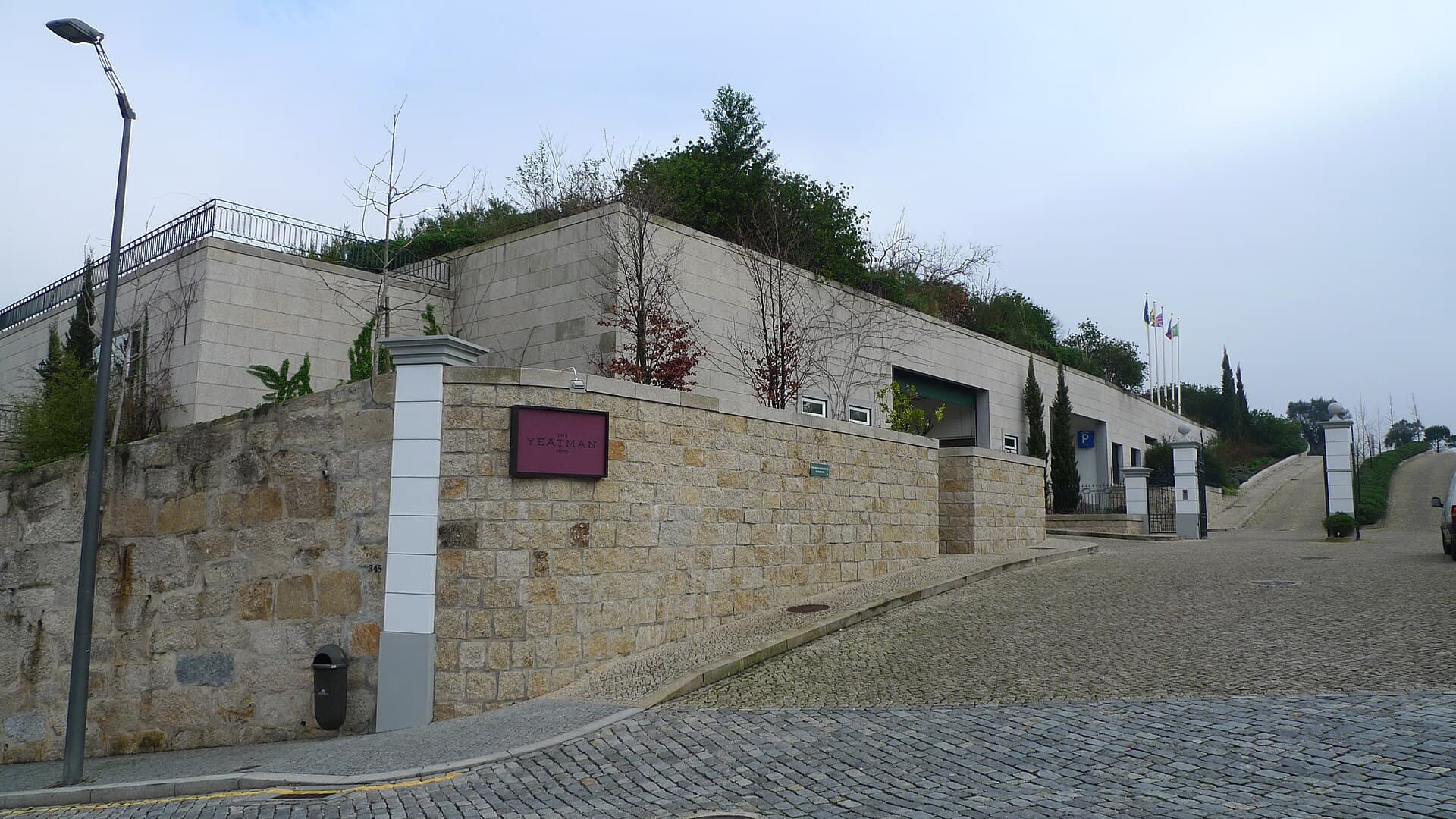
The palace is symmetrical, with a central block and two wings, in a rose-pink render picked out in white stone. The entrance hall and staircase keep their original stucco, ironwork and stained glass, and the ballroom and the former dining room were restored rather than redecorated. Siza's spa, by contrast, is a low building of pale stone and glass set apart in the park, its pools and treatment rooms lit from above.
Rooms and suites
There are 70 rooms and suites, most of them on the upper floors of the palace, with high ceilings and windows onto the park. The suites occupy the corners and the main façade, and the largest keep the proportions of the original reception rooms.
Dining
The main restaurant is the former dining room of the palace, with its painted ceiling and tall windows, and serves Portuguese cooking with produce from the region. There is a second, lighter restaurant at the golf clubhouse and a bar off the entrance hall.
Wellness
The Vidago thermal spa, designed by Álvaro Siza, uses the mineral water of the springs in its pools and treatments. There is an indoor pool, an outdoor pool in the park for summer, and the 18-hole golf course. The park itself, with its walks under the old trees and the Vidago springs, is the hotel's largest amenity.
Weddings and events
Vidago Palace takes weddings in the ballroom and the garden, and the park allows a marquee for larger parties. The ballroom and a set of smaller salons serve for conferences and private dinners, and the golf clubhouse hosts corporate days.
Location
Vidago is 17 kilometres south of Chaves and about 45 kilometres north of Vila Real. Porto airport is about 130 kilometres away, around an hour and a half by motorway. The Spanish border at Verín is 30 kilometres north. The sister park at Pedras Salgadas, with its own springs and the Pedras Salgadas eco-houses, is 10 minutes by car.
At a glance
What sets it apart
- 01Palace hotel commissioned by King Carlos I, opened 6 October 1910
- 02Hundred-hectare park with the Vidago mineral springs
- 03Thermal spa by Álvaro Siza Vieira, added for the 2010 reopening
- 0418-hole golf course: nine holes by Mackenzie Ross (1936), extended by Cameron Powell
- 0570 rooms and suites; member of The Leading Hotels of the World
Chronology
Dates that matter
1908
King Carlos I, who commissioned the palace hotel, dies before it is completed.
1910
Vidago Palace opens on 6 October, the day after the republic is proclaimed.
1936
Mackenzie Ross lays out a nine-hole golf course in the park.
2006
The hotel closes for a four-year restoration.
2010
Vidago Palace reopens for its centenary with a spa by Álvaro Siza and an 18-hole course.