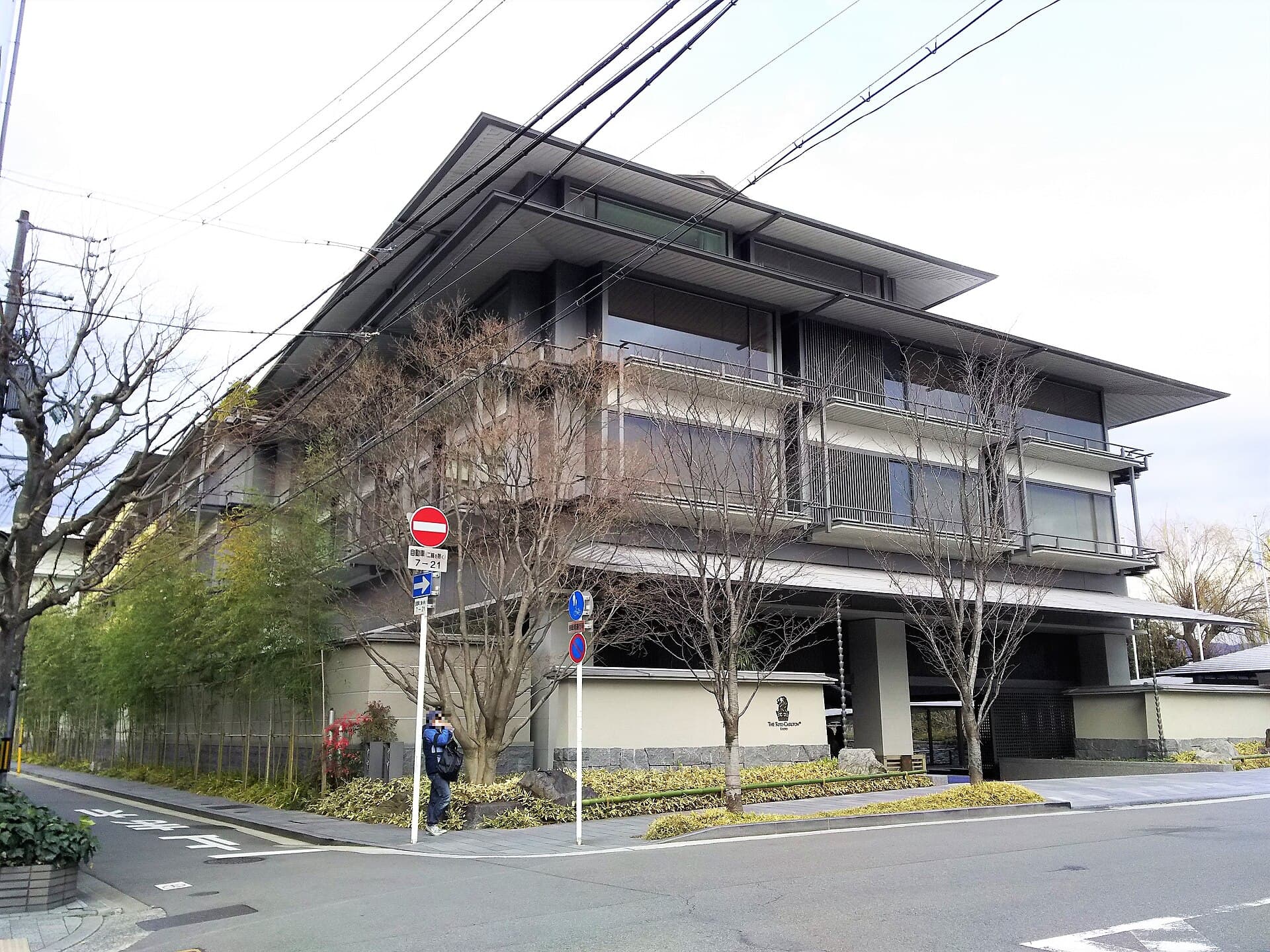
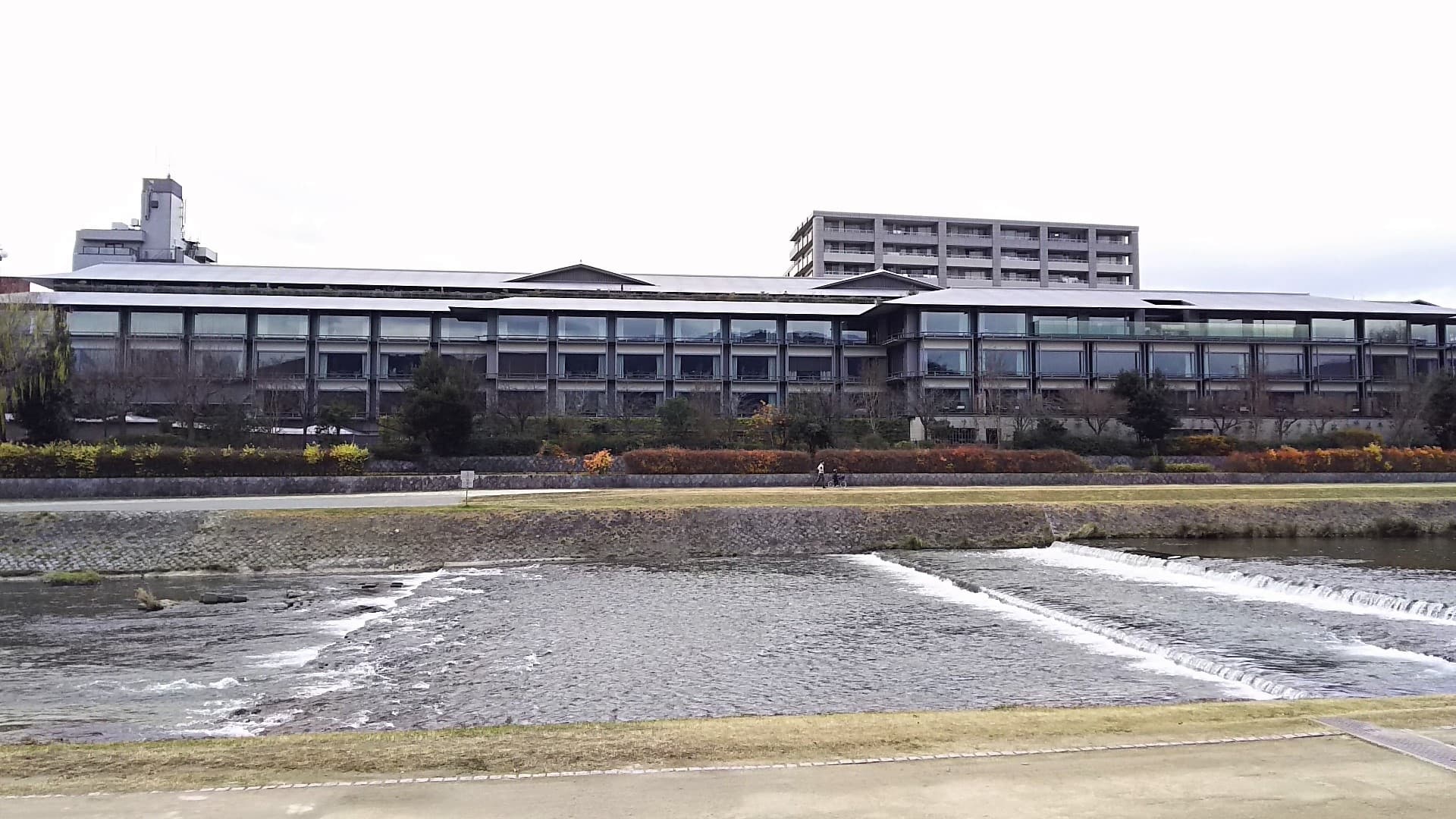
Stand on Nijo-Ohashi bridge and look west along the Kamogawa and the hotel barely shows: a line of tiled roofs and timber screens behind trees, no taller than the townhouses of the street beside it. The Ritz-Carlton, Kyoto was designed to disappear, and it opened on 7 February 2014 as the first Ritz-Carlton in Kyoto and the second in Japan after Tokyo.
History
The riverside site belonged in the Meiji era to Fujita Denzaburo, the Osaka industrialist, whose family villa and garden stood here. After the war the Hotel Fujita Kyoto occupied the land until it closed in 2011. The new owners kept the Fujita garden, with its waterfall and old trees, and built the hotel around it. The Ritz-Carlton opened in 2014 with 134 rooms and set a price level for Kyoto hotels that others have followed since.
Architecture and design
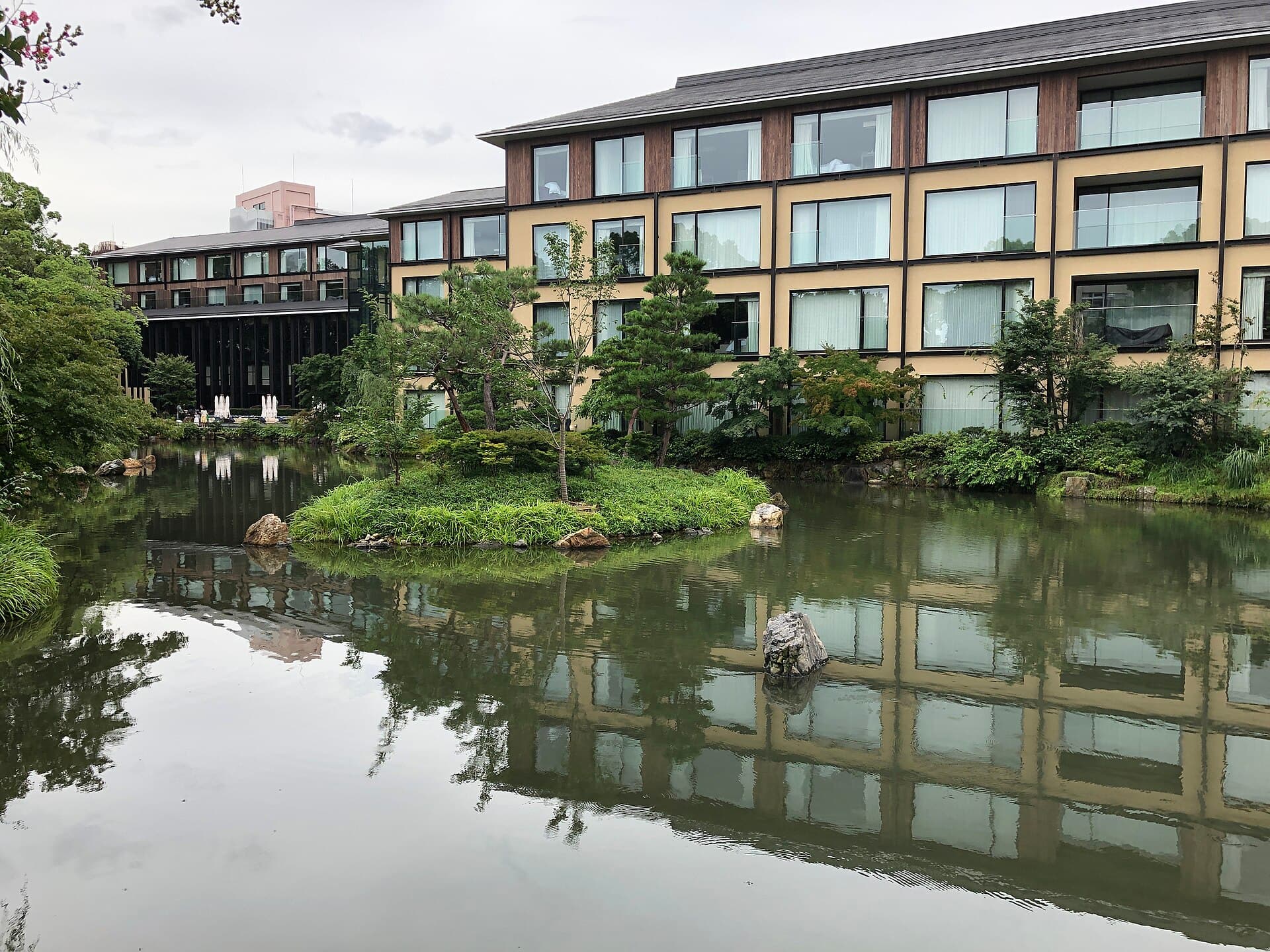
Kyoto limits building heights along the river, so the hotel has five floors above ground and several below, where the restaurants, the spa and the pool are. Peter Remedios of Remedios Studio designed the interiors, drawing on the Meiji-era style that mixed Japanese and Western elements. Corridors are lined with artworks commissioned from Kyoto craftsmen, lacquer, textiles and paper, and the lobby looks out on the garden and its waterfall. A fragment of the old villa's stone work was reused in the garden.
Rooms and suites
The 134 rooms and suites are among the largest in the city, with wooden floors, deep bathtubs and screens that recall the shoji of a machiya townhouse. River-view rooms face the Kamogawa and the Higashiyama hills beyond; garden rooms on the lower floors open on to private terraces beside the Fujita garden. A handful of suites have tatami rooms, and the top suites take the full width of the river frontage.
Dining
Mizuki is the Japanese restaurant, with four separate counters and kitchens for kaiseki, tempura, sushi and teppanyaki, each with its own chef. La Locanda serves Italian food. Pierre Hermé Paris has a boutique in the hotel, which supplies the afternoon tea in The Lobby Lounge, and the bar serves Japanese whisky beside the garden.
Wellness
The spa is below ground, with treatment rooms, a 20-metre indoor pool, a gym and a Japanese bath. Treatments use Kyoto ingredients such as green tea and rice bran, and the pool is one of the few lap pools in a Kyoto hotel.
Weddings and events
The hotel has a ballroom and a series of smaller function rooms, used for Japanese and Western weddings, board meetings and private dinners, with catering from the Mizuki and La Locanda kitchens. Wedding ceremonies can also be arranged at nearby shrines and temples, with the reception at the hotel. Published capacities vary with the layout and are best confirmed directly.
Location
The hotel stands on Kamogawa Nijo-Ohashi Hotori, Nakagyo ward, on the west bank of the river. Kyoto Shiyakusho-mae subway station on the Tozai line is about five minutes on foot, Gion is 15 minutes across the river, and Kyoto Station is about 15 minutes by taxi. The Kyoto Imperial Palace gardens are about 15 minutes on foot to the north and Nishiki market ten minutes to the south-west. Kansai International Airport is around 75 to 90 minutes by car. For a luxury hotel in Kyoto, the position between the river and the Teramachi shopping streets is as central as the city allows.
At a glance
What sets it apart
- 01Opened 7 February 2014 on the site of the Hotel Fujita Kyoto
- 02Five storeys above ground to respect Kyoto's riverside height limit
- 03Garden of the Meiji-era Fujita family villa with its waterfall
- 04134 rooms and suites, interiors by Peter Remedios
- 05Mizuki restaurant with four counters: kaiseki, tempura, sushi, teppanyaki
Chronology
Dates that matter
2011
The Hotel Fujita Kyoto closes on the riverside site.
2014
The Ritz-Carlton, Kyoto opens on 7 February with 134 rooms.