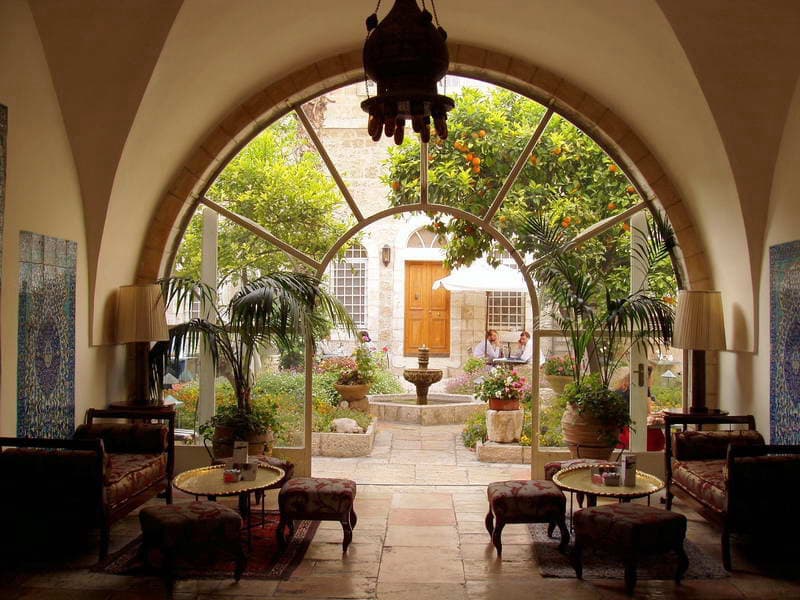
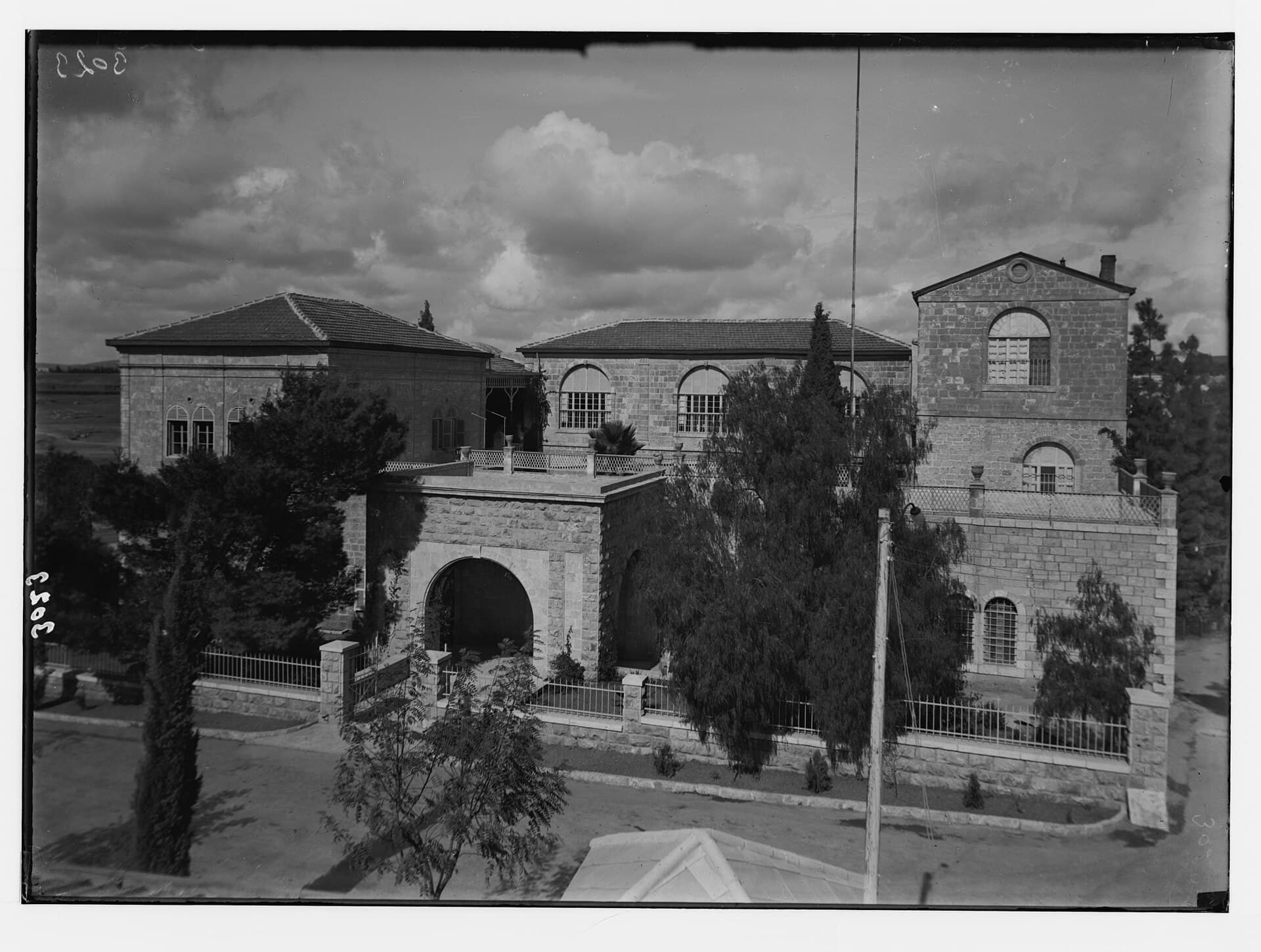
Nablus Road runs north out of the Old City of Jerusalem, past the Damascus Gate and into Sheikh Jarrah, and about a kilometre along it a limestone wall encloses a courtyard with a fountain, lemon trees and tables under the arches. This is The American Colony Hotel, Jerusalem, and the house behind the wall was not built for guests.
History
Rabbah Daoud Amin Effendi al-Husseini, a member of one of the city's leading families, built the house in the 1860s as a residence for himself and his four wives. The central room, now the Pasha Room, was his reception hall. In 1881 Horatio and Anna Spafford arrived from Chicago with a small group of followers; they had lost four daughters in a shipwreck in 1873 and came to Jerusalem to found a Christian community devoted to charitable work. The group, joined by Swedish families in the 1890s, bought the Husseini house in 1895 and moved in.
The colony began taking paying guests in 1902, at first at the suggestion of Baron Plato von Ustinov of Jaffa, grandfather of the actor Peter Ustinov, who sent travellers up the hill. In December 1917 the white flag with which the Ottoman mayor surrendered Jerusalem to British troops was a bed sheet from the colony's hospital. Through the Mandate, the war of 1948, the Jordanian years and the period after 1967, the hotel stayed open and stayed in the hands of the Spafford descendants. T. E. Lawrence and Lowell Thomas were guests, Graham Greene wrote here, and John le Carré set parts of The Little Drummer Girl in the hotel. Some of the early, unofficial contacts that led to the Oslo process in the 1990s took place in its rooms.
Architecture and design
The original house is a square Ottoman building of pale Jerusalem stone around a courtyard, with cross-vaulted ceilings, painted wooden ceilings in the principal rooms and tiled floors. Later wings were added in the same stone, and the gardens were extended with a second courtyard and a pool. Nothing has been plastered over: the Pasha Room keeps its painted ceiling, the vaults in the Cellar Bar are the house's cellars, and the stair treads are worn.
Rooms and suites
Around 95 rooms and suites are spread over the main house, the East House and the garden wings. Those in the main house have the vaulted ceilings and the arched windows of the 1860s; the garden rooms are later and open directly onto the greenery. Bedrooms are furnished with Ottoman and Damascene pieces, rugs and old photographs of the colony.
Dining
The Arabesque Restaurant serves breakfast and dinner, the Courtyard takes lunch and dinner under the trees in summer, and the Cellar Bar, in the old vaults, has been the meeting place of foreign correspondents in Jerusalem for decades. The Summer Bar opens on the garden side in the warm months. The hotel's Saturday brunch in the courtyard is a city institution.
Wellness
There is an outdoor swimming pool in the garden, a fitness room and a sauna. The courtyard and gardens matter more to most guests than the gym.
Weddings and events
The Pasha Room, with its painted ceiling, is the formal reception room, and the courtyard and gardens take receptions and dinners in the open air. The hotel hosts weddings, private dinners and small conferences, and has long been used by embassies, aid organisations and news bureaux for meetings. Capacities depend on the room and the layout and are confirmed by the hotel.
Location
The hotel stands on Louis Vincent Street, off Nablus Road, in Sheikh Jarrah. The Damascus Gate and the Old City are about 15 minutes on foot. The Jerusalem light rail stops nearby, and the city's main railway station, Yitzhak Navon, is a short drive. Ben Gurion Airport is about 50 kilometres away. Among the few luxury hotels in Jerusalem that predate the twentieth century, it is the one most bound up with the city's modern history.
At a glance
What sets it apart
- 01House built in the 1860s for Rabbah Daoud Amin Effendi al-Husseini and his four wives
- 02Bought by the Spafford family's American Colony in 1895, guests from 1902
- 03The 1917 surrender flag of Jerusalem was a bed sheet from the colony
- 04Pasha Room with original painted ceiling; Cellar Bar in the old vaults
- 05Member of Small Luxury Hotels of the World
Chronology
Dates that matter
1881
Horatio and Anna Spafford arrive from Chicago and found the American Colony.
1895
The colony buys the Husseini house in Sheikh Jarrah and moves in.
1902
The first paying guests are received; the house becomes a hotel.
1917
Jerusalem is surrendered to British forces under a white flag taken from the colony's hospital.
1983
John le Carré publishes The Little Drummer Girl, with scenes set in the hotel.