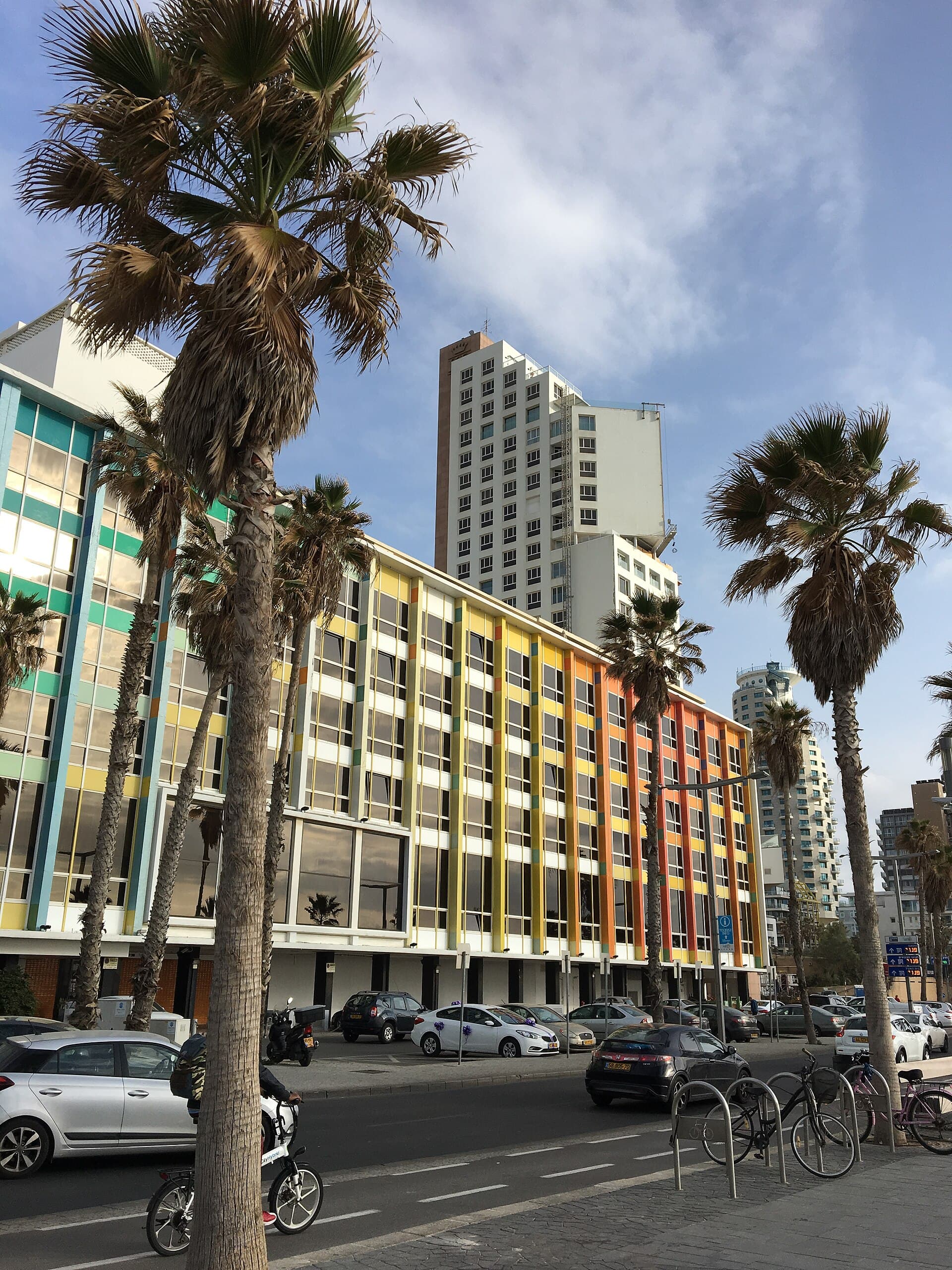
Kaete Dan ran a small guesthouse on HaYarkon Street, a step from the beach, until the brothers Yekutiel and Samuel Federmann bought it in 1947. Six years later the Dan Tel Aviv opened on the site, the first hotel of the Dan Hotels chain and still its flagship, at 99 HaYarkon Street facing the Mediterranean in Tel Aviv.
History
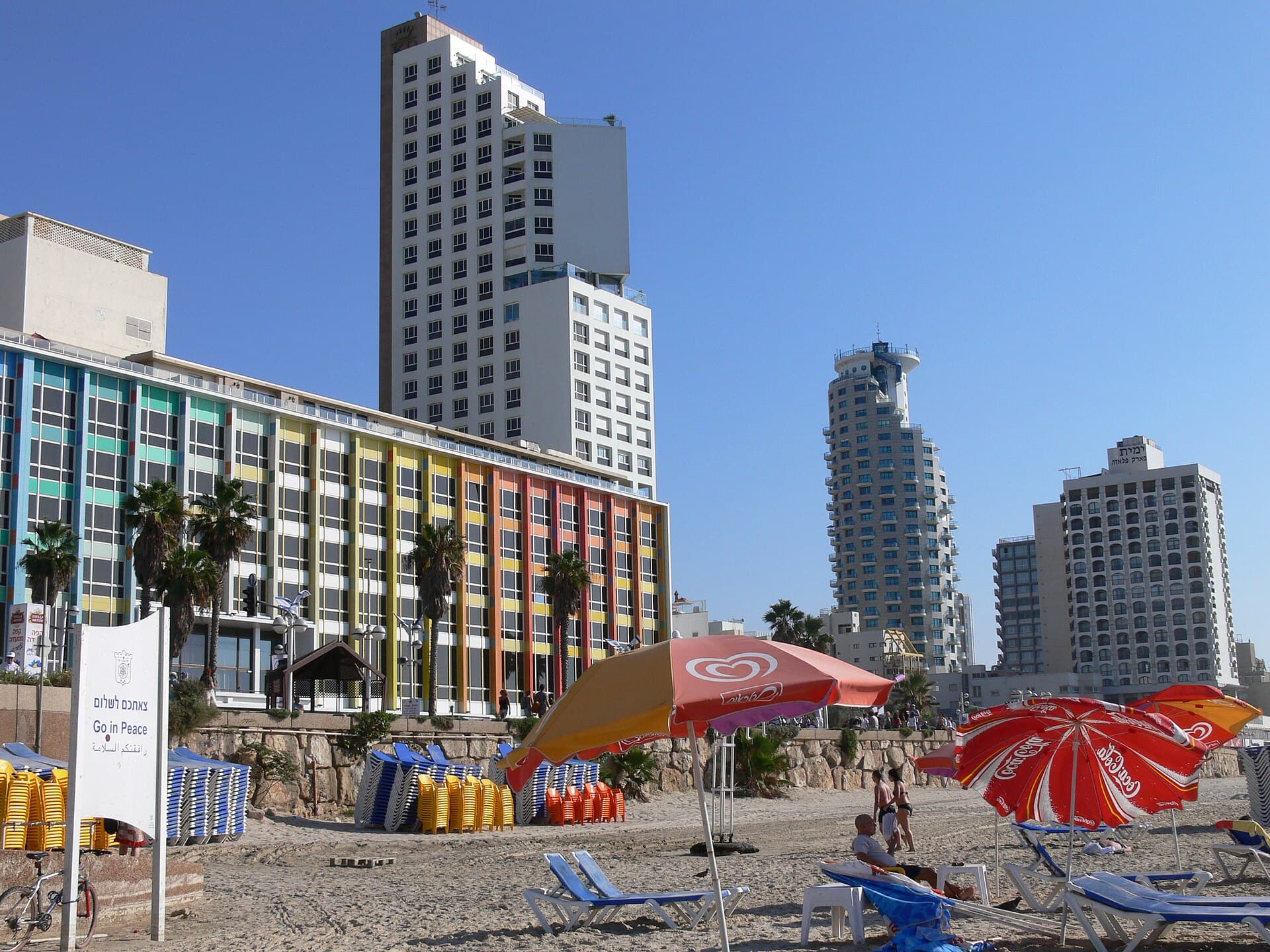
The Federmanns kept the name of the woman whose pension they had bought, and built the Dan Tel Aviv up in stages through the 1950s and 1960s, with the architect Heinz Fenchel designing the hotel as it stands. The chain grew from here: the King David in Jerusalem joined in 1958, and Dan Hotels now runs houses across Israel. For decades the Dan Tel Aviv was the city's address for visiting heads of state, performers and the diplomatic corps, the Tel Aviv counterpart of the King David. In the 1990s the artist Yaacov Agam painted the whole seafront facade in bands of colour, a kinetic work that shifts as you walk past it along the promenade, and the rainbow building became the emblem of the Tel Aviv beachfront.
Architecture and design
Fenchel's building is a long modernist slab of the kind the city built in the 1960s, turned to face the sea, with balconies across the facade. Agam's intervention covers it in vertical stripes of graded colour, so that from the north the building reads in one sequence of hues and from the south in another. The lobby is wide and low, with sea light at the far end, and the public rooms were refurbished in a contemporary style that keeps the 1960s proportions.
Rooms and suites
The 280 rooms and suites look either at the Mediterranean, across HaYarkon Street and the promenade, or back over the city. Sea-view rooms have balconies. The upper floors hold the suites, including the one used for state visits, and executive floors with a lounge.
Dining
The hotel's restaurant serves the Israeli breakfast that the Dan chain is credited with turning into an institution, a buffet of cheeses, salads, fish and baked goods, and dinner from a kosher kitchen, as in every Dan hotel. A lobby bar and a pool bar in season complete the hotel's own offer; Dizengoff Street and the port, a short walk either way, do the rest.
Wellness
There are two pools: an outdoor pool on the terrace facing the beach, open in the warm months, and a heated indoor pool for winter. A gym and sauna sit beside them. The beach across the street has lifeguards and deckchairs, and the promenade that runs the length of the city is the real morning exercise.
Weddings and events
The Dan Tel Aviv has conference and banqueting rooms for meetings and the receptions of the diplomatic and business community, and a ballroom used for weddings and bar mitzvah dinners. The sea terrace takes cocktail receptions. Israeli weddings are large and the hotel is set up for them.
Location
HaYarkon Street runs parallel to the seafront, and the hotel stands between Frishman and Gordon streets, with Gordon Beach across the road. Dizengoff Square is three blocks east, the Tel Aviv Port and its boardwalk 20 minutes on foot to the north, and the Carmel Market the same distance south. Ben Gurion Airport is about 20 kilometres south-east, 25 to 40 minutes by car; Tel Aviv Savidor Central railway station is ten minutes by taxi. For a luxury hotel in Tel Aviv on the beach, it is the one the city itself points to.
At a glance
What sets it apart
- 01Opened 1953, first hotel of the Dan Hotels chain
- 02Seafront facade painted in colour bands by Yaacov Agam
- 03280 rooms, sea-view rooms with balconies
- 04Outdoor pool facing the beach and heated indoor pool
- 0599 HaYarkon Street, promenade and beach across the road
Chronology
Dates that matter
1947
Yekutiel and Samuel Federmann buy the Kaete Dan guesthouse on HaYarkon Street.
1953
The Dan Tel Aviv opens as the first hotel of the Dan chain.
1958
The King David in Jerusalem joins the Dan chain.
1990
Yaacov Agam begins his colour-stripe facade on the seafront of the hotel.