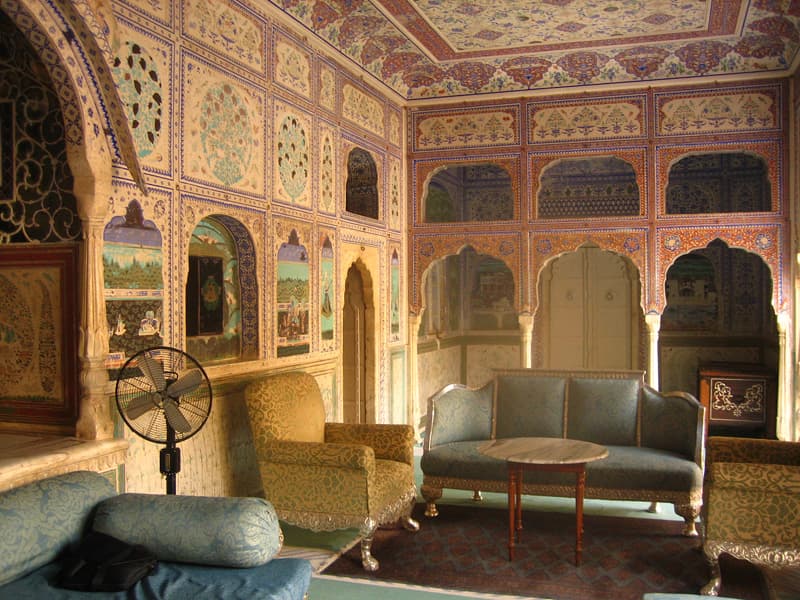
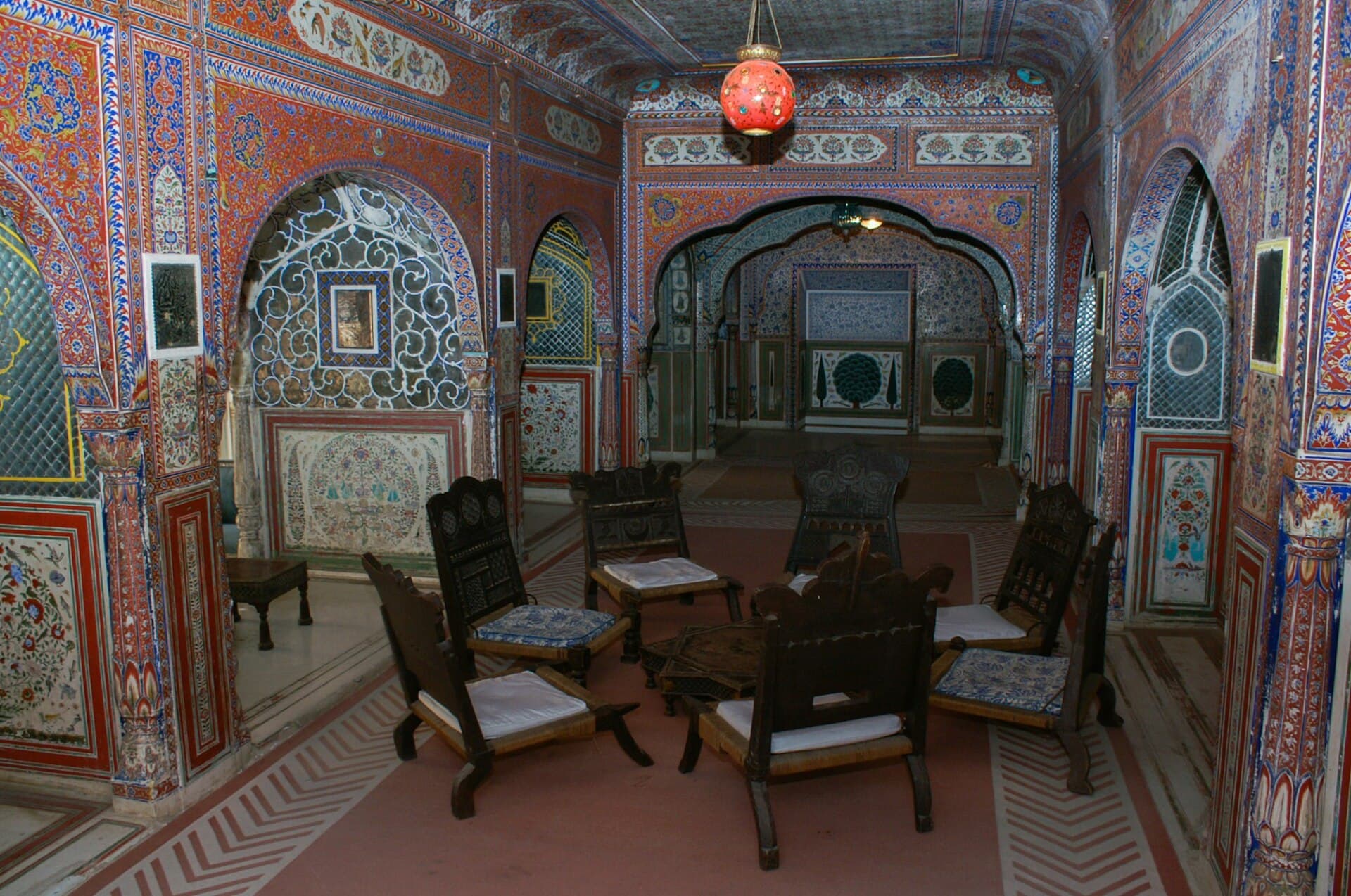
Forty kilometres north-west of Jaipur, where the Aravalli hills fold around a village, a palace built by the Nathawat clan has been painted inside for four centuries. Samode Palace, in the village of Samode in Rajasthan, is still owned by the family that built it, and since the 1980s it has been a hotel.
History
The Samode estate was granted to the Nathawat Rajputs, a branch of the Kachwaha dynasty of Jaipur, in the sixteenth century, and the palace grew over generations. Its most celebrated rooms were decorated in the nineteenth century under Rawal Berisal and Rawal Sheo Singh, ministers at the Jaipur court, who brought in painters working in the Mughal-Rajput style. The building found a wider public when the 1984 television series The Far Pavilions was filmed in its halls. The brothers Rawal Raghvendra Singh and Yadavendra Singh opened it as a hotel and have run it since, adding Samode Bagh, a garden property nearby, and Samode Haveli in Jaipur.
Architecture and design
The palace climbs the hillside in tiers of courtyards. The Durbar Hall is the showpiece: every surface painted with flowers, birds and hunting scenes, and a ceiling of mirrors and gilt. The Sheesh Mahal is the mirror hall, and the Sultan Mahal has painted walls and views over the gardens and the village. Bedrooms open off the courtyards and the upper terraces. There are 43 rooms and suites, no two the same, with painted ceilings, carved doors and marble bathrooms. A rooftop infinity pool was added on the upper level, looking out at the hills, and a second pool sits in a courtyard garden with a fountain.
Rooms and suites
Rooms range from the old family quarters, with alcoves and painted friezes, to suites with their own terraces. Bathrooms were fitted into the palace fabric, so sizes vary. The Royal Suites, in the oldest part of the palace, have the most painted surface and the best views.
Dining
Meals are served in the painted dining hall and on the terraces, with Rajasthani dishes such as laal maas and gatte ki sabzi alongside Indian and European cooking. Dinners by candlelight in the courtyards are the form most evenings take, and the bar on the terrace faces the village as the lights come on.
Wellness
A spa offers Ayurvedic and Western treatments in a few rooms, and the two pools and the walks into the hills are the exercise. Yoga can be arranged on the terraces in the morning.
Weddings and events
The palace's courtyards and the Durbar Hall host weddings, and the whole palace can be taken for a family celebration. Samode Bagh, the family's garden property a few kilometres away with a Mughal-style garden and tents, offers lawns for larger receptions. Meeting rooms exist for small corporate groups, and the Sheesh Mahal is used for private dinners.
Location
Samode village is about an hour's drive from Jaipur, whose airport and railway station are the usual arrival points, and around five hours from Delhi by road. The village is a working one, with a bazaar and lacquer bangle makers, and Jaipur's forts and palaces are a day trip. The painted havelis of Shekhawati lie to the north, within reach for a long day out. As a luxury hotel in Samode, the palace is the village's main employer and the reason most visitors come.
At a glance
What sets it apart
- 01Sixteenth-century seat of the Nathawat clan, still in family ownership
- 02Durbar Hall and Sheesh Mahal painted in the nineteenth century
- 03Filming location of The Far Pavilions, 1984
- 0443 rooms and suites, rooftop infinity pool and courtyard pool
- 0540 km from Jaipur in the Aravalli hills
Chronology
Dates that matter
1984
The Far Pavilions is filmed in the palace's painted halls.