
In 1936 Lord Willingdon, Viceroy of India, opened a hotel on Queensway in the new capital, and his wife gave it its name. The Imperial New Delhi still stands on that street, renamed Janpath after Independence, and it has run continuously as a hotel since, the last of the Lutyens-era houses to do so in the centre of the city.
History
The hotel was commissioned by Sardar Bahadur Narain Singh, a contractor who had worked on the building of New Delhi, and designed by F. B. Blomfield, an associate of Edwin Lutyens. Construction finished in 1931, the year the new capital was inaugurated, and the formal opening by Lord Willingdon followed in 1936. The Imperial became the social address of the last years of the Raj. In 1947 Jawaharlal Nehru, Mahatma Gandhi, Muhammad Ali Jinnah and Lord Mountbatten met here as the terms of Partition were being settled. The founding family, now the Akois, have owned it throughout, and a long restoration through the 1990s and 2000s brought back the original fabric and the collection of art that fills it.
Architecture and design
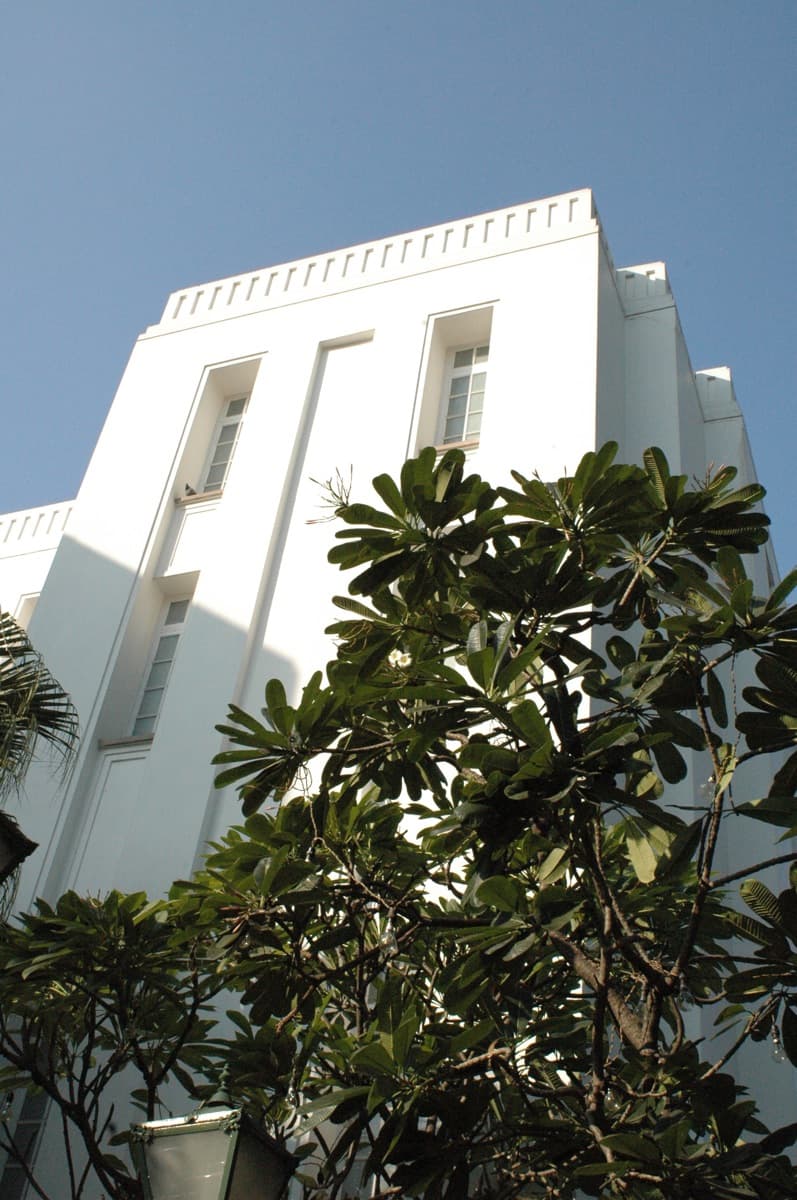
Blomfield mixed Victorian, colonial and Art Deco styles. The façade is white and restrained, the public rooms are taller than the street suggests, and the Art Deco details survive in the bars and on the staircases. The hotel's art collection, assembled over decades, includes aquatints by Thomas and William Daniell, the uncle and nephew who painted India in the 1780s and 1790s, and lithographs, maps and photographs of the British period hang along every corridor. The 235 rooms and suites occupy a building that has kept its lawns and old trees in the middle of the city, with 24 king palms lining the drive in from Janpath.
Rooms and suites
Rooms keep the proportions of the 1930s: high ceilings, teak furniture, period prints and marble bathrooms. Suites are named for the Raj and its figures, with sitting rooms and, on the upper floors, views over the garden. The quiet is remarkable for a hotel this close to Connaught Place.
Dining
The Spice Route took seven years to build. Its painted ceilings and carved pillars were made by temple artists from Kerala, and the menu follows the old trade route through Kerala, Sri Lanka, Thailand, Malaysia and Vietnam. 1911, named for the year the capital moved to Delhi from Calcutta, is the all-day restaurant with a verandah on the garden. Daniell's Tavern serves Indian dishes in a room hung with the Daniells' prints, and San Gimignano is the Italian restaurant with a courtyard. The Patiala Peg bar takes its name from the Maharaja of Patiala's generous measure of whisky.
Wellness
The Imperial Spa has treatment rooms for Ayurvedic and Western therapies, a gym and a salon, and the outdoor pool sits in the garden among the palms.
Weddings and events
The Royal Ballroom, with its chandeliers and period detailing, is the main venue, and a set of smaller rooms serve meetings and private dinners. The garden lawns take wedding receptions, which is rare for a hotel at this address, and the house has hosted state banquets and diplomatic functions for the better part of a century.
Location
Janpath runs south from Connaught Place to the India Gate lawns, and the hotel sits at the Connaught Place end, with the Janpath metro station across the road. New Delhi railway station is about 10 minutes by car; Indira Gandhi International Airport is 40 minutes to an hour, depending on traffic. Government offices, the National Museum and the shops and craft emporia of Janpath are all within walking distance, which makes this luxury hotel in New Delhi the most central of its kind.
At a glance
What sets it apart
- 01Designed by F. B. Blomfield, associate of Lutyens; opened by the Viceroy in 1936
- 02Venue of the 1947 Partition meetings between Nehru, Gandhi, Jinnah and Mountbatten
- 03Collection of Daniell aquatints and British-period prints throughout
- 04The Spice Route restaurant, seven years in the making
- 05Garden with outdoor pool and 24 king palms on the drive
Chronology
Dates that matter
1931
Construction of the hotel on Queensway is completed, the year New Delhi is inaugurated as capital.
1936
Lord Willingdon, Viceroy of India, formally opens The Imperial.
1947
Nehru, Gandhi, Jinnah and Mountbatten meet at the hotel during the Partition negotiations.
2014
Janpath metro station opens across the road from the hotel.