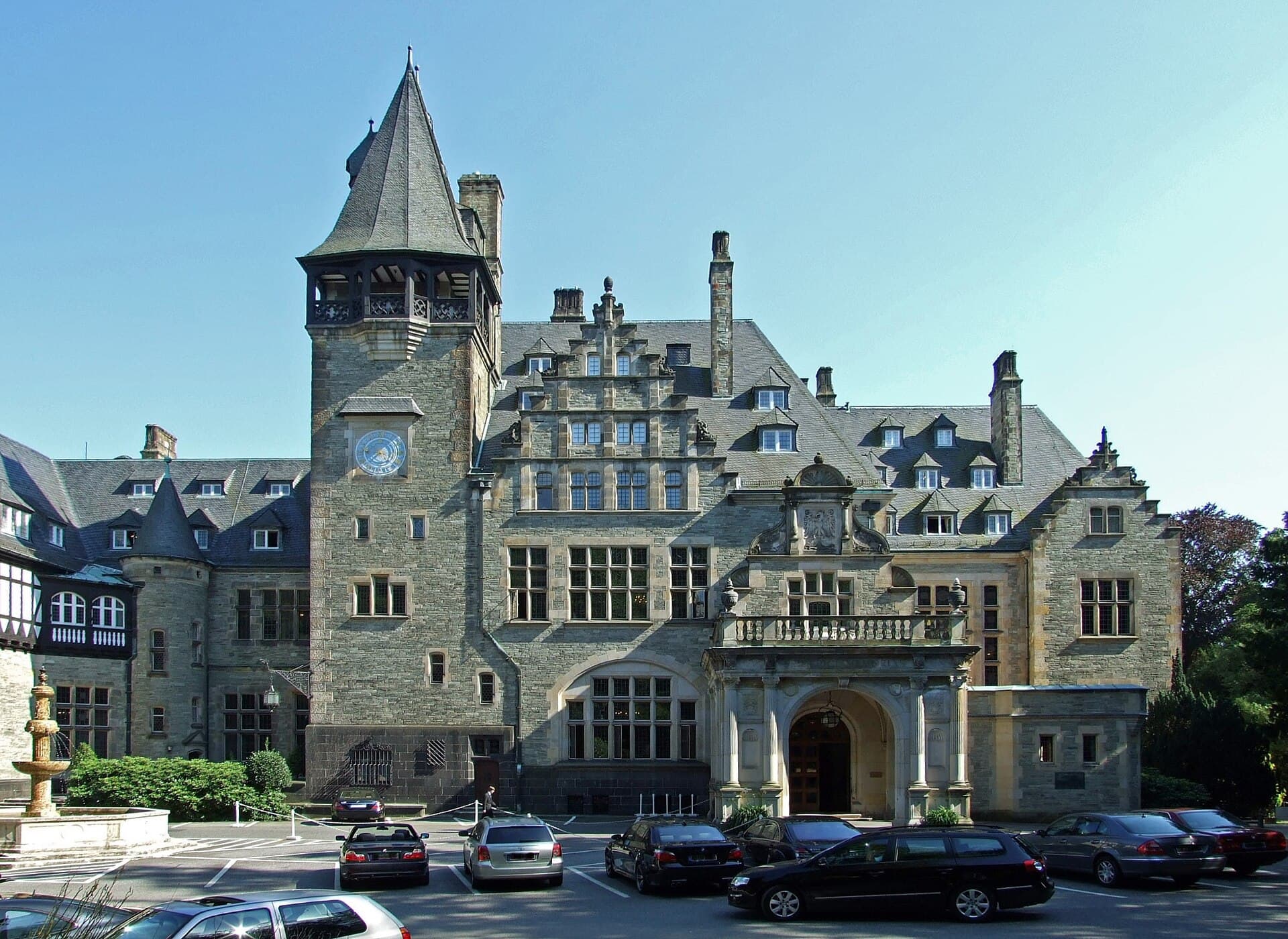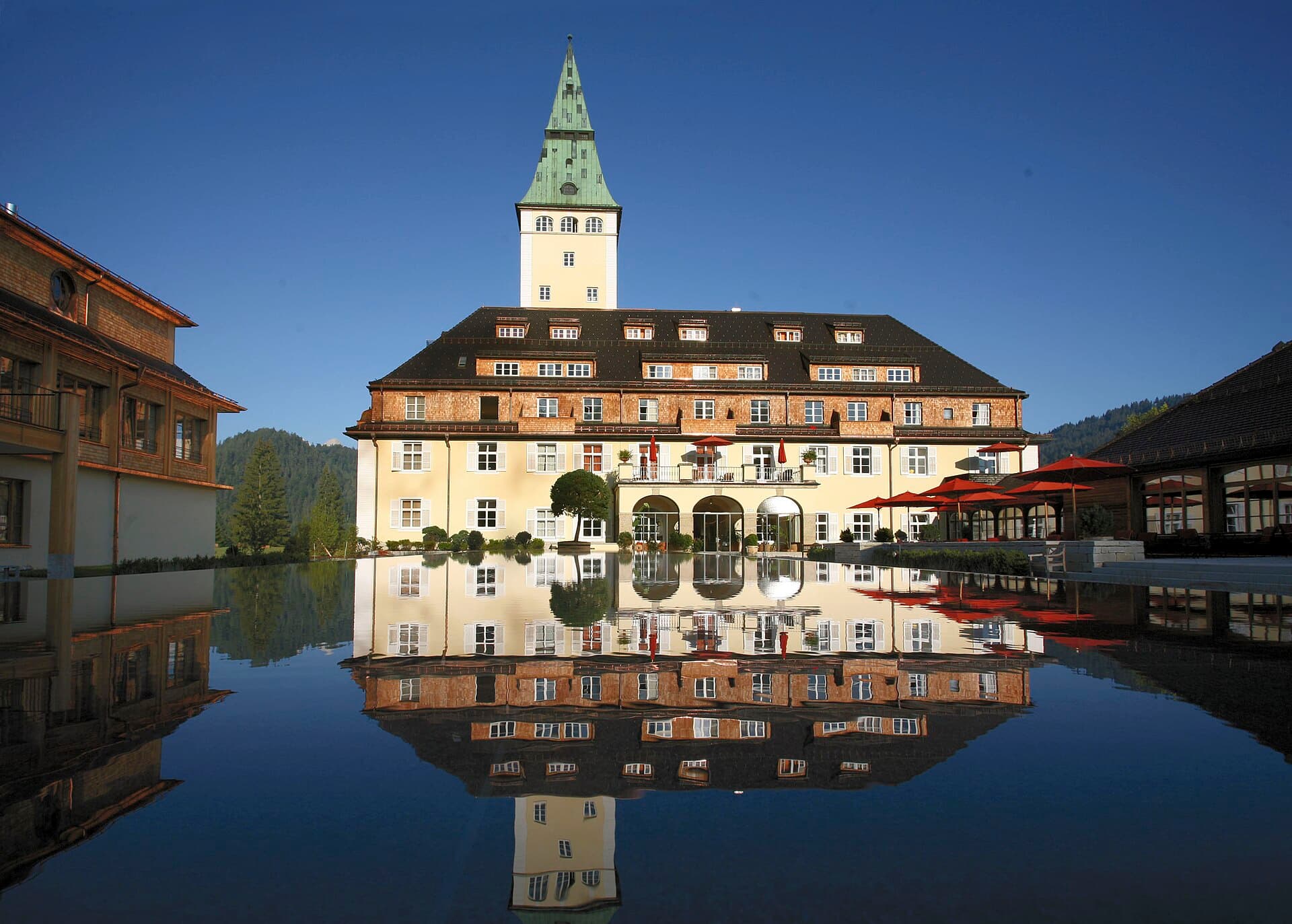
Schloss Elmau stands alone in an Alpine valley between Garmisch-Partenkirchen and Mittenwald, at the foot of the Wetterstein mountains. It was built between 1914 and 1916 by the philosopher and theologian Johannes Müller as a retreat, and it stands among the leading luxury hotels in the German Alps today, still run by his grandson, Dietmar Müller-Elmau.
History
Müller conceived the castle as a place for reflection, music and dance. After a fire in 2005, the main building was rebuilt and reopened, and a second building, the Retreat, opened in 2015. That year the hotel hosted the G7 summit, and it received the leaders of the G7 again in 2022.
Architecture and design
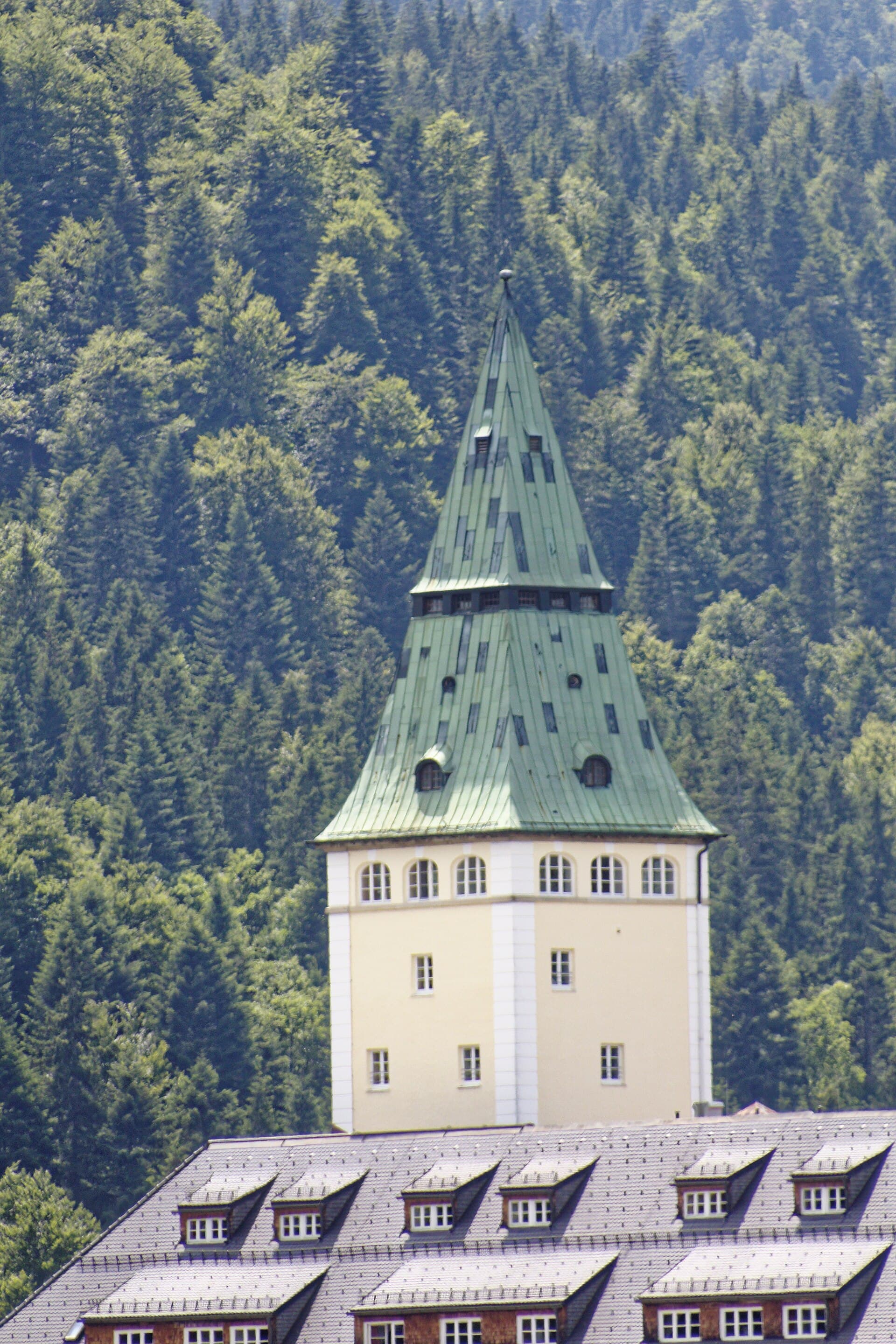
The architect Carl Sattler designed the castle in the style of the German Reform movement, simple and solid, with large roofs and towers adapted to the mountain setting. Inside, the hotel is known for its libraries and its concert hall.
Wellness and culture
Schloss Elmau has several spas, indoor and outdoor pools and an extensive programme of classical music, jazz and literary events throughout the year.
Weddings and events
The castle hosts weddings, conferences and retreats in a secluded setting surrounded by mountains.
At a glance
What sets it apart
- 01Built between 1914 and 1916 by Johannes Müller
- 02Host of the G7 summits of 2015 and 2022
- 03Concert hall and a year-round music programme
- 04Several spas in an Alpine valley
Chronology
Dates that matter
1914
Johannes Müller begins building Schloss Elmau with the architect Carl Sattler.
1916
The castle opens as a retreat for reflection, music and dance.
1945
After the war the castle is requisitioned and used as a sanatorium for survivors of the camps.
1997
Dietmar Müller-Elmau, grandson of the founder, takes over the running of the castle.
2005
A fire in August destroys much of the main building.
2007
The rebuilt castle reopens.
2015
The Retreat opens and the hotel hosts the G7 summit in June.
2022
The G7 leaders meet at Schloss Elmau for a second time in June.