The Delhi Golf Course on one side, Humayun's Tomb on the other: the view from The Oberoi, New Delhi has not changed since the hotel opened in 1965, even if almost everything inside has. The building on Dr Zakir Husain Marg was the Oberoi group's first purpose-built modern hotel in the capital, and after a 21-month closure in 2016 and 2017 it came back as a different house.
History
M. S. Oberoi opened the hotel in 1965 as The Oberoi Intercontinental, in a joint venture with the American chain, and it was Delhi's first luxury hotel of international standard. For decades it was where visiting business and political figures stayed, and its restaurants and bar were part of the city's social life. The Intercontinental name went, and the hotel became simply The Oberoi. In April 2016 the group closed it entirely for a rebuild of the interiors, reopening in January 2018 with new restaurants, fewer and larger rooms and a hotel-wide air purification system, a first for Delhi, where winter air quality had become a daily concern.
Architecture and design
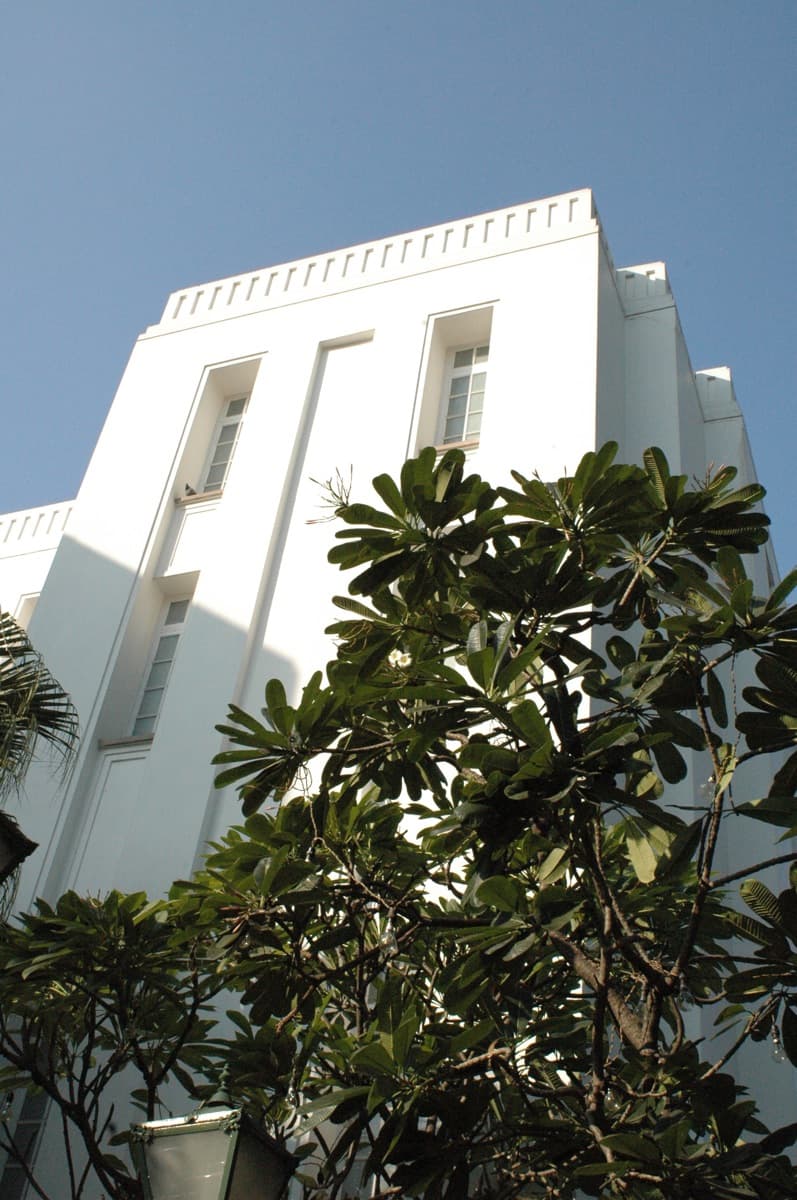
The 1965 structure stands, a modernist slab typical of its decade, but the renovation reworked the interiors under the New York designer Adam D. Tihany. The result is calmer than the original: dark wood, bronze, marble and Indian art, with a lobby that opens onto the greenery of the golf course. The room count fell to 220, which allowed larger bathrooms and more suites. Every window frames either the fairways or the Mughal tomb and its gardens.
Rooms and suites
Rooms and suites have floor-to-ceiling windows, walk-in wardrobes and bathrooms with separate tubs and rain showers. A 24-hour butler service covers every category. The top suites run to several rooms with private dining, and the Kohinoor Suite is the largest, with a terrace over the tomb side.
Dining
threesixty° is the all-day restaurant with a sushi counter and a tandoor section. Omya serves Indian cooking with a modern hand. Baoshuan, on the rooftop, is a Chinese restaurant developed with the London chef Andrew Wong, and has a terrace facing Humayun's Tomb. The Cigar Lounge and The Club Bar handle evenings, and the Patisserie & Delicatessen on the ground floor serves breads, cakes and chocolates.
Wellness
The Oberoi Spa has treatment rooms for Ayurvedic and Western therapies. There are two pools, one temperature-controlled indoors and an outdoor pool in the garden, and a gym open around the clock.
Weddings and events
The Ballroom is the main venue, with an adjoining pre-function foyer, and a set of smaller boardrooms serve meetings. Weddings use the ballroom and, for smaller gatherings, the restaurants and terraces. The hotel's reputation with government and business keeps its meeting rooms busy with conferences and official dinners.
Location
The hotel is in central Delhi, on the road that separates the golf club from the Nizamuddin area. Humayun's Tomb and Sunder Nursery are a few minutes away, and India Gate and Khan Market about ten minutes by car. Indira Gandhi International Airport is roughly 40 minutes away, and Hazrat Nizamuddin railway station, where several express trains stop, is closer than New Delhi station. Among the luxury hotels in New Delhi, this is the one with the most greenery at its windows.
At a glance
What sets it apart
- 01Opened 1965 as The Oberoi Intercontinental, Delhi's first modern luxury hotel
- 02Interiors rebuilt by Adam D. Tihany, reopened January 2018
- 03220 rooms facing the Delhi Golf Course or Humayun's Tomb
- 04Baoshuan rooftop Chinese restaurant developed with Andrew Wong
- 05Hotel-wide air purification system installed in the renovation
Chronology
Dates that matter
1965
The Oberoi Intercontinental opens on Dr Zakir Husain Marg.
2016
The hotel closes in April for a complete rebuild of its interiors.
2018
Reopening in January with 220 rooms, new restaurants and an air purification system.