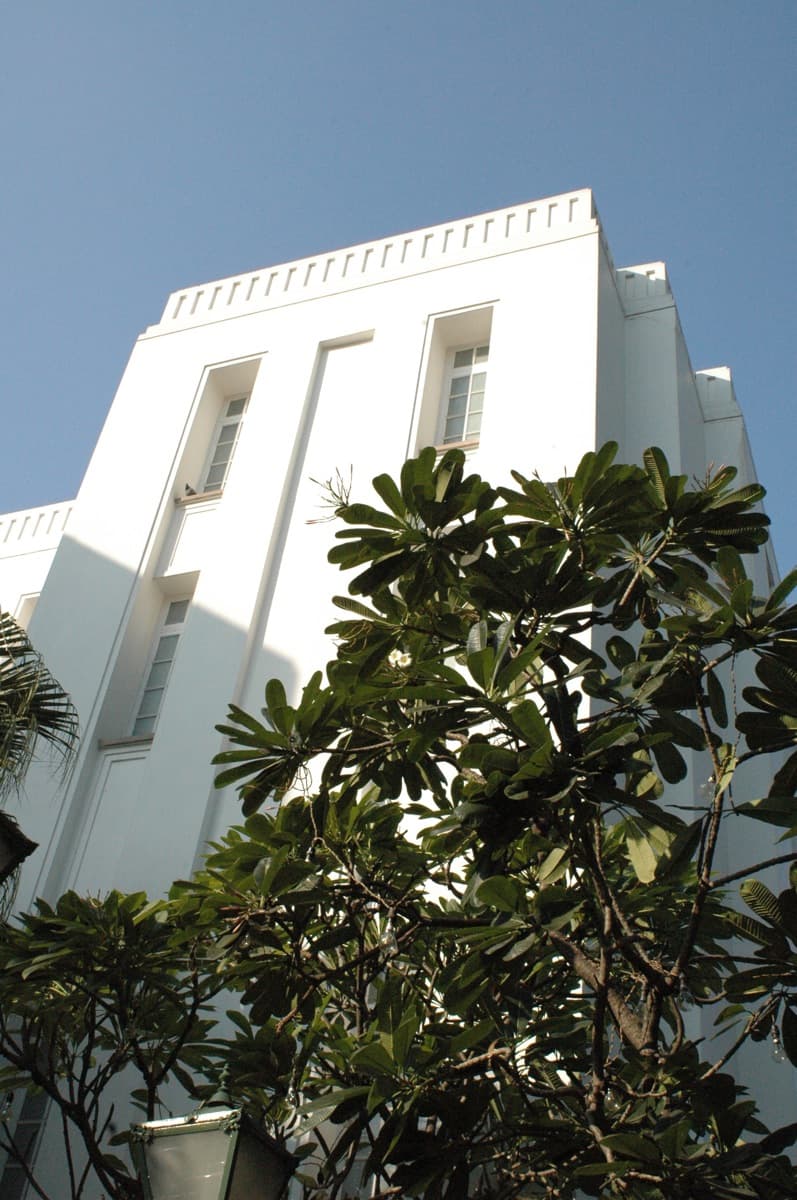
Domes, arched gateways and courtyards in the manner of a Rajput palace greet arrivals at The Oberoi Rajvilas, on the Goner Road east of Jaipur. Inside lie 32 acres of gardens, pools and fountains, and a Shiva temple older than the hotel by more than two centuries. The Oberoi group opened Rajvilas in 1997, and it was the first of the Vilas resorts that came to define the company's approach to hospitality in India.
History
The Oberoi group traces its origins to 1934, when Mohan Singh Oberoi bought his first hotel, the Clarke's in Shimla. By the 1990s the company ran grand city hotels across India, and Rajvilas was its first attempt at something new: a low resort built in the local idiom, on open land outside a historic city, with gardens and space instead of a tower. It became the model for a new kind of luxury hotel in Jaipur and well beyond. Amarvilas in Agra followed in 2001, and Udaivilas in Udaipur and Vanyavilas at Ranthambore in 2002.
Jaipur offered a deep store of architecture to draw on. Maharaja Sawai Jai Singh II founded the city in 1727 on a planned grid, and its walled centre, painted pink for the visit of the Prince of Wales in 1876, was listed by UNESCO as a World Heritage Site in 2019.
Architecture and design
The hotel was built to read as a Rajasthani fort palace, with domes, chhatris, colonnades and courtyards, set in formal gardens with reflecting pools and fountains in the Mughal manner. At the heart of the grounds stands a restored Shiva temple from the eighteenth century, where prayers are still held. The spa occupies a restored haveli, the traditional courtyard mansion of Rajasthan's merchant families. The buildings are kept low, so the gardens, the temple and the sky above the Aravalli hills dominate the scene.
Rooms and suites
Accommodation comes in three forms. The main rooms sit around courtyards in the palace buildings. Luxury tents, with canopies and teak floors, stand in the gardens in the tradition of the camps used by Rajput and Mughal rulers on the move. Villas, set apart with their own walled gardens and private pools, take the top of the range. The interiors use Rajasthani textiles, marble and carved wood, and many rooms open onto private gardens or terraces.
Dining
The kitchen serves Indian and international menus, with the dishes of Rajasthan well represented, among them laal maas, the region's fiery mutton curry. Meals can also be served by the pool, in the courtyards or in the gardens under the night sky, often with musicians.
Wellness
The Oberoi Spa, in its haveli, has treatment rooms around a courtyard and draws on Ayurvedic practice alongside other therapies. A large swimming pool sits in the gardens, and yoga is offered in the mornings.
Weddings and events
Jaipur is one of India's favourite wedding cities, and the lawns and courtyards of Rajvilas are used for wedding ceremonies and receptions, including the multi-day celebrations of Indian weddings. The gardens also host private dinners and small corporate gatherings, which suit the low, open layout better than large conferences.
Location
The hotel is about eight kilometres east of the walled city, in the direction of the Galta hills. Hawa Mahal, the City Palace and the Jantar Mantar observatory, a UNESCO site built by Jai Singh II, are around half an hour away by car, and Amber Fort, on its ridge north of the city, a little further. Jaipur International Airport is roughly half an hour away. Jaipur Junction railway station has fast trains to Delhi of about four and a half hours, and the drive to Delhi takes around five hours.
At a glance
What sets it apart
- 01First Oberoi Vilas resort, opened 1997
- 0232 acres of gardens, pools and fountains east of Jaipur
- 03Restored eighteenth-century Shiva temple in the grounds
- 04Rooms, garden tents and villas with private pools
- 05Oberoi Spa in a restored haveli
Chronology
Dates that matter
1727
Maharaja Sawai Jai Singh II founds Jaipur on a planned grid.
1934
Mohan Singh Oberoi buys his first hotel, the Clarke's in Shimla.
1997
The Oberoi Rajvilas opens as the first of the group's Vilas resorts.
2001
The Oberoi Amarvilas opens in Agra, the next of the Vilas resorts.
2019
UNESCO lists the walled city of Jaipur as a World Heritage Site.